
Why your house is so dusty in South Dakota

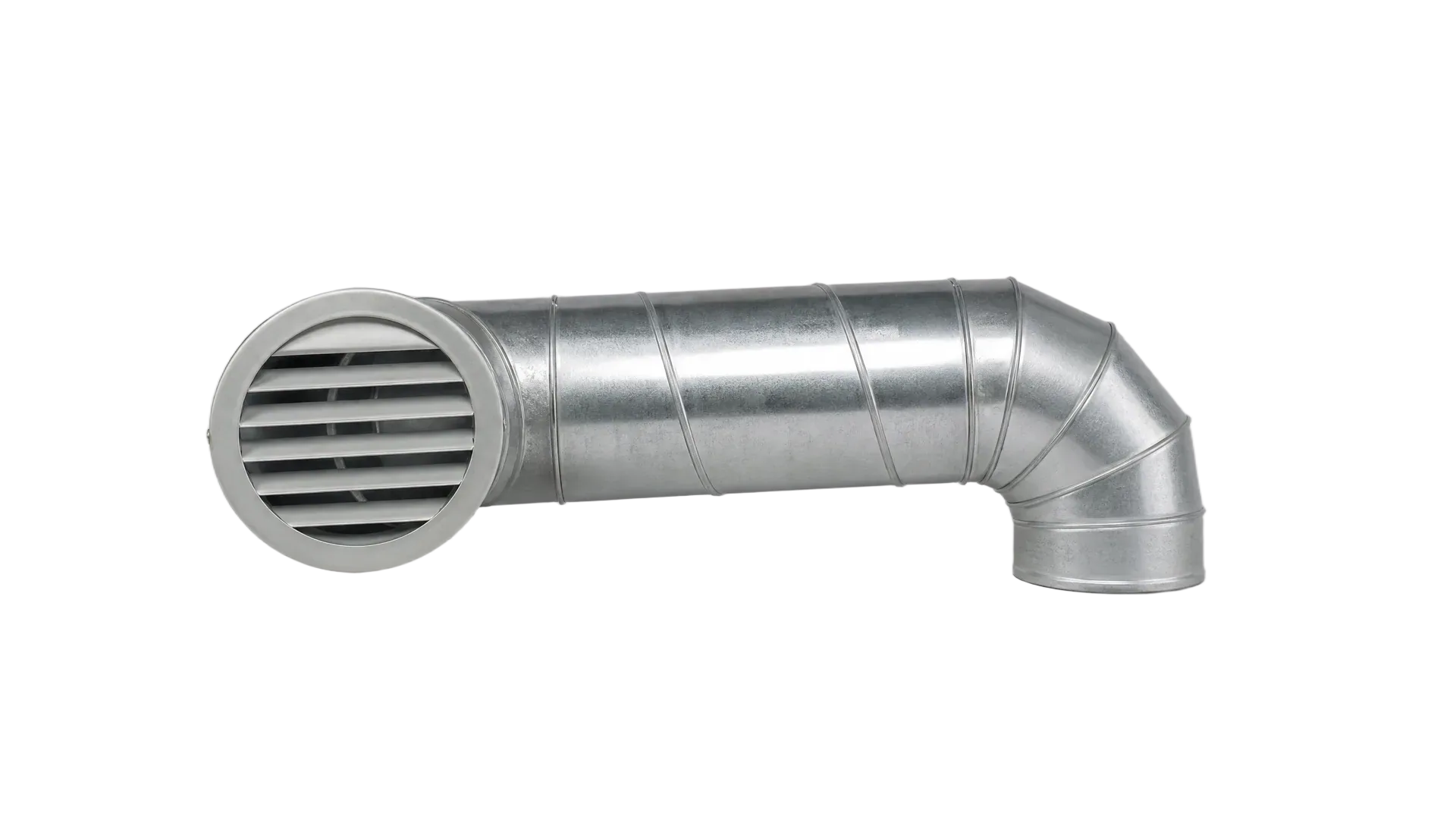
A galvanized steel round duct section with a 90-degree elbow at one end and a louvered vent grille at the other, photographed against a plain gray background.
Connect with a pro

Why is my house so dusty in South Dakota?

You dust the shelves and a day later there's a film on them again. It's not just you being extra careful. Something is putting that dust back into the air faster than it should, and with winters here running the furnace for months at a stretch, it's worth knowing whether this is normal or a sign the ducts need attention.

Your ductwork is likely moving more dust than it should

Dust builds up fastest when the furnace is running, and in South Dakota that's a good chunk of the year. Every time it cycles on, air moves through the ducts and across the coil, picking up whatever has settled inside and carrying it right back into your rooms. If the ducts haven't been cleaned, that buildup just keeps recirculating instead of getting filtered out. A dirty filter makes it worse, but even a good filter can't catch what's already loose inside the duct walls. The gas furnace running hard through a long winter is exactly the condition that pushes dust around a house.

Unfinished basement with bare concrete walls and floor, exposed wood joists, and galvanized sheet-metal HVAC ductwork and pipes running across the ceiling.

Ducts doing their job

This is what a duct system looks like when it isn't the problem. Air moves through the sheet metal, the filter catches what it's supposed to catch, and the dust in the house stays at a normal level for a place that heats with gas all winter.


Basement ceiling with galvanized sheet-metal ductwork, wooden joists and subfloor, black and white pipes, above a concrete wall and floor.

Ducts holding onto dust

Dust and debris build up inside the metal at every joint and branch. Once it's packed in there, the furnace blower stirs it loose and pushes it back into the rooms every time it runs, which with gas heat is most days from fall to spring.

Clean the Ducts or Keep Dusting

Clean the ducts

  • A contractor runs a brush and vacuum through the supply and return lines and pulls out what years of furnace cycles have packed into the bends and joints.
  • The dust sitting in the ductwork stops getting pushed into the rooms every time the furnace kicks on.
  • Once the lines are clear, a new filter actually catches what comes through instead of working against what's already loose inside.
  • You stop wiping the same shelf twice in one week.
  • It doesn't change how often the furnace runs or what it costs to run, only what's riding along in the air it moves.
  • If the dust came from something built up in the system, this is the fix for that, not for a bad seal or a leak.

Leave it alone

  • The furnace keeps circulating whatever is already loose in the ducts every time it cycles on, which in a gas heat setup here can be most days from fall through spring.
  • Dusting and vacuuming more often treats what's landed on the furniture, not what's still moving through the vents.
  • Filters get asked to catch more than they're built for, so they load up faster and let more through once they're full.
  • You keep spending time on it every week instead of once.
  • If the real cause is a leak or a gap in the ductwork rather than built-up debris, this doesn't tell you which one you're dealing with.
  • Whatever is making the dust keeps doing it, so the film on the shelf keeps coming back on the same schedule.
Unfinished basement interior with exposed wooden floor joists, galvanized rectangular and round sheet-metal ducts, a gray furnace unit at left, and a large blank light-colored wall at right.

Where the dust actually collects

Flex duct and sheet metal both have seams, elbows, and joints where airflow slows down. Dust doesn't ride straight through to the vents. Some of it settles in those low-flow spots and sits there until a stretch of cold weather sends the furnace into long, frequent cycles. Each cycle stirs up a little more of what's built up and carries it into the rooms you're dusting.

Galvanized sheet metal ductwork with elbows and a vent grille running beneath an exposed wood joist and OSB ceiling, next to a blank white wall.

Gas furnaces move more air

A gas furnace pushes air harder and more often than other ways of heating a house, because it has to move heated air through the whole duct run to warm the place. More air moving through dirty ducts means more dust getting carried along with it. If your furnace runs through a cold snap for days at a stretch, that's days of pulling whatever is packed into the ducts out into your living room.

Power costs 13.32 cents per kilowatt-hour statewide

At 13.32 cents a kilowatt-hour, running your blower longer than it needs to doesn't cost much here. That's worth knowing because clogged ducts make the furnace cycle more to push the same air through, and in South Dakota that's a cost you can avoid, not one you're stuck paying.

EIA-861 2025 statewide residential average

An older man with gray hair, a dark coat and scarf dusted with snow stands in a warmly lit entryway with an open wooden door, a table lamp, framed pictures, and a plant in a vase.
An older man with gray hair and a beard wearing a dark snow-dusted coat stands in a home entryway, with a lamp-lit living room and a wooden staircase behind him.
An older man with gray hair and a beard, wearing a dark snow-dusted coat, stands in a warmly lit home entryway with a hallway, console table with lamp, patterned rug, and living room visible behind him.
A gray-haired bearded man in a dark snow-dusted coat and scarf stands inside a dimly lit home entryway, with a hallway, framed picture, lit table lamp and staircase behind him.

A pro who works on ducts

Answer a few questions instead of calling shop after shop.

You only hire the pro if you want to.

How the air actually moves

  • Every furnace cycle pushes air through the return duct, across the filter, and back out through the supply runs to each room.
  • A clogged filter doesn't stop dust, it lets more past because air finds the gaps around a dirty filter instead of going through it.
  • The blower draws return air from the house, so any dust sitting in that duct gets pulled back into circulation, not removed.
  • Static pressure builds when ducts are packed with debris, and that makes the blower work harder without moving any more clean air.
  • Gas furnaces here cycle on and off all winter, and each cycle is another pass of air through whatever has built up in the ducts.
  • The supply registers are the last stop before that air reaches your rooms, so whatever rode along from the ductwork lands on your furniture.

A furnace doesn't make dust. It moves air, and moving air moves whatever is riding in it. Return air comes in through the big duct near the furnace, passes across the filter, and gets pushed back out through the supply runs to every room in the house. That loop runs every time the furnace cycles on, and in a South Dakota winter that's a lot of cycles. The filter is supposed to be the one place in that loop where dust gets taken out. When it's dirty enough, air stops going through it evenly and starts finding the gaps around the edges instead, carrying dust past the one part meant to catch it. Whatever settles in the ductwork itself doesn't just sit there either. The return side pulls air out of the house to send it back through the furnace, and that draw stirs up anything resting in the duct along the way. Ducts packed with buildup also push back against the blower. The motor has to work harder to move the same volume of air, and that extra static pressure doesn't translate into cleaner air, just a harder-working furnace. By the time that air reaches a supply register, it's carrying whatever it picked up on the way, and the register is the last stop before it lands on a shelf or a countertop. None of this is about how careful you are with a duster. It's about what's traveling through the ducts every time the system runs.

Empty unfinished basement with bare concrete floor, insulated walls with vapor barrier between wood studs, exposed wood joists, galvanized sheet-metal ductwork, a recessed light, and a steel support column.
Here the ducts run clean and open, carrying air to every room the way they were sized to.
Empty basement room with bare concrete walls and floor, exposed wooden floor joists overhead, large galvanized sheet-metal ducts with a vent grille, colored pipes, and a single lit bulb.
Here dust has a place to hide, in the joints and low runs where moving air slows down.
  1. The furnace fires and the blower pulls air through the return duct.

  2. Air crosses the filter, where most dust gets trapped.

  3. Air not fully caught moves on through the ducts toward each room.

  4. Some of that dust settles in elbows, seams, and low-flow joints.

A man in a dark blue shirt stands in an open front doorway of a stucco and wood-clad house, facing a blond woman seen from behind in the foreground on a stone walkway.

The dust is coming from the ducts, not the air outside

A furnace that cycles all winter and a duct system with years of buildup in the bends explains the film on your shelves better than anything coming in from outside. That's the plain answer. The fix is getting the lines cleaned out so the furnace is moving air through clean duct, not pushing dust back into every room it heats.

Finding someone to do that work usually means sorting through contractors, calling a few, explaining the same problem each time, and lining up quotes to see who's worth hiring. You can skip that part. Answer a few questions about your house and you'll be matched with a contractor who handles duct cleaning and knows what a South Dakota winter does to a system that runs this much. They'll reach out to you directly.

Interior corner of a dining room with a round wooden table, a ceramic vase holding olive branches, a dark spindle-back chair near a curtained window, and a sideboard with a lamp against beige walls.
Dimly lit interior showing galvanized sheet-metal HVAC ductwork running below a wooden joist ceiling above a dark gray wall.

Get your ductwork to the right pro

Describe your ductwork job once, to one pro.

Duct and vent cleaningDucts or ventsSouth Dakota
Step 1 of 2

What ZIP code is the job in?