

Signs your air ducts need cleaning in South Dakota

A local pro who cleans ducts gets in touch with you.

Request a pro

Dust that resettles on furniture within a day or two of cleaning is usually the clearest sign. Register covers with a thick, gray buildup, or a musty smell when the furnace kicks on, point the same way. Gas furnaces push air through the same ducts for months on end, and anything sitting in that ductwork, dust, pet hair, dander, gets stirred into the air every time the system runs. If anyone in the house has started sneezing more at home than elsewhere, or a room near a vent never seems to stay as clean as the rest, the ducts are the likely source. Weak airflow at a vent even with the fan running hard can mean a buildup is blocking the path. None of this is an emergency, but it is worth dealing with before it gets worse, since a duct system left alone keeps circulating whatever is already inside it.

Unfinished basement with bare concrete floor and walls, exposed wood joists, large galvanized sheet-metal ductwork, PVC and copper piping, and a gray furnace unit beside wood stud framing.

Ducts doing their job

Metal runs like this carry warm air from the furnace to every room without you giving them a thought. No staining on the metal, no dust ring around the seams, no musty pull of air when the furnace cycles on. That's what normal looks like.

Basement ceiling with large galvanized sheet-metal ductwork, round metal pipes and plumbing lines running beneath wood joists, above a bare concrete wall and floor.

Ducts worth a look

Water staining on the foundation wall means moisture has been getting into the joist bay where these ducts sit. Damp air around sheet metal for long enough leaves dust and grime stuck to the inside of the duct instead of blowing through to your rooms.

Why does your house feel dustier than it used to

You wipe down a shelf and by the next day there's a thin film back on it. That's dust coming out of the vents faster than normal, not just a house that needs cleaning more often. Check the return vent cover. If it's got a gray coating thick enough to see from across the room, the same stuff is coating the inside of the ducts too. Some households notice it more when the furnace first kicks on in the fall, after the system has sat untouched since spring. A relative with allergies sneezing more indoors than outside, or a musty smell that fades a few minutes after the furnace starts, are both worth paying attention to.

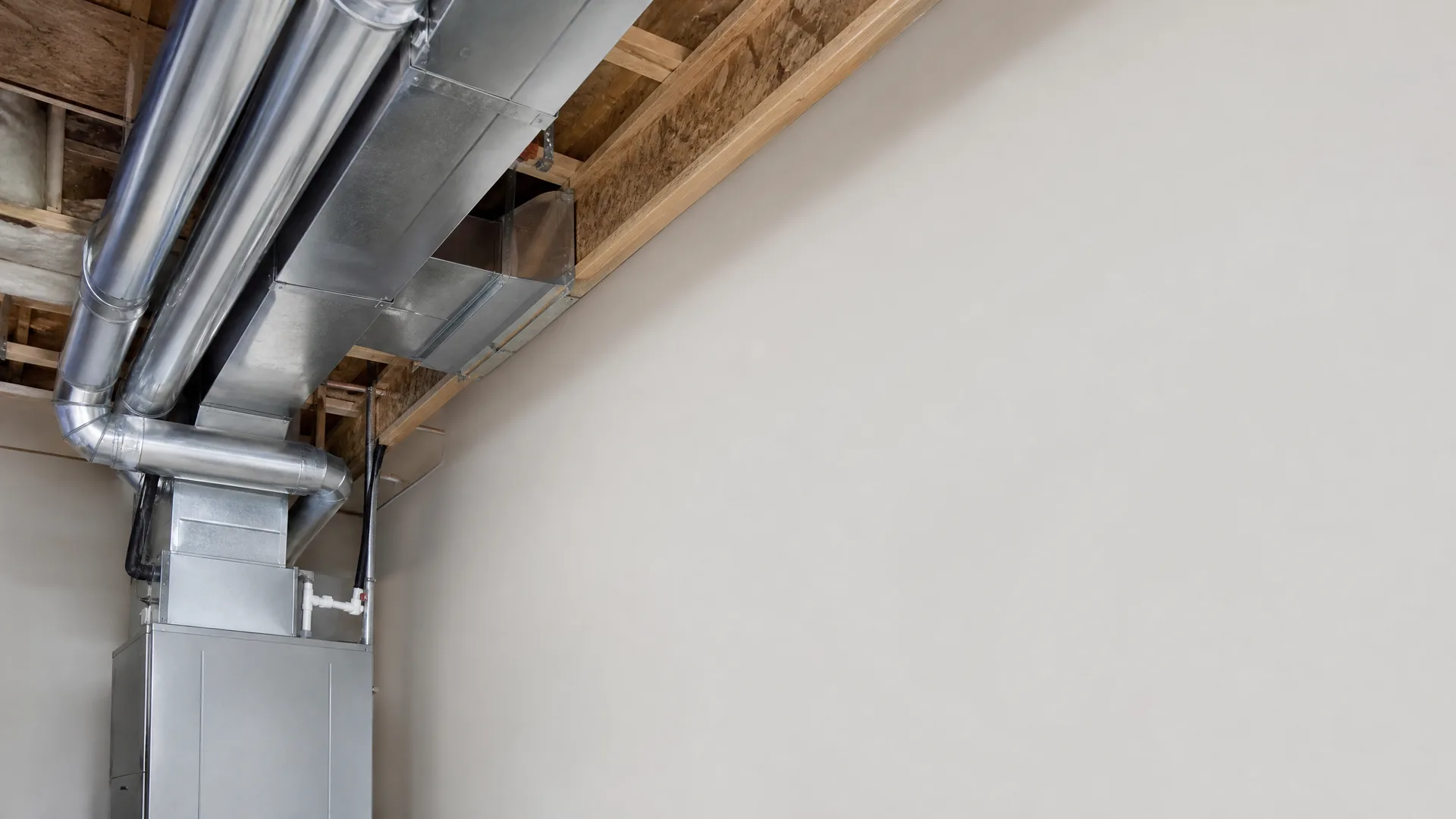
Galvanized sheet-metal ductwork and round pipes running along an exposed wood-joist ceiling with insulation, above a furnace unit beside a blank painted wall.

How buildup actually forms

Every pass of air through the ductwork carries a little dust with it, and most of that dust settles out at the bends and the seams where airflow slows down. Gas furnaces run long cycles once the weather turns cold, so the same air moves through those metal runs over and over. Over a winter that adds up to a coating thick enough to flake off and get pulled back into the house.

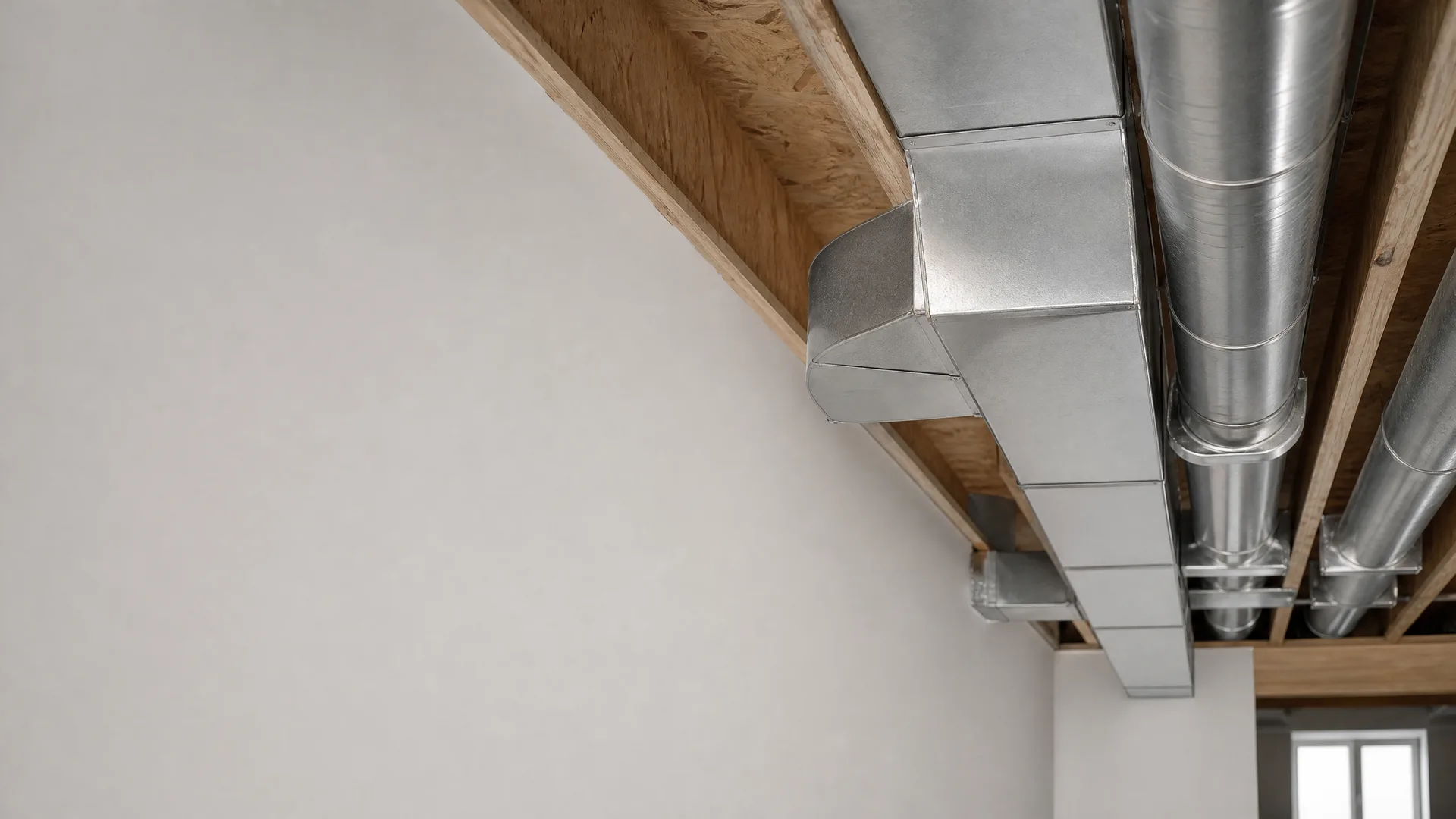
Galvanized rectangular and round sheet-metal ductwork mounted beneath an exposed wooden joist and OSB ceiling, next to a plain white wall and a window at lower right.

What the furnace side adds

The return side pulls air back toward the furnace before it gets heated again, and that's the side where dust tends to concentrate most. If the filter isn't catching everything, the fraction that slips past goes straight into the duct run and settles there. Cheap power here means a lot of homeowners run the blower fan on and off through the day, and every cycle moves more air past whatever is already sitting in the ducts.

A woman stands in the open doorway of a white stucco house holding the dark door, facing a man in a black cap and shirt seen from behind in the blurred foreground, with a potted flowering plant beside the entry.

What a cleaning actually does to the system

A duct cleaning clears the branch runs and the main trunk line, then the supply and return plenums right at the furnace. Those plenums sit closest to the blower, so they catch the heaviest buildup first. A contractor working the job runs a brush or a whip through each run and vacuums from the far end back toward the furnace, so loosened dust gets pulled out instead of pushed deeper into the system.

South Dakota winters put a lot of hours on a gas furnace, and every one of those hours moves air through the same metal. If your ducts haven't been opened up since the house was built, nobody working on your system yet knows what your runs actually look like inside. A match with a contractor who can get in there and tell you what's really built into your walls is worth more than guessing from a register cover.

A dark ceramic mug on a round wooden table beside a light grey sofa with a woven cushion and knit throw, with a window, potted plant, floor lamp and wooden cabinet blurred in the background.
  1. Dust and debris get pulled into the return vents as the blower runs.

  2. Air slows at duct bends and seams, dropping buildup there first.

  3. A contractor snakes a brush or whip through each run to loosen it.

  4. A vacuum pulls the loosened debris out through the main trunk line.

A bearded man in a plaid flannel shirt sits indoors looking out a window at snow-covered trees, with a steaming mug on the sill and wooden kitchen shelves behind him.
A bearded man in a navy T-shirt sits on a light-colored couch indoors, smiling while looking down at a laptop screen in the foreground, with a framed picture and a potted plant blurred behind him.
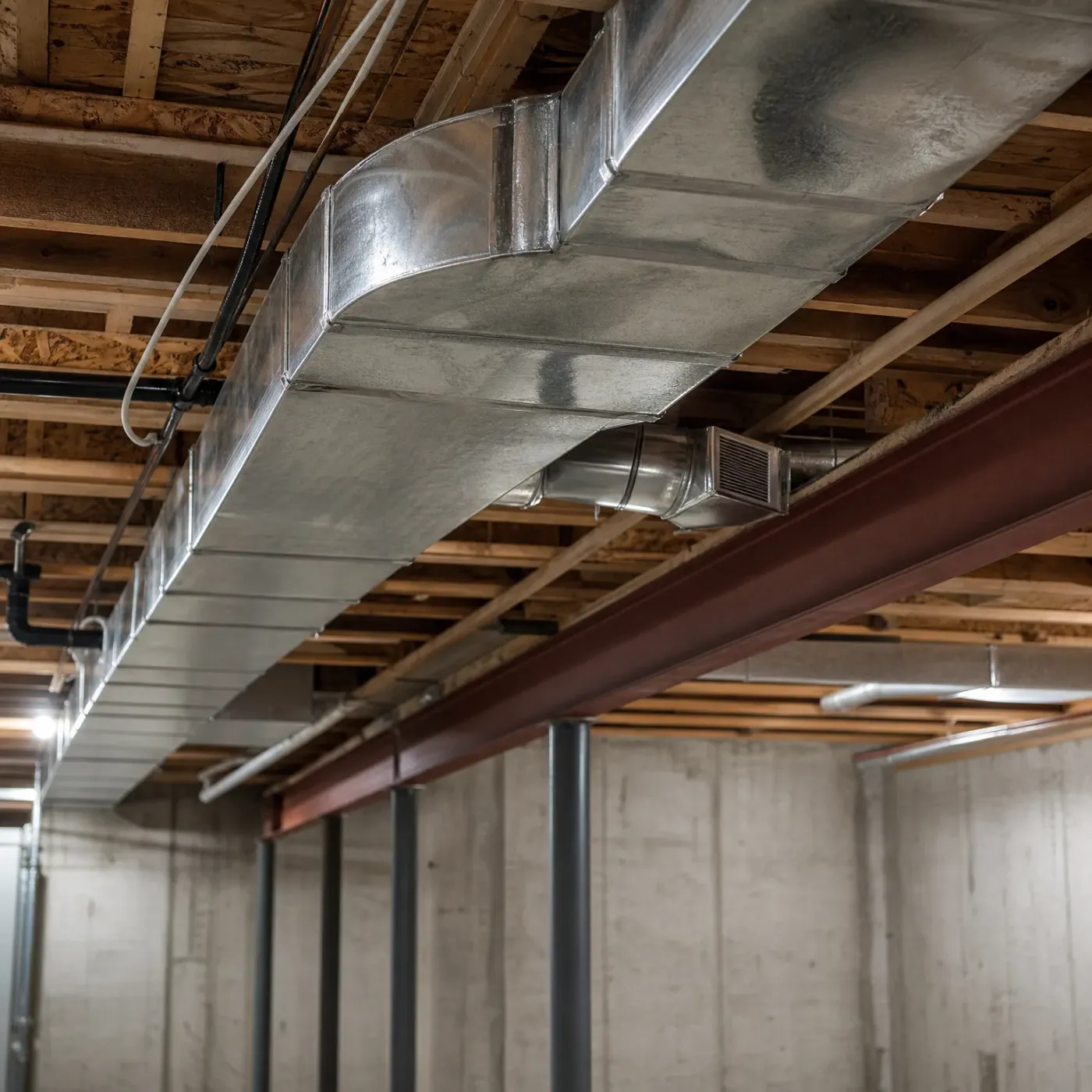
Galvanized sheet metal trunk ductwork with a round branch and register running beneath wood floor joists in an unfinished basement, alongside pipes, wiring, a steel beam and concrete walls.

The right pro for this job

Send the form and finding a duct cleaner is handled.

Your duct cleaning request goes to a local pro who does this work.

Get matched

No fee to send it, and nothing to sign.

Clean Now or Wait

Clean now

  • A contractor can reach every run while vents are easy to access and the furnace isn't mid-cycle on the coldest days of the year.
  • Clearing buildup before the long gas furnace runs of winter means less of it gets pushed into the air you're breathing all season.
  • Register covers and the plenums near the blower get the worst of the buildup cleared before cold weather sets the furnace running for months straight.
  • Scheduling isn't squeezed between emergency calls, since a furnace that isn't struggling yet means more flexibility on timing.
  • Dust that's resettling fast now only gets worse once the furnace is running long cycles day and night.

Wait and watch

  • If the registers are still clean and there's no musty smell when the furnace kicks on, there may be nothing to clean yet.
  • A system with no staining around the seams and no dust ring at the vents is doing what it's supposed to do.
  • Waiting costs nothing if dust isn't resettling within a day or two of wiping it down.
  • Once winter sets in, a furnace running long stretches makes it harder to find a good window for the work.
  • Checking the return vent cover now tells you more than guessing, and it costs nothing but a look.
Empty basement with bare concrete walls and floor, a small window at left, and exposed wood joists with galvanized sheet metal ductwork and pipes overhead.
Clean metal, tight seams, no dust ring where the duct meets the register.
Dusty sheet-metal HVAC ducts with a rectangular vent register run beneath wooden floor joists above an empty concrete-walled basement.
Dark buildup coats every run, with a second pipe alongside it just as grimy.

Power costs 13.32 cents per kilowatt-hour statewide

At 13.32 cents a kilowatt-hour, running the furnace blower longer than it needs to costs you something every month. A blower pushing air through ducts caked with buildup has to work harder to move the same amount of heat around the house.

EIA-861 2025 statewide residential average

Where Your Ducts Stand

  • Dust that resettles within a day or two, gray buildup on register covers, and a musty smell at startup are the three signs worth checking.
  • Gas furnaces here run long cycles all winter, and that steady airflow is what pushes buildup through the house once it reaches a certain point.
  • A duct system that looks clean, with tight seams and no dust ring at the registers, doesn't need attention regardless of how long it's been.
  • The buildup that matters most sits at bends and seams and in the supply and return plenums closest to the furnace blower.
  • A blower working against caked ducts has to run longer to move the same heat, and that shows up on the power bill.
  • Catching this before the coldest months means less buildup getting pushed into the air you breathe once the furnace is running nonstop.

The signs worth checking are simple, and you can check them yourself. Dust that comes back fast after you've wiped it down, register covers with a gray film, a musty smell when the furnace starts up. Any one of these points the same direction. None of it happens on its own. Your furnace pushes air through the same metal runs for months once the cold sets in, and that long steady airflow is what carries buildup from the bends and seams out into the rooms you live in. The plenums right at the blower take the worst of it, since they sit closest to where the air is moving fastest. A system with tight seams and no dust ring at the registers isn't due for anything, no matter how many winters it's been running. But once buildup has built up, the blower has to push harder to move the same amount of heat, and that extra work is what shows up on the power bill. The real cost isn't the dust on your furniture. It's what's moving through the air every time the furnace cycles on, and how much harder the system is working to keep up. Catching it now, before the long runs of deep winter start, means less of that buildup ends up in the air and less strain on equipment that still has work to do this season.

A woman in a cream cowl-neck sweater sits by a window with snow outside, in a dimly lit living room with a sofa, lit lamp, mirror, candles and a fireplace.
A woman in a gray turtleneck sweater sits beside a large window looking out at snow-covered evergreen trees, in a dimly lit living room with a lit fireplace, lamps, couch and houseplant.
A woman in a cream turtleneck sweater stands beside a large window with snow-covered ground and bare trees outside, in a dimly lit living room with lamps, a sofa and framed art.
A woman in a grey cowl-neck sweater stands indoors near a window, looking out at falling snow, with a lamp, framed picture and couch in the warmly lit room behind her.

Ductwork Cleaning

Matched to your ductwork job

One request and the duct cleaning stops waiting on you.

A black-framed smartphone standing upright against a plain light gray background, its screen filled with solid green.
Duct and vent cleaningDucts or ventsSouth Dakota
Step 1 of 2

What ZIP code is the job in?