


Is duct cleaning worth it in South Dakota

Fill out one short form instead of calling around.

Start one form

Is duct cleaning worth it in South Dakota

You keep hearing about duct cleaning, maybe from a flyer or a company that called your house, and you're trying to figure out if it actually does anything or if it's a way to spend money on nothing. You're not against spending on your house, you just want to know it goes somewhere real before you commit an evening to looking into it.

It's worth it if your ducts actually have buildup, not on a schedule

Dust, pet hair and debris settle in ducts over years, and in a home that's been heating with gas and running the furnace blower all winter, that buildup moves through the air you breathe. Cleaning makes sense when there's visible dust coming from the vents, a musty smell when the furnace kicks on, or you know there's been rodent or insect activity in the ducts. It doesn't make sense as something to do every year or two just because a company suggests it. A technician who looks at your actual ducts, not a sales script, can tell you whether yours need it now or can wait.

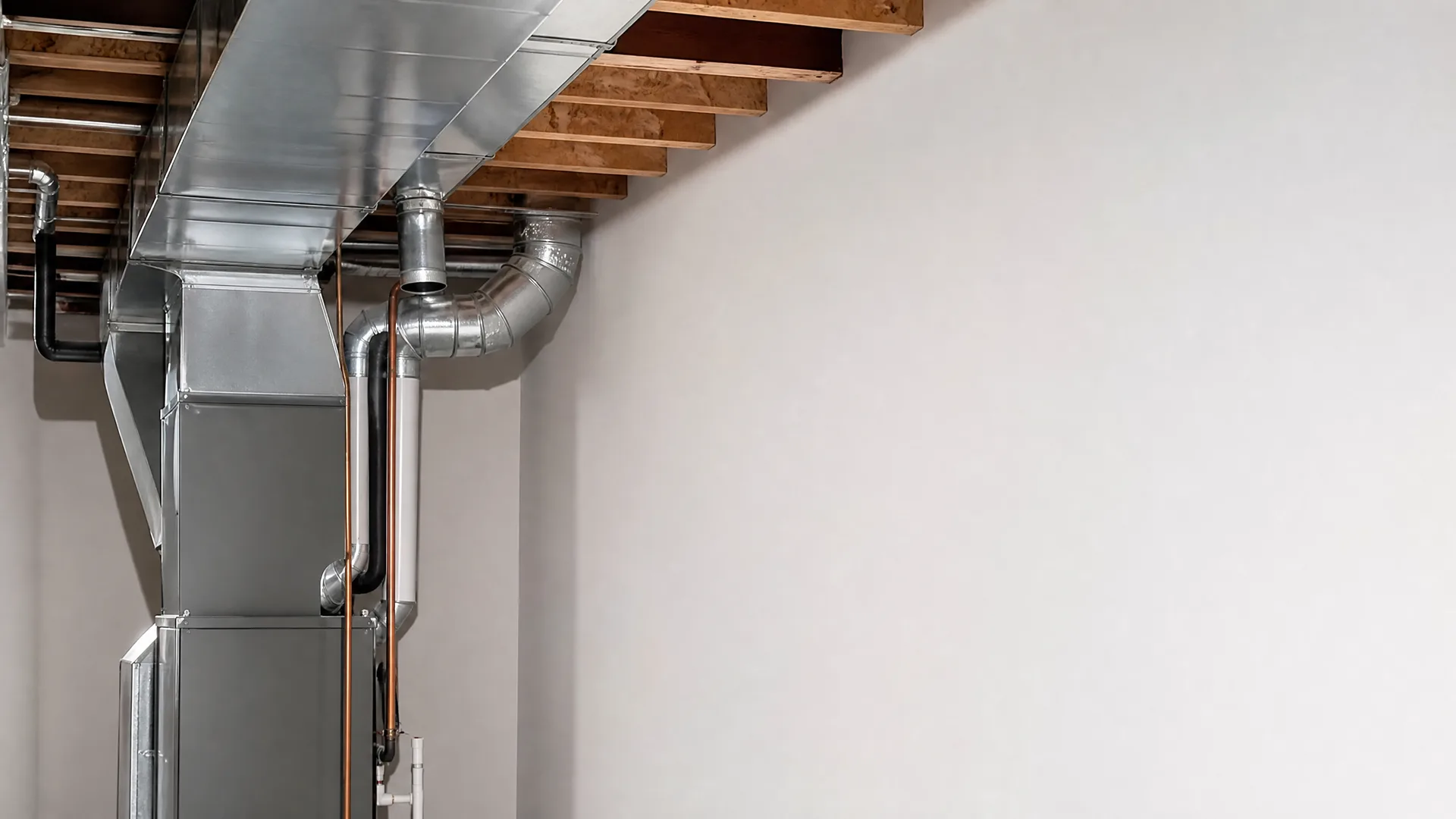
Basement interior showing a furnace with sheet-metal ductwork, a round flue pipe and copper lines running beneath exposed wooden floor joists next to a plain light-colored wall.

What's actually in your ducts

Dust builds up slow, and pet hair, and whatever gets tracked in and pulled through the return vent. Gas furnaces don't add soot to that mix the way an oil furnace would, so what collects is mostly household dust. It sits along the duct walls and doesn't move much on its own. A furnace filter catches a lot of what passes through the system, but it can't catch what was already settled in the ducts before the filter ever sees it.

Interior corner of a building with a large blank white wall beside an unfinished ceiling showing wood joists, galvanized sheet-metal ductwork, and white and copper pipes.

Where cleaning doesn't help

Cleaning the ducts doesn't fix a leaky duct run or a crushed section of flex duct, and it won't change how warm or cool a room feels if the real problem is airflow. If a room runs cold in January, that's usually a balance or a duct sizing issue, not dust inside the metal. A contractor who works on furnaces all winter can tell the difference by looking at the system, not by cleaning it.

Do Your Ducts Need Cleaning Now

Worth cleaning now

  • You can see dust coming out of the vents or settling near them faster than it used to.
  • Someone in the house has allergies or asthma that seem to flare up more at home than elsewhere.
  • You just finished a remodel or had work done that left drywall dust or debris near the ducts.
  • A contractor opens a vent and finds heavy buildup, not just a light coating.
  • You had rodents or another pest get into the ductwork at some point.
  • The system has sat unused for a long stretch, like in a vacant home, and hasn't been checked since.

Skip it for now

  • Your furnace filter gets changed on schedule and the ducts have never been opened up to check.
  • Nobody in the house has breathing trouble or new allergy symptoms tied to being indoors.
  • You don't notice dust settling any faster than normal around the house.
  • The ductwork is original to the house and has never had a leak, pest problem, or water issue.
  • A flyer or a cold call is the only reason you're considering it right now.
  • You had the ducts cleaned within the last several years and nothing has changed since then.
A basement with a gray furnace on a concrete pad connected to large sheet-metal ducts running along an exposed wood joist ceiling, with PVC pipes and plastic sheeting on the walls.

A system that's keeping up

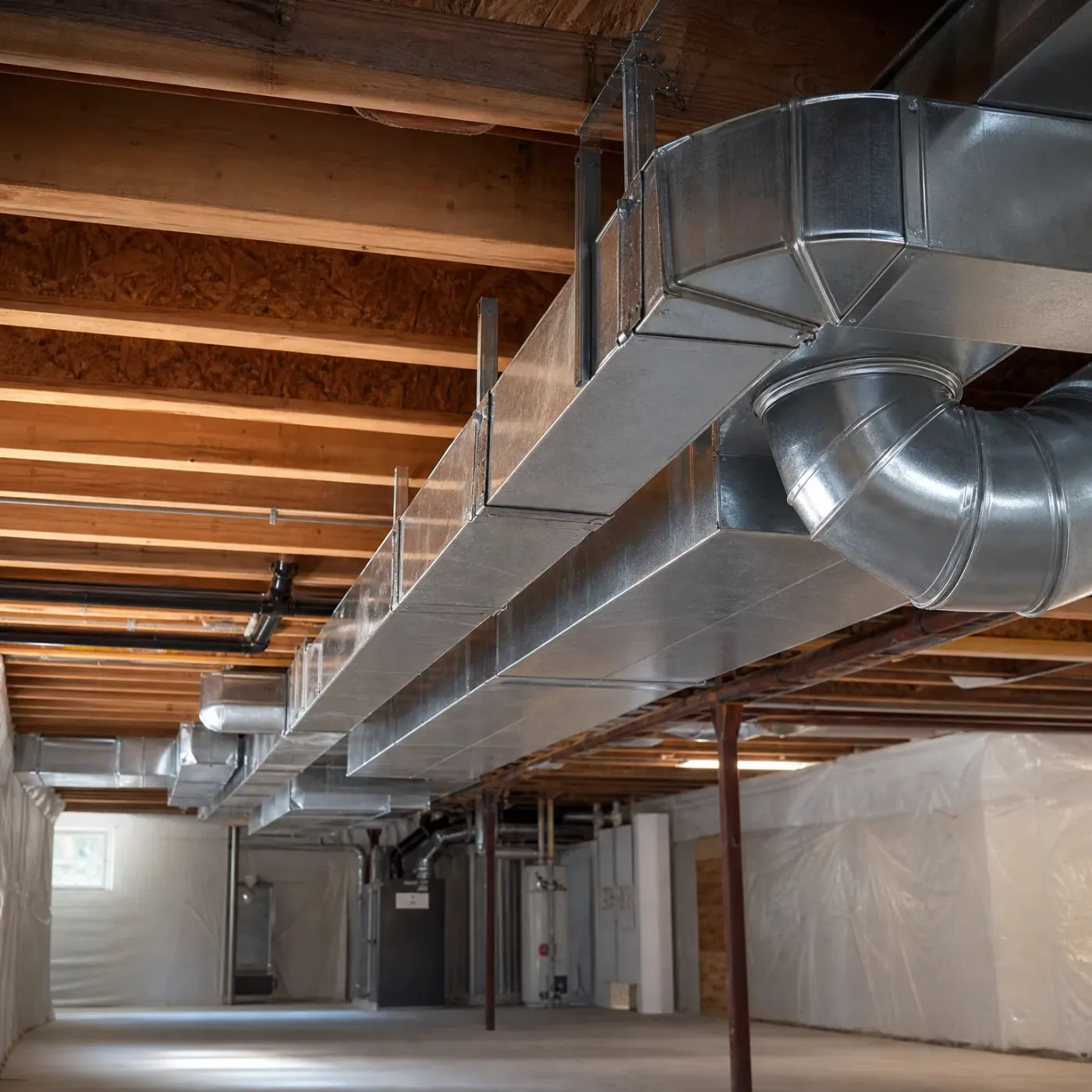
This is what a clean setup looks like: the plenum and the runs feeding off it carry air without restriction, and the furnace doesn't have to push against anything extra to get warm air through the joists and into the rooms.


Galvanized sheet metal HVAC ductwork with a vent grille running along a wooden joist ceiling above a bare concrete wall.

A system working against itself

When the runs sit heavy with buildup, the furnace behind them is working harder to move the same amount of air. Over a Sioux Falls winter that adds up, even with gas keeping the heat itself cheap.

A smiling woman with long dark hair in a gray sweater sits behind a white countertop holding a glass of red wine, with a dimly lit living room and dark kitchen island in the background.
A woman in a beige knit sweater with her hair up laughs while looking to the side, seated in a dimly lit living area with a sofa, windows and a kitchen counter behind her, a glass of red wine in the lower right foreground.
A woman in a black sweater laughs while seated at a light stone counter with a glass of red wine, in a dimly lit living and dining room with bookshelves, a table lamp and framed artwork behind her.
A smiling woman with long dark hair in a beige sweater sits at a granite counter with a glass of red wine, with a living room, fireplace and dining area behind her.
Unfinished basement with galvanized sheet-metal trunk ductwork and round branch ducts suspended beneath wood floor joists, with support posts, plastic sheeting on the walls, and a furnace and water heater along the far wall.

Describe it once

Only one pro gets your request, so you hear from one company.

Explain the job once and skip repeating it on every call.

Skip calling around

Sending the form costs nothing.

Unfinished basement with galvanized sheet-metal rectangular and round ductwork running along a wood-joist ceiling, two steel support columns, a small window, and a furnace unit against the far right wall.
Air moving through clean runs like this means your furnace fires, heats, and shuts off without fighting the ductwork to do it.
An unfinished basement with bare concrete walls and floor, showing exposed wooden floor joists, pipes, wiring, and metal HVAC ducts with a vent grille overhead.
Caked dust narrowing the joists like this is what makes a furnace run longer than it should to heat the same rooms.

A contractor doesn't just stick a vacuum in one vent and call it done. Each run gets a brush or whip worked through it to knock dust loose, then the vacuum at the furnace end has to hold enough suction to pull that dust out instead of letting it drop a few feet further down the line. That's why the other registers get sealed off one at a time, so the suction doesn't bleed off through the whole system at once. The blower wheel gets wiped down too, since dust sitting on it throws the balance off and makes the furnace work harder than it needs to. Grilles and registers come off and get washed on their own, because running a brush through the duct behind them doesn't touch the dust caked on the metal you actually look at every day. Some contractors run a camera through afterward, not because they have to, but because it's the easiest way to show you the inside of the run instead of just telling you it's clean.

How a duct cleaning actually works

  • A duct cleaning crew runs a brush or whip through each run to knock debris loose before a vacuum pulls it out through the plenum.
  • The vacuum has to hold negative pressure at the furnace end or the loosened dust just resettles a few feet down the line.
  • Every supply and return in the house gets sealed off one at a time so the suction stays strong enough to pull dust the full length of the run.
  • The furnace blower itself gets wiped down since dust on the blower wheel throws it off balance and makes it work harder.
  • A camera run through the ducts afterward is how a contractor shows you the runs came out clean instead of just telling you they did.
  • Registers and grilles come off and get washed separately, since brushing the duct behind them does nothing for the dust caked on the grille itself.
A smiling middle-aged man in a dark green sweater sits at a candlelit table with a glass of red wine and a bowl of salad in the foreground.
A woman in a cream knit sweater reclines on a beige couch with eyes closed and a slight smile, a gray hardcover book resting open on a textured blanket over her lap, with a lit table lamp and a leafy plant in the dim background.

Left alone

Dust keeps building in the runs, your furnace keeps pushing harder to move the same air, and anyone with allergies keeps noticing it most at home.

Fill out one form

Cleaned out

A local contractor who works on ductwork every winter runs the brush and vacuum through, clears the buildup, and tells you straight if anything else needs attention.

Fill out one form

Power costs 13.32 cents per kilowatt-hour statewide

At 13.32 cents per kilowatt-hour, running your furnace blower against clogged runs costs you less here than it would in most states, but it still costs you something every day that dust narrows the joists and makes the motor work to push air through them.

EIA-861 2025 statewide residential average

You get someone out to look at it, and the runs turn out mostly clear. A thin coat of dust, nothing blocking airflow, and you've paid for a service you didn't need.

Or the brush comes back caked and the vacuum's pulling out years of buildup, and your furnace stops working as hard the same week. Either way you know now instead of guessing.

Basement ceiling with galvanized sheet metal rectangular ducts and round pipes running between wooden joists above a bare concrete wall and floor.
Before you get your ductwork cleaning
Unfinished basement with bare concrete walls and floor, showing exposed wood floor joists overhead with sheet-metal rectangular ductwork, insulated flexible ducts, and pipes.
After you get your ductwork cleaning
  1. A technician seals each supply and return vent but one.

  2. A negative air machine connects to the one open vent.

  3. The vacuum pulls the whole duct system down to negative pressure.

  4. A brush or whip runs through each run, knocking debris loose.

So the answer is the same one you started with: it depends on what's actually in your ducts, and the only way to know is to look. If you're seeing dust at the vents, or someone's allergies act up more at home than anywhere else, it's worth having someone run a brush through the runs and see what comes out. If none of that's true for you, it probably isn't. Either way, the person who comes out to check is someone who works on ductwork all winter, in houses heated the same way yours is, and knows what a clogged run looks like versus a clean one. You're not getting a handful of companies calling you back at once trying to win the job. It's one local contractor, looking at your system, telling you straight whether the brush and vacuum are going to make a difference here or not.

Dim interior with a dark gray wall, exposed wood joist ceiling, sheet-metal ductwork, conduit, pipes and a sprinkler head.

One form, no calling around

Your duct cleaning request goes to one local pro.

Duct and vent cleaningDucts or ventsSouth Dakota
Step 1 of 2

What ZIP code is the job in?