Is duct cleaning worth it in Harrisburg, SD

Send the form and the duct cleaning stops sitting on your list.

Send my request

Is duct cleaning worth it in Harrisburg, SD?

You've seen the trucks around town offering duct cleaning and you're wondering if it actually does anything, or if it's just another service to upsell you on. You keep your furnace filter changed and don't have an obvious problem, but you're the type who'd rather check on a small thing now than let it turn into a bigger one. You want to know if this is worth paying for or worth skipping.

It's worth it if you have a specific reason, not just as routine upkeep

Duct cleaning helps when there's a reason behind it: new construction dust still settling after a build, a renovation that left debris in the lines, rodents or insects that got into the ductwork, or visible mold around a vent. Lincoln County winters mean your furnace runs hard for months, pulling air through those ducts the whole time, so whatever is sitting in them gets circulated into the house. If you've got allergies that flare indoors, or dust that settles again within days of cleaning, that's a sign worth checking into. Without one of those reasons, cleaning ducts on a schedule just because time has passed doesn't do much. The ducts carry air. The filter is what cleans it, and a clean filter changed on schedule does more for your air than a duct cleaning with no cause behind it.

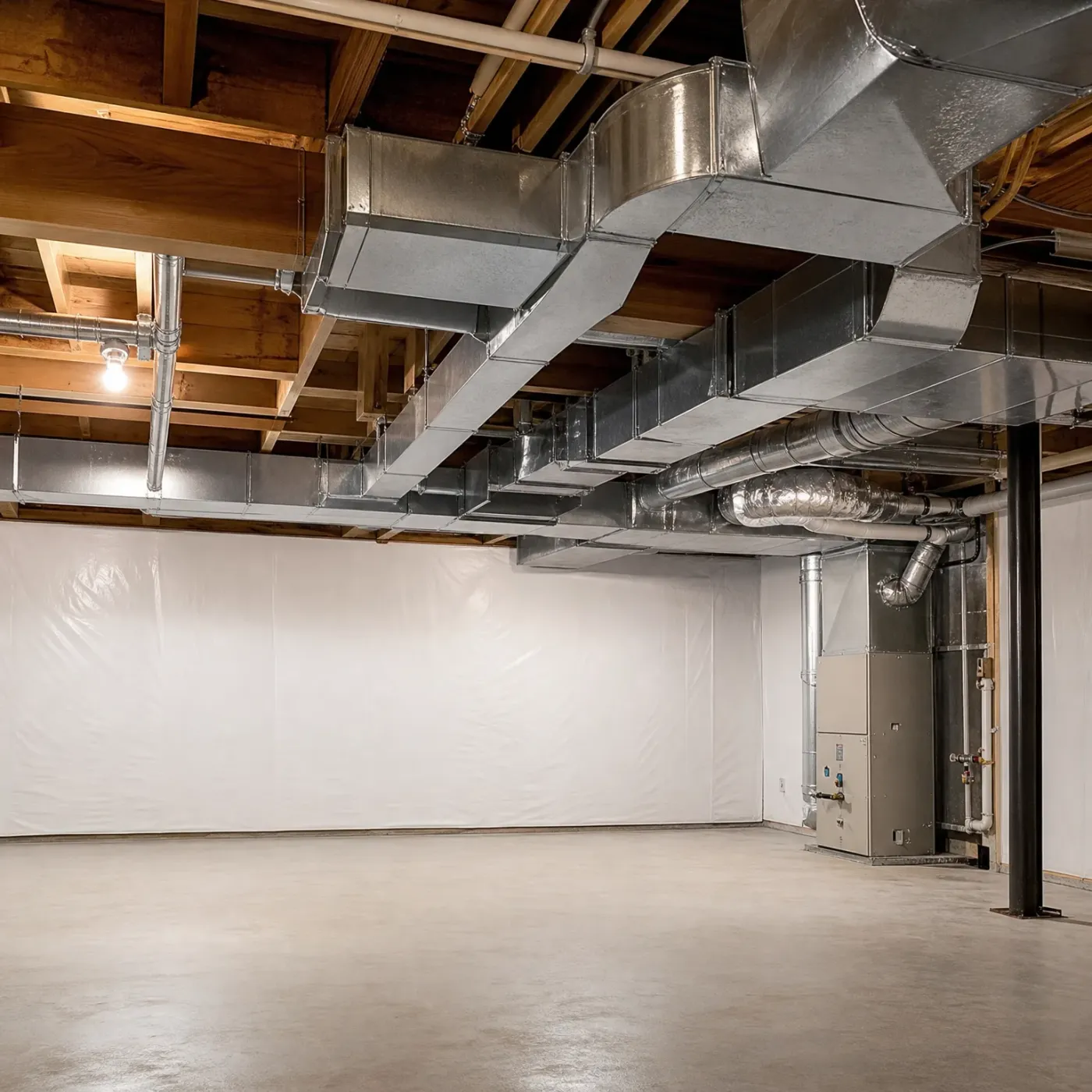
Unfinished basement with exposed wood joists, sheet metal and insulated flexible ductwork, white pipes, a steel support post, plastic-covered walls, and a bare concrete floor.

Ducts doing their job

This is what a clean system looks like from below: metal trunk lines and flex runs carrying air to every room without much else going on. No dust ringing the seams, no buildup dragging on the blower. Air moves through and that's the whole story.

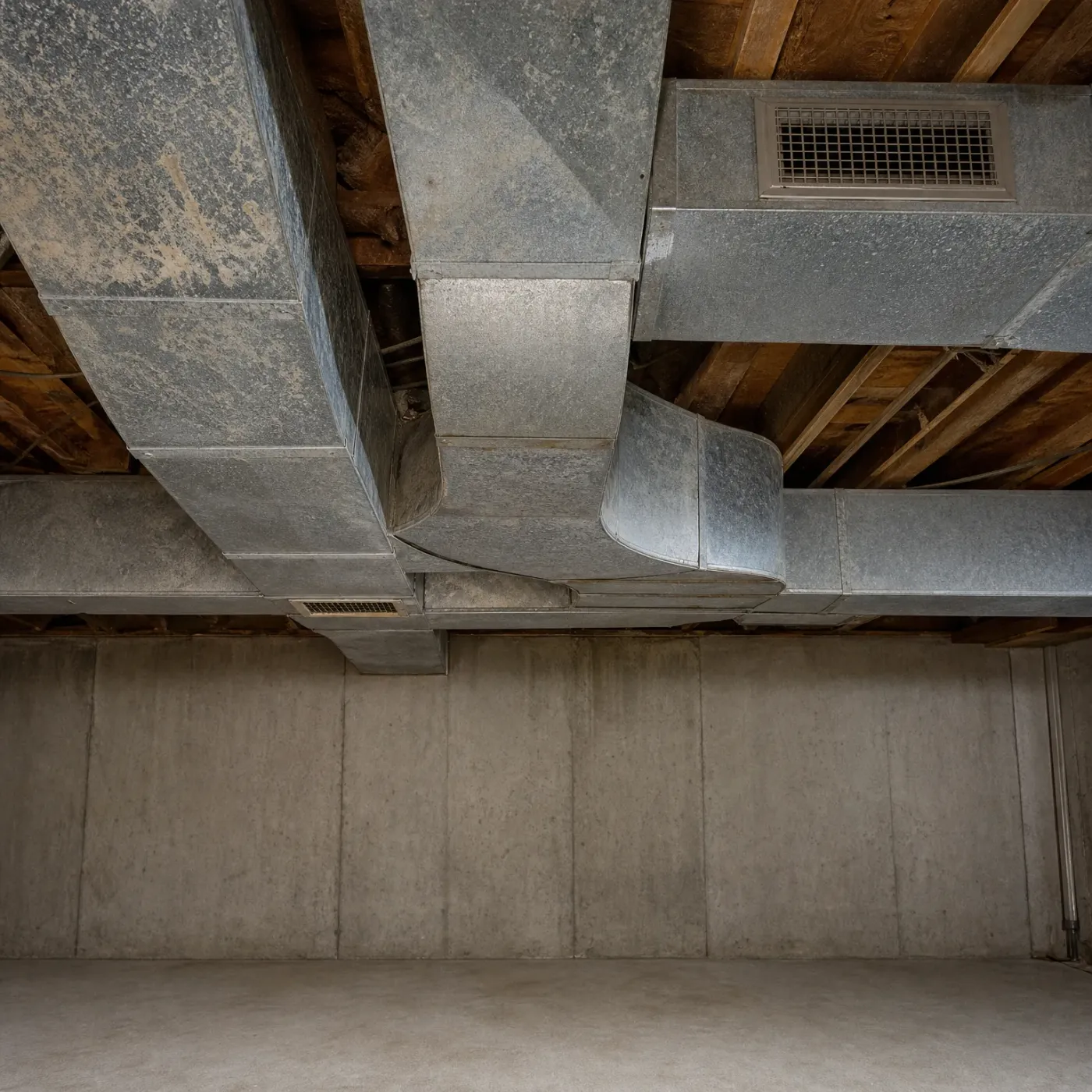
Galvanized sheet-metal ductwork and round pipes run beneath wooden floor joists in a basement with concrete walls and floor.

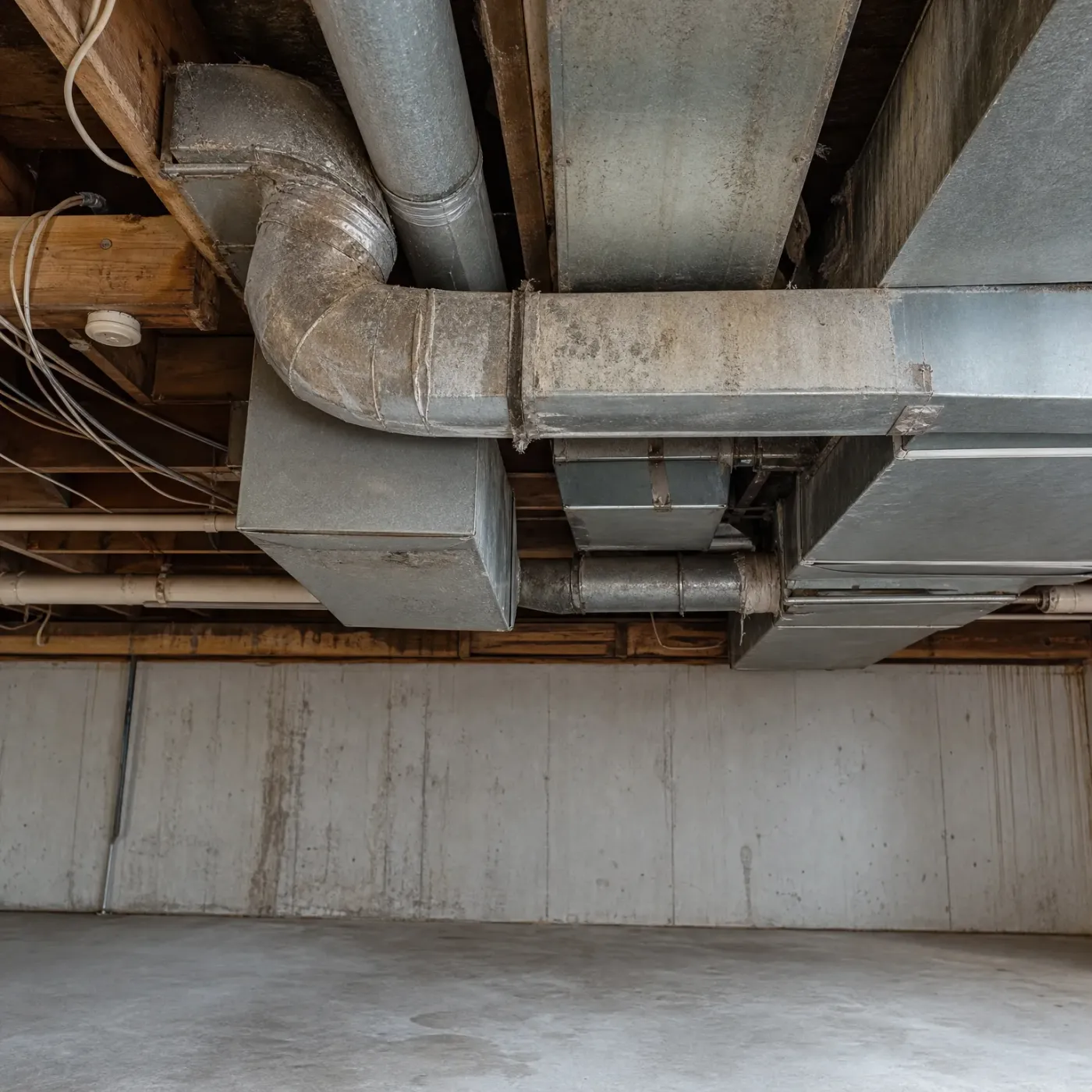
Ducts carrying more than air

Look closer at the trunk line and the elbow joints here and you'll often find dust built up along the seams, sometimes enough to shed into the air every time the furnace kicks on. It doesn't mean the ductwork is failing, but it's not moving clean air either.

So does your duct system actually need cleaning?

  • Half the homes here were built by 2005

    Half the homes in Lincoln County went up by 2005 or earlier, so plenty of duct systems here have had years to collect dust nobody's looked at.

  • Heat runs October through May

    Your furnace runs eight months a year here, October through May, which means the blower is pushing air through those ducts almost constantly.

  • Cooling runs June through August

    Three months of summer cooling add to that, so between the two, air is moving through your ducts most of the year.

ACS 2020-2024 · NOAA nClimDiv 1991-2020

A man in a gray knit sweater stands smiling and looking off to the side beside a white marble kitchen island, with a dining table, pendant light, and open shelving in the background.
A smiling man with short dark hair and stubble in a gray sweater sits at a stone-topped counter with a white ceramic mug, in a room with a framed picture, a plant, and shelves holding bowls.
A smiling man in a dark navy sweater sits at a wooden kitchen counter with a light ceramic mug, with white tile backsplash, open shelving and a window with potted plants behind him.
A smiling man with dark hair and a beard, wearing a dark green knit sweater, stands at a kitchen counter with a ceramic mug, with an open living room, sofa, armchair and large windows behind him.

Why does your house feel dustier than it used to?

You dust the shelves and by the weekend there's a film again. A register blows a puff of gray when the furnace kicks on. Maybe someone in the house has started sneezing more indoors than out, or you've noticed a flat, stale smell when the heat first comes on in October. These are the signs duct buildup usually shows. Left alone, it doesn't stay the same. More dust moving through means the furnace works harder to push air where it needs to go, and anyone in the house with allergies or asthma is breathing what's sitting in those ducts all winter long.

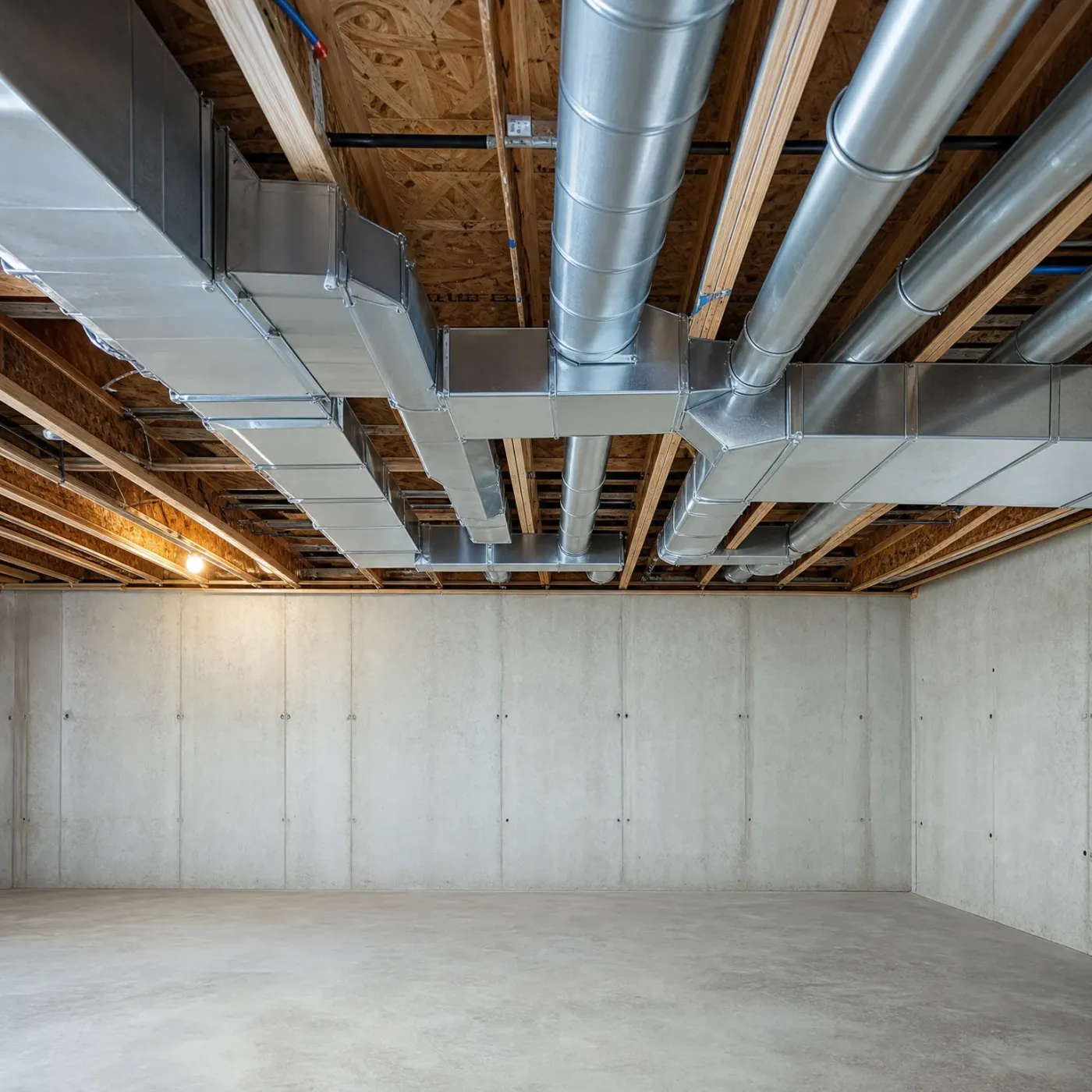
Empty concrete-walled basement room with bare floor and an exposed wood-joist ceiling carrying galvanized rectangular and round sheet-metal ducts, black pipes, and wiring.

Clean and clear

This is galvanized metal doing what it was built for, carrying air without anything riding along with it. The seams are still bright. A system kept this way doesn't choke the blower or give the furnace extra work it doesn't need to do.

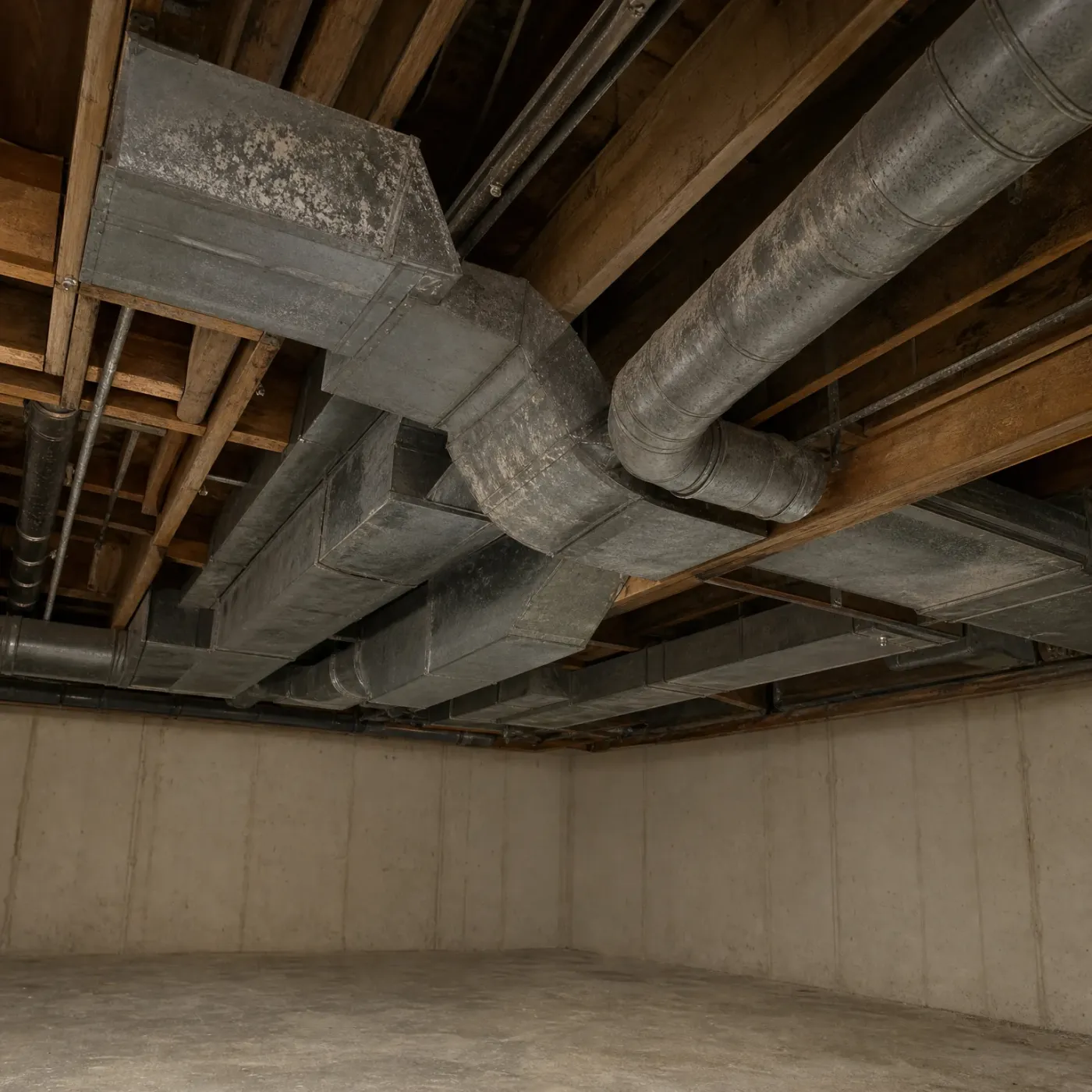
Empty concrete-walled basement room with exposed wooden joists and galvanized rectangular and round ductwork plus pipes running across the ceiling.

Years of buildup

This is the same kind of ductwork after years nobody looked at it. The metal has dulled and the surfaces show buildup clinging to every seam and joist. Air still gets through, but it's working past a coating of dust that wasn't there when the system went in.

Clean the Ducts or Leave Them Be

Clean the ducts

  • A contractor pulls out the dust that's been sitting in the trunk lines for years, the kind your filter never touches because it's already settled past the furnace.
  • If someone in the house has started sneezing more indoors than out, clearing that buildup is one of the few things that might actually change it.
  • It gets rid of the gray puff a register throws when the furnace first kicks on, since that's dust riding the airflow out of the duct itself.
  • A blower pushing air through a clear system doesn't work as hard, which matters over eight months of heating a year.
  • It settles the question instead of you guessing every time you dust the shelves and find a film there again by the weekend.

Leave it alone

  • If you change your filter on schedule and nobody's symptoms have changed, there may be nothing in the ducts worth paying to remove.
  • Dust sitting in a duct isn't moving air through your living room the way a dirty filter or a failing blower does.
  • A system that's only a few years old, or one you've never seen buildup in, is a harder case to justify cleaning.
  • Skipping it means living with the same light dust you've already got, not a system getting worse on its own.
  • You can wait and watch for the signs instead of acting on a truck driving through the neighborhood offering the service.
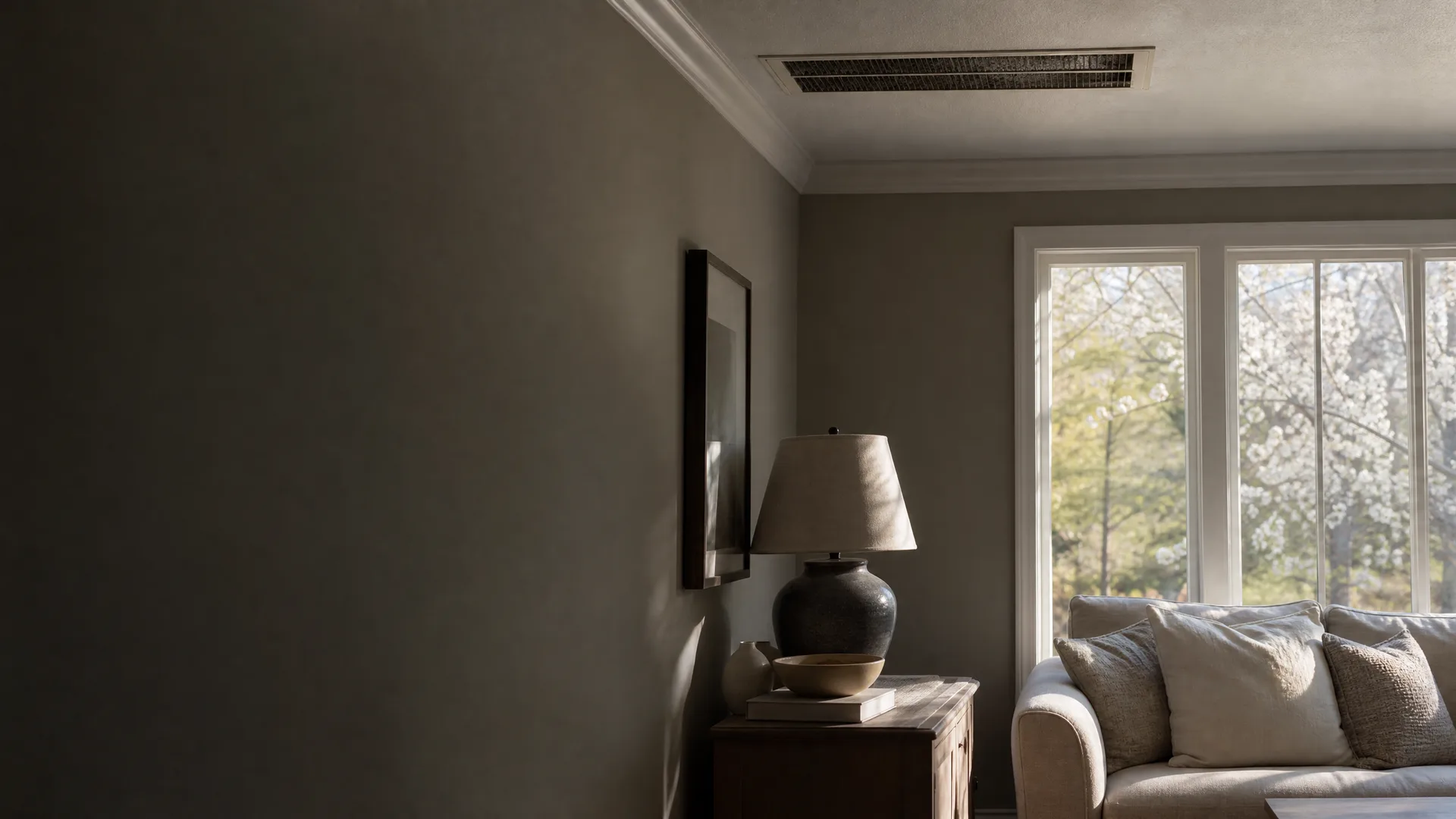
A dimly lit living room corner with a gray wall, framed picture, a table lamp on a wooden side table, a beige sofa with pillows, a ceiling vent, and windows showing flowering trees outside.

The furnace kicks on for the first time since March, that quick click before the air starts moving. Sun's coming in low through the window, the kind of light that shows everything. Up on the ceiling, the vent grille has a gray ring around it, thicker than you remembered, and when the air pushes through, a little of it lifts and settles on the side table below. You run a finger across the table and it comes back dusty again, same as it did this morning. The dog lifts her head at the sound of the blower, then puts it back down. Outside, Lincoln County is still cool enough for a jacket, but inside, it already feels like the furnace is stirring up more than it's sending out.
It's off your list after this

The pro who gets in touch is licensed in South Dakota and works in Lincoln County.

No charge to send it. You decide if you hire them.

How a duct cleaning actually works

  • A duct cleaning crew uses a vacuum collection unit sealed to the trunk line, so nothing gets pushed out through your registers into the room.
  • Each supply and return run gets agitated with a brush or air whip before it's pulled toward the vacuum, loosening what's stuck to the metal.
  • The furnace blower itself usually gets wiped down, since dust settles on the wheel and blades right where the air gets pushed out.
  • Return runs typically carry more buildup than supply runs, since that's the side pulling household air back through before it hits the filter.
  • A contractor checks the plenum and the coil area while the system is open, since that's where buildup tends to restrict airflow the most.
  • The whole job gets done room by room, sealing one register at a time so suction stays strong enough to actually pull debris instead of just stirring it.

A contractor doesn't just run a hose into a register and call it done. The whole system gets hooked up to a vacuum collection unit first, sealed tight against the trunk line so the suction has somewhere to pull debris to instead of blowing it back into the room. From there it's run by run. Each supply and return gets agitated, usually with a brush or a whip that blasts compressed air along the metal, knocking loose what's been sitting stuck to the sides for years. That loosened dust gets pulled toward the vacuum before it has a chance to settle again. Return runs usually get more attention than supply runs, since they're the ones pulling air out of the house before it ever reaches the filter, which means they catch more of what's floating around indoors. While the system is open, a contractor also looks at the plenum and the coil area, since that's where airflow tends to choke down first if there's real buildup. The blower wheel and blades get wiped down too, since dust collects right there where the furnace pushes air out into the ducts. Work moves register by register, sealing off one at a time, because suction only works if it's concentrated. Open everything at once and you're just stirring dust around instead of collecting it.

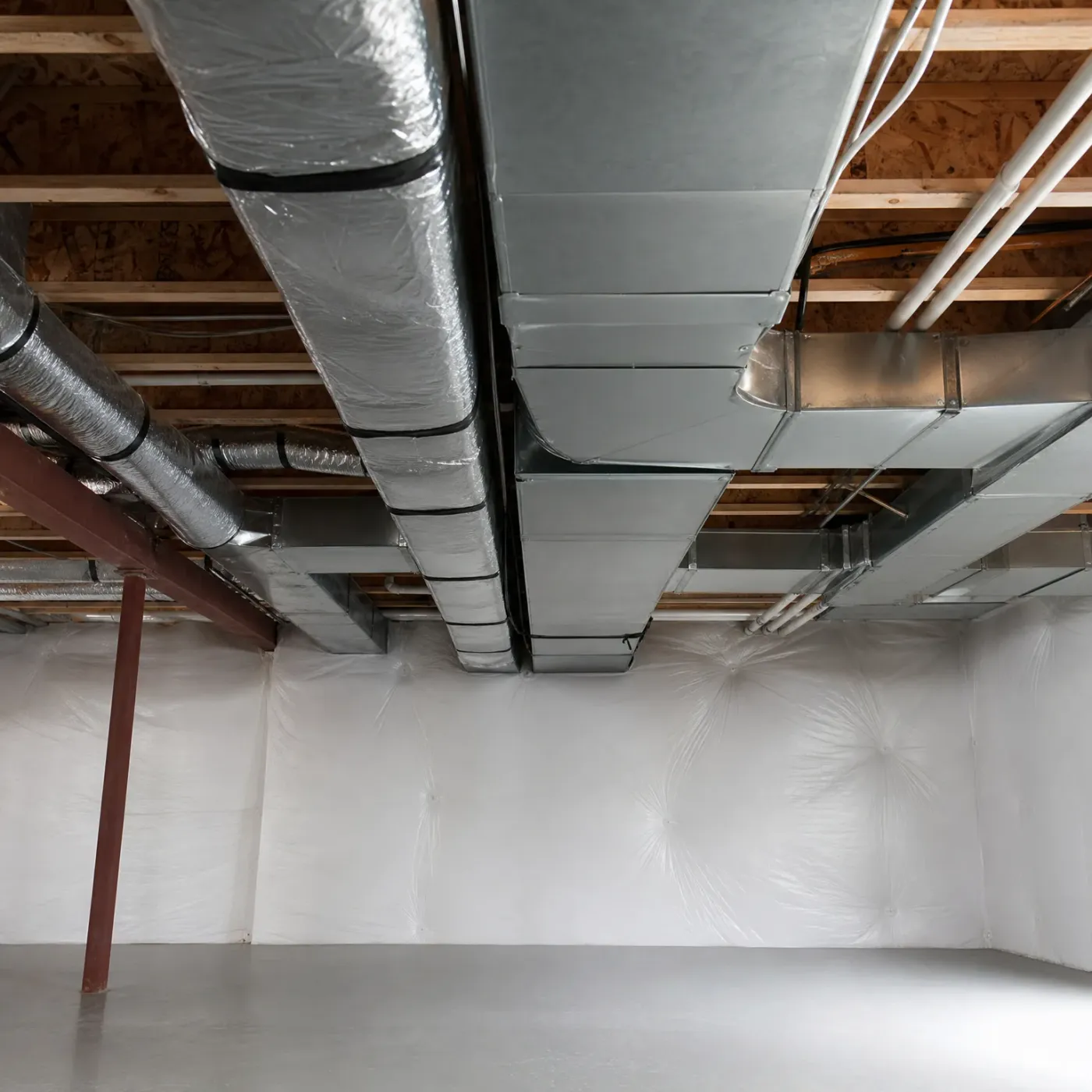
Empty basement with bare concrete floor, white plastic sheeting over one wall, exposed wood joists, galvanized sheet-metal ductwork and pipes overhead, and a furnace unit with a steel support column at right.
Metal runs clean and unbroken, each joint still tight after years of carrying air through the basement.
Galvanized sheet metal HVAC ducts with vent grilles run along a wooden floor joist ceiling above bare concrete walls and floor in an unfinished basement.
Dust has settled thick along every seam here, the kind of buildup your filter never had a chance to catch.
  1. A contractor seals a vacuum collection unit to your main trunk line

  2. A brush or air whip agitates dust loose inside each duct run

  3. Loosened dust and debris pull back into the sealed vacuum unit

  4. Supply and return registers get wiped down and reattached last

A bearded man in a dark blue T-shirt sits on a gray couch, smiling and looking down to his left, with a bookshelf and a bright window behind him.
A bearded man in a plaid flannel shirt stands indoors beside a wood-framed, frost-covered window, looking outside, with a steaming brown mug on the sill and a wooden cabinet behind him.

Power here costs 13.03 cents per kilowatt-hour

At 13.03 cents per kilowatt-hour, your blower motor is cheap to run compared to a lot of the country. But a motor working against dust-choked trunk lines still pulls more than it should, month after month, just to push the same air through a dirtier system.

EIA-861 2025

So is it worth it? If your ducts have years of dust sitting in them, or someone in the house is sneezing more indoors than out, cleaning them does real work: it gets the system back to moving air without dragging dust through your rooms. If nothing above sounds like your house, there's no reason to pay for it right now. Either way, the furnace behind that question is still the one that has to run eight months straight through a Lincoln County winter, and it's worth having someone look who works on these systems all season and knows which trunk lines in older Harrisburg homes tend to collect the worst of it. One contractor gets matched to your request, licensed and local, so you're talking to someone who can actually tell you what's in your ducts instead of fielding calls from a handful of companies guessing over the phone.

A dark-clad house with large windows beside a gravel driveway lined with in-ground path lights, ornamental grasses and hydrangeas, with distant hills and an orange sunset sky.

Ductwork Cleaning

Stop chasing a duct system pro

Duct and vent cleaningDucts or ventsLincoln County, SD
Step 1 of 2

What ZIP code is the job in?

  • A gray upholstered sofa arm with a cream knit fringed throw sits beside a wooden side table holding a stack of books, a shallow wooden bowl, and a ceramic vase of leafy branches, on a wood floor near a window.
    • Get matched with a Lincoln County pro who cleans ducts.
    • Get matched with a pro who works on ducts in Lincoln County.
  • A living room corner with a cream upholstered sofa and cushion beside a wooden side table holding a ceramic vase of olive branches and a small dark bowl, with a framed landscape painting on the gray wall and a linen curtain at the window.
    • One request and the search for a pro is handled.
    • Send it once and finding someone is no longer on you.
  • A wood-framed armchair with a beige cushion and knitted throw sits beside a round wooden side table holding a ceramic mug, with a potted green plant near a window in the corner and a framed picture on the wall.
    • Skip searching for someone who cleans ducts in Lincoln County.
    • One form replaces the calls you'd make to find a duct system pro.
  • Interior corner with beadboard wainscoting, a gray cabinet with wood countertop holding a vase of greenery below a window, and a potted leafy plant in a woven basket on a wood floor with a fringed jute rug.
    • Your duct cleaning request goes to one local pro.
    • Your request goes to one pro, not a list of companies.