








Why your house is so dusty in Sioux Falls, SD

Get matched with a pro who works on ducts in Minnehaha County.

Get a local pro

Why is my house so dusty in Sioux Falls?

You keep wiping down the same shelf, and a day later there's a film on it again. The furniture, the TV screen, the floor near the vents, all of it collects dust faster than seems normal. You're starting to wonder if it's the house, the furnace, or just something about living here.

Your ductwork is recirculating dust instead of filtering it out

Dust builds up because the air moving through your ducts keeps picking up the same particles and dropping them on every surface it passes. A furnace that runs hard through a Sioux Falls winter pushes a lot of air through those ducts, over and over, all season. Any dust already sitting in the ductwork, or any that's gotten past a loose seam or a filter that isn't sealing right, rides along with that air into every room. It settles, you clean it, and the system stirs it up again the next time it runs. With gas furnaces working long hours from November through March here, that cycle has more chances to repeat than it would somewhere with a shorter heating season.

  1. Dry winter air lets dust float instead of settling down.

  2. The furnace pulls that dusty air through the return duct.

  3. A dirty filter lets fine dust pass straight through it.

  4. Dust collects inside the ducts and coats the squirrel cage blower.

What makes a Minnehaha County house dust up so fast?

  • Half the homes here were built by 1987

    Half the homes here were built in 1987 or earlier, and older ductwork tends to have more gaps where it pulls in attic or crawlspace dust.

  • Heat runs September through May

    Heat runs September through May here, nine months of dry furnace air moving through the same ducts and pushing dust out every vent.

  • Cooling runs June through August

    Cooling only runs June through August, so for most of the year it's the furnace, not the AC, doing the work of circulating dust through your house.

ACS 2020-2024 · NOAA nClimDiv 1991-2020

An older man with gray hair and a beard, wearing a dark coat dusted with snow, stands in a home entryway with a lit lamp, a staircase railing, and a living room with large windows behind him.
An older man with gray hair and a beard, wearing a dark snow-dusted coat and plaid scarf, stands smiling in a warmly lit hallway with a lamp, side table and glass-paned doors behind him.
An older man with gray hair and a beard, wearing a dark snow-dusted jacket and scarf, stands smiling in a dimly lit entry hall with a lamp, wooden front door and staircase behind him.
An older man with gray hair and a beard stands in a dimly lit entryway wearing a dark hooded coat dusted with snow, with a lit table lamp, framed picture, and front door with glass panels behind him.

Is your house dustier than it should be?

You dust the TV stand and the ceiling fan blades, and within a week they're gray again. There's a thin coat on the windowsills, on top of the fridge, along the baseboards. You might notice a musty, dry smell when the furnace kicks on, or sneezing that eases up once you leave the house. Look at the vent covers themselves. If they're dark around the edges, that's dust being pulled through and pushed back out with every cycle. Left alone, that buildup makes the furnace work harder to push air through, and it gives anyone in the house with allergies or asthma more to react to all winter.

A woman wrapped in a thick textured blanket sits on a sofa with an open book on her lap, beside a lit lamp and bookshelf, with a frost-patterned window behind her.
A smiling older woman with gray hair in a loose bun wearing a ribbed beige sweater stands in a dimly lit kitchen beside a window showing darkness outside, with a loaf of crusty bread on a wooden board in the foreground.

Power here costs 13.16 cents per kilowatt-hour

At 13.16 cents a kilowatt-hour, running the blower longer than it needs to doesn't cost much here. That matters because a clogged duct system makes the furnace work harder and move less air, so cleaning it out restores airflow without adding much to the power bill.

EIA-861 2025

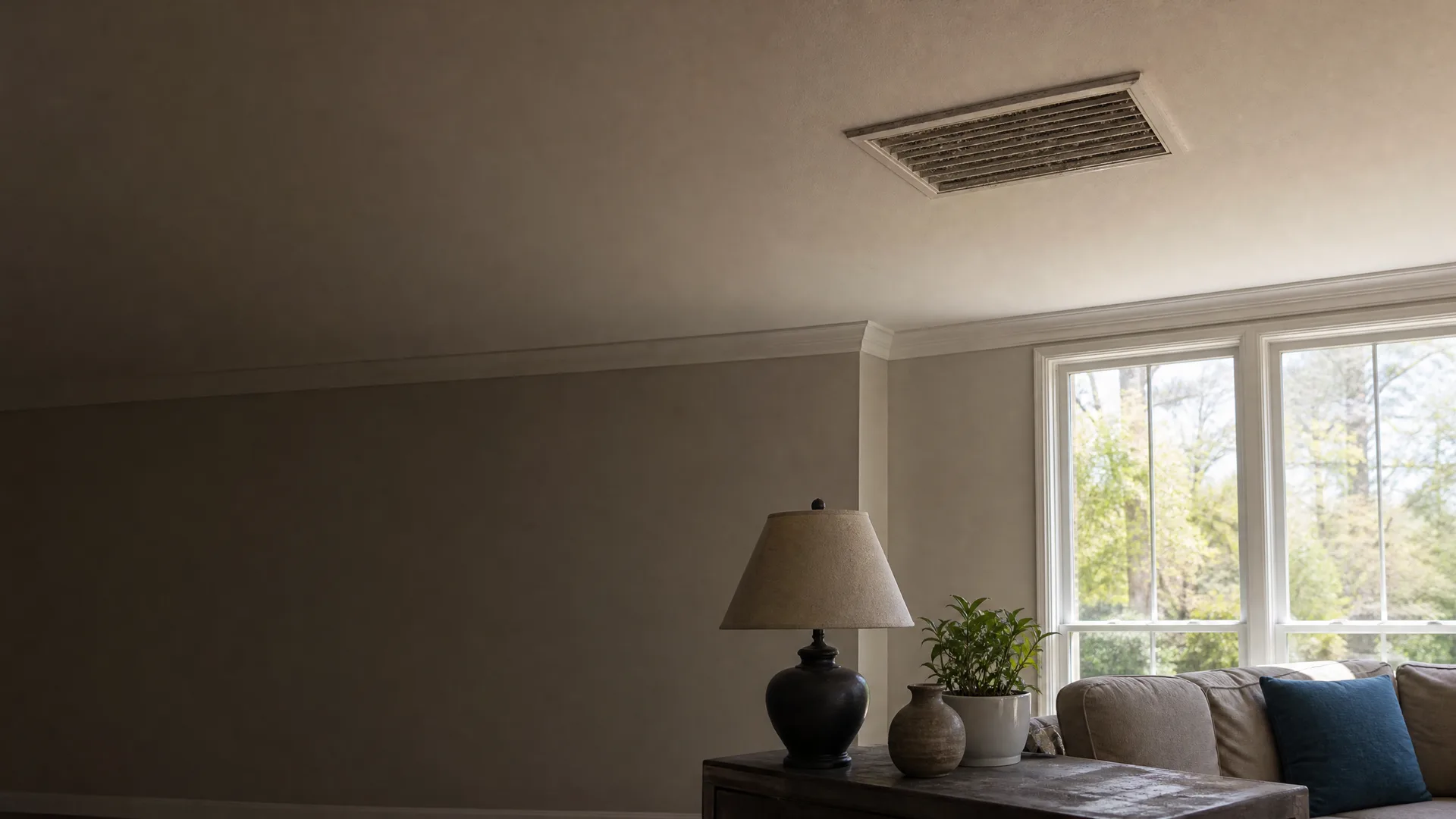
A ceiling air vent in a living room with beige walls, a table lamp and potted plant on a wooden console, a sofa with a blue cushion, and a window showing green trees outside.

Late April, early afternoon, sun coming in low across the living room. You're on the couch and you look up at the ceiling vent, the one above the TV, and the grille has gone gray around the slats. A thin haze sits on the TV screen itself, and on the side table under it there's enough dust that you could write in it. The furnace hasn't run in days, maybe a week, but the vent still looks like it's breathing dust onto everything below. You run a finger along the table edge and it comes back dark. You've wiped that same spot three times this month.

A duct system pro near you

After this form, you can stop searching for a duct system pro.

There's no charge for the request.

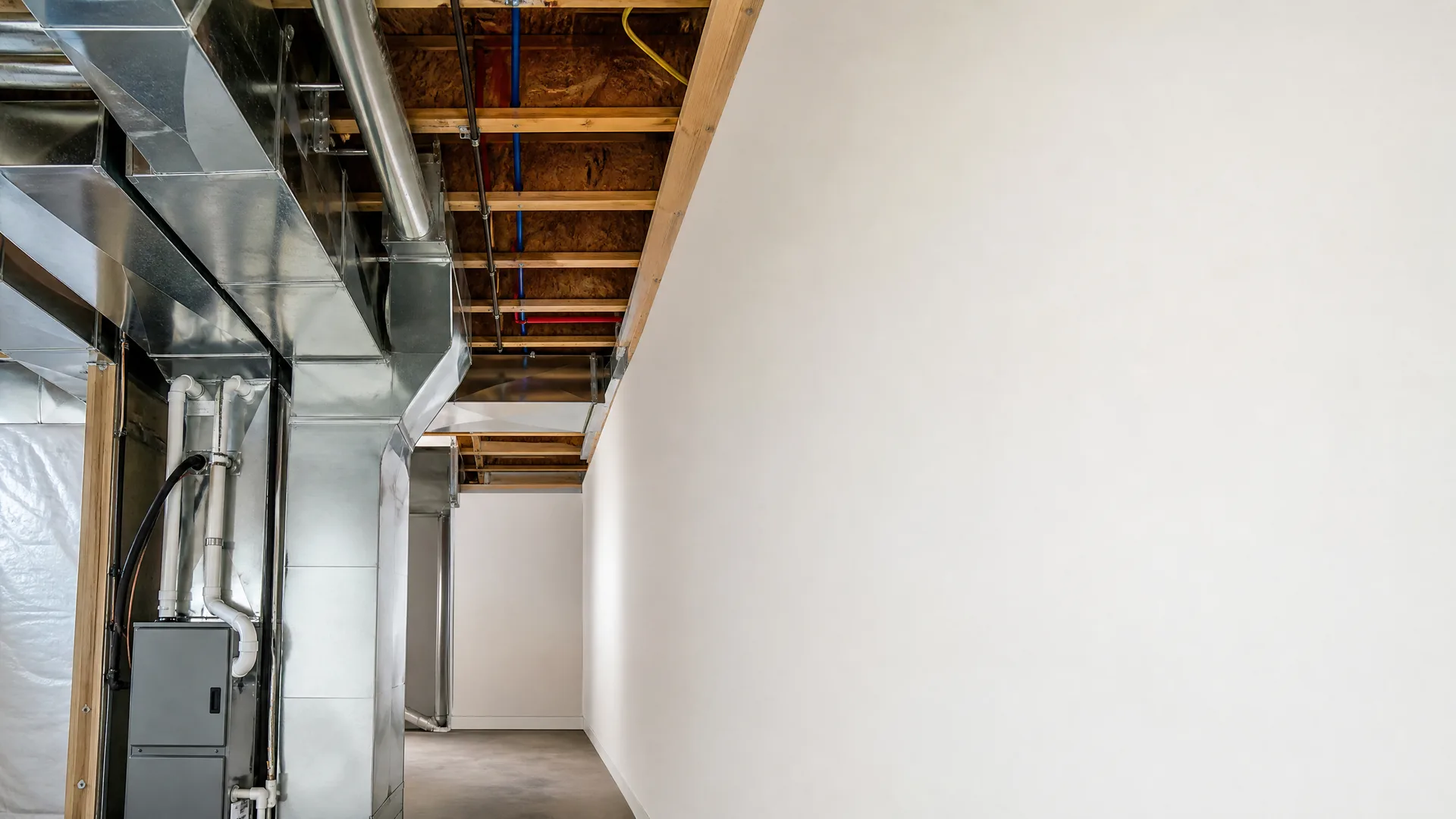
Unfinished basement corridor with exposed wood floor joists, pipes and wiring overhead, sheet-metal HVAC ductwork and an electrical panel along the left wall, and a blank white wall on the right.

Leave the ducts alone

The dust keeps coming back, the filter clogs faster than it should, and the vents stay gray no matter how often you wipe them. The furnace keeps pulling the same dusty air through the same dirty ducts, nine months a year. Nothing inside the system changes, so nothing about the dust changes either. You end up cleaning shelves and screens every few days instead of once a week, and the house never quite gets ahead of it.

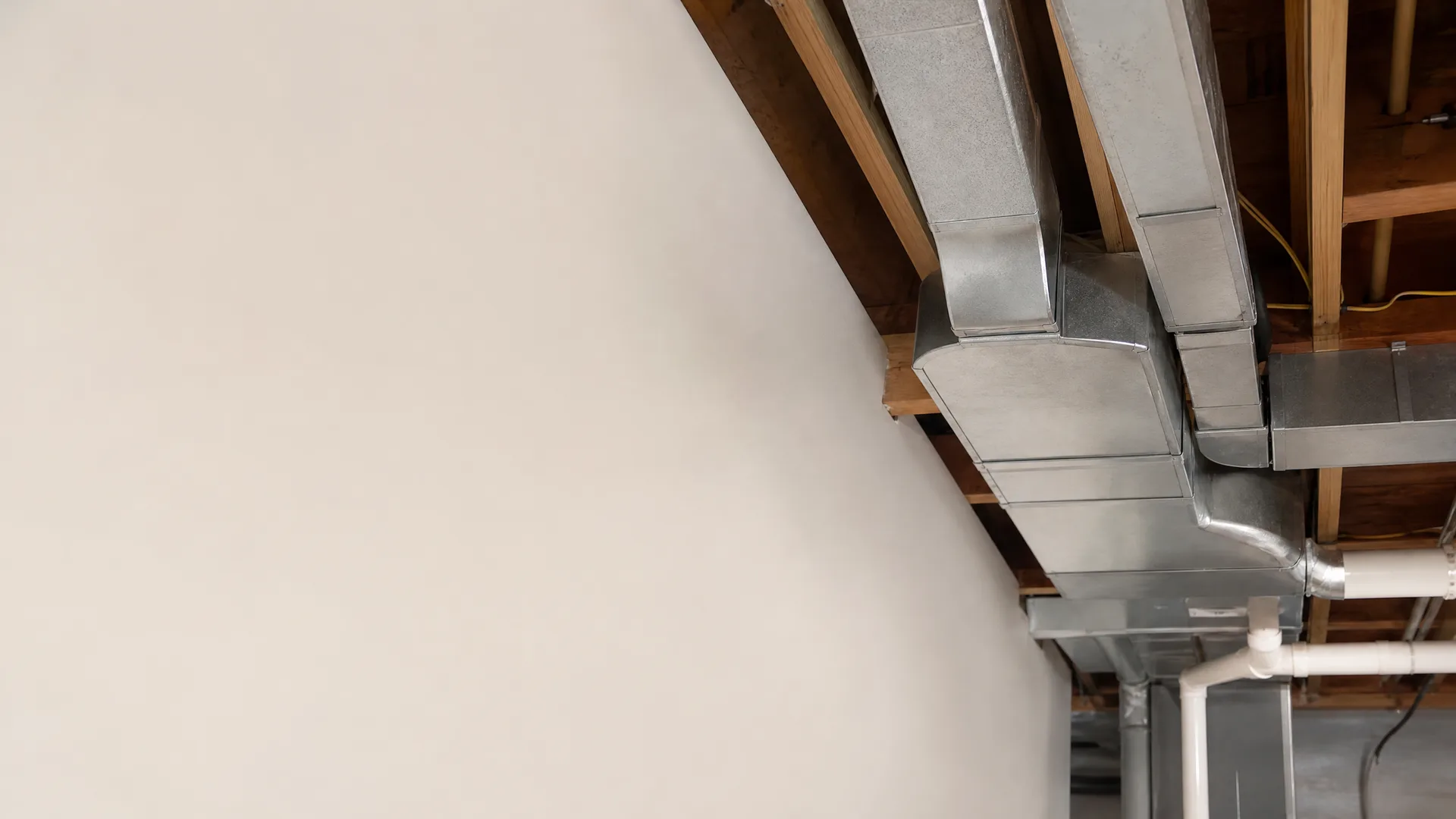
Interior basement ceiling with exposed wooden joists, sheet-metal HVAC ducts, and white PVC pipes beside a plain off-white wall.

Have the ducts cleaned

A contractor clears the dust sitting inside the ductwork and on the blower wheel, so the air moving through the house carries less of it. The furnace draws air more easily, and what comes out the vents is cleaner than what's been circulating all winter. You still dust the shelves and wipe the screens, but the gray film stops building back so fast, and the vents themselves stay cleaner between visits.

Clean the ducts, or keep dusting

Duct cleaning

  • A contractor runs a brush or air whip through the trunk line and branches to knock loose dust off the sheet metal walls.
  • The squirrel cage blower gets wiped or brushed clean, so it moves the full volume of air it was built to move.
  • Once the ducts are clear, a new filter actually catches dust instead of fighting dust that's already past it.
  • You still get nine months of dry furnace air pulling dust through the house, but the ducts aren't adding to the pile.
  • The gray ring around the vent covers usually doesn't come back as fast once the source inside the ductwork is gone.
  • This doesn't touch gaps or leaks in the duct run itself, only what's built up on the inside.

Keep wiping and waiting

  • The dust that settles on the shelf today came through the same dirty ducts, so it's back within a day or two.
  • A clogged duct system makes the furnace push harder to move the same amount of air through the house.
  • The filter keeps catching some of it, but once it's coated it stops catching much and lets dust pass straight through.
  • Nothing inside the ducts changes, so the gray film on the vent grilles keeps building month after month.
  • At 13.16 cents a kilowatt-hour the extra runtime from a strained furnace isn't a big cost, but the dust problem itself doesn't go away.
  • You're still dusting the same shelf next week, and the week after that, with no change in how much comes back.
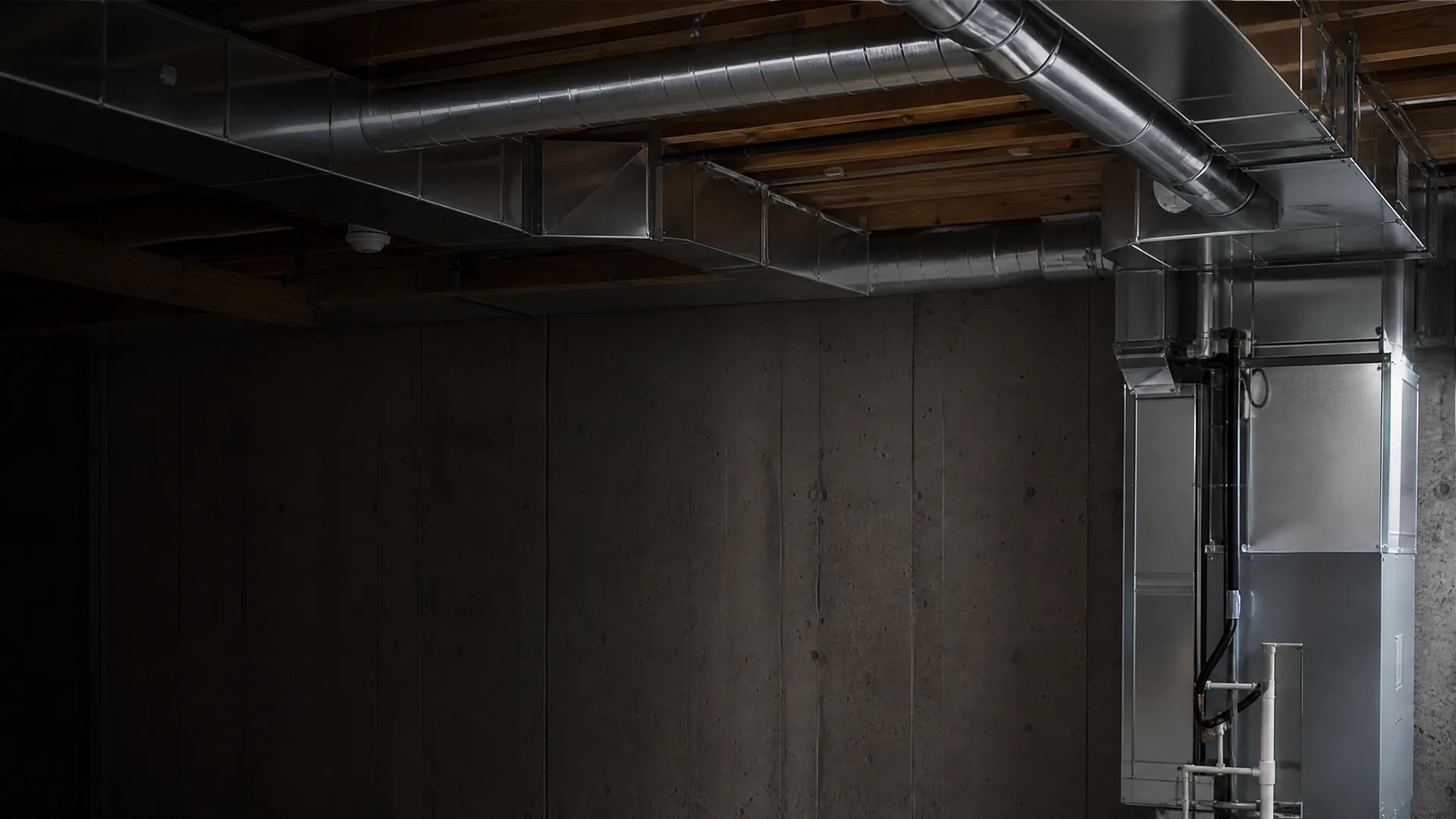
Unfinished basement with bare concrete walls and floor, showing exposed wood floor joists overhead with sheet-metal rectangular ductwork, insulated flexible ducts, and pipes.

Ducts moving full air

This is what a trunk line looks like clear. The sheet metal is clean, the flex runs are open, and air moves through at full volume. A furnace tied into ductwork like this pulls air through once and sends it back out, instead of recirculating the same dust nine months straight.

Basement ceiling with galvanized sheet metal rectangular ducts and round pipes running between wooden joists above a bare concrete wall and floor.

Ducts coated in dust

This is the same kind of system after dust has built up along the trunk and branch lines. The coating narrows the path air can take, so the blower works harder to move less of it. That dust rides every cycle back into the house, onto the shelf you just wiped.

Dry winter air, nine months of furnace runtime, and ductwork that may have been collecting dust since before 1987. Add those up and a house that dusts fast isn't a mystery, it's just how the system has been running. None of it gets fixed by wiping the shelf again. The dust stops piling up once the ducts get cleaned out and the blower can move the air it was built to move. From there, finding a contractor to do that work isn't something you have to sort out on your own. Send the request and the matching happens behind the scenes, and a contractor who works on duct systems in Minnehaha County reaches out to you. You don't have to track down who's reliable or who answers the phone. That part is off your plate the moment the form goes in. What's left is a house that holds still between cleanings, shelves that stay clear longer than a day, vents that don't gray back up by next week.

Unfinished basement with poured concrete walls, exposed wooden joists, and galvanized sheet-metal supply ducts and round pipes running along the ceiling to a furnace unit at right.

Get matched with a duct system pro in Minnehaha County

One request and the search for a pro is handled.

Duct and vent cleaningDucts or ventsMinnehaha County, SD
Step 1 of 2

What ZIP code is the job in?