South Dakota HVAC Pros

Signs of leaky ductwork in Brookings, SD

Find my pro

Winter in Brookings County puts hard pressure on a duct system, and a leak in it means your furnace runs longer to push the same heat through the house. Come summer, the same leak pulls warm air into rooms you just cooled. You've noticed something: a room that won't hold temperature, higher gas bills than the weather explains, dust where you don't expect it. Those are the signs worth checking. Finding the actual leak, in a supply run, a return, a joint behind a wall, takes someone who works on duct systems in homes like yours on a regular basis and knows where they tend to fail. Answer a few questions about your house and what you're seeing, and you'll be matched with one licensed contractor local to Brookings, not a handful of companies competing for your callback. They'll reach out and take it from there.

A leaky duct shows up as rooms that never feel right and a furnace that seems to run too much for the temperature you've set. One bedroom stays cold while the rest of the house is fine. Your energy bill climbs even though you haven't changed the thermostat. You might hear air hissing near a duct joint in the basement or attic, or find a layer of dust around a seam where air is escaping. Sometimes a closed door changes the pressure in a room enough that it whistles or the door itself gets harder to open and close. In a Brookings winter, a leak before the furnace pulls in cold basement or attic air and makes the system work longer to reach the same heat. In summer, the same gap pulls warm air into ducts carrying cooled air, so rooms farthest from the furnace lag behind. None of this means the furnace itself is failing. It means the air it makes isn't all getting where it should.

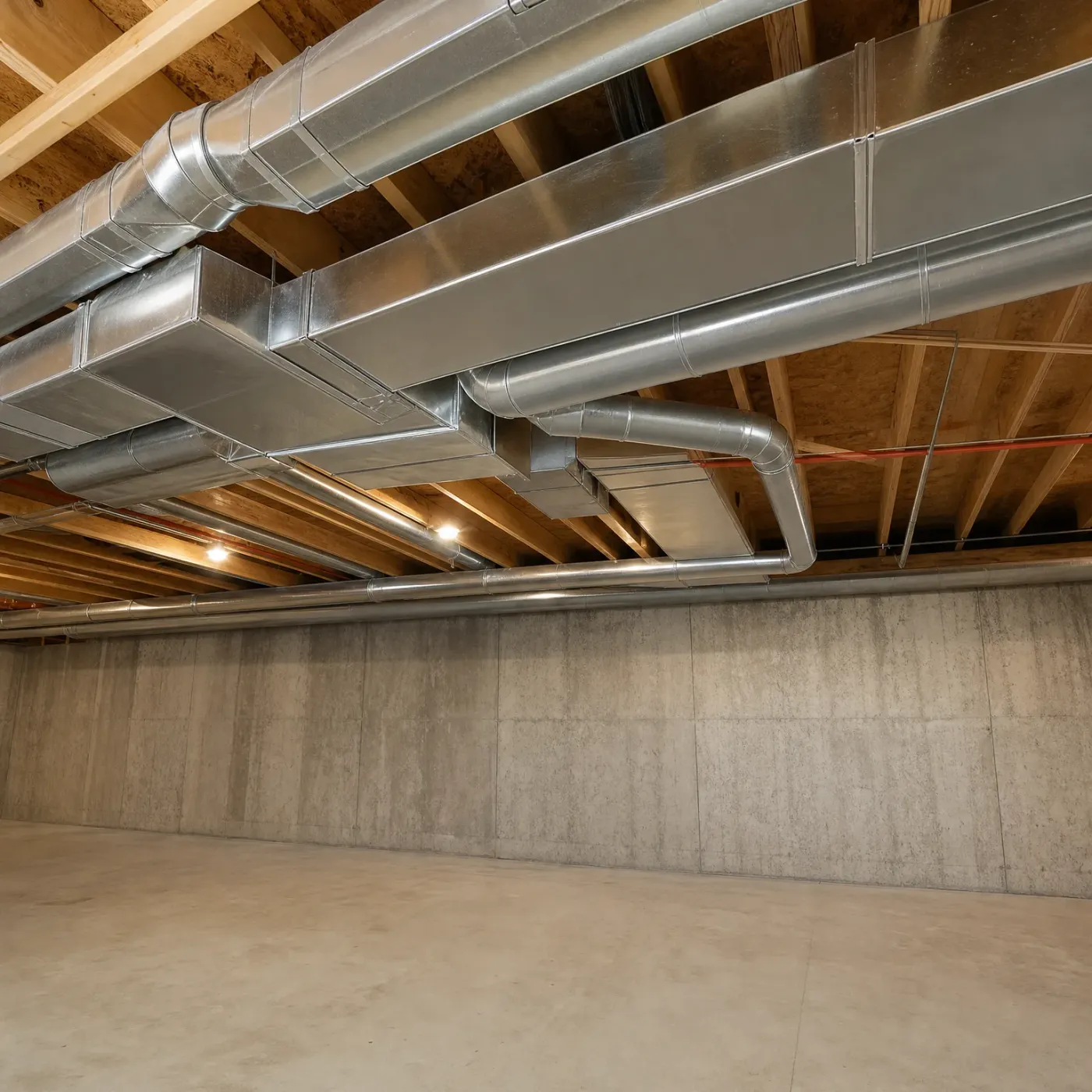
Unfinished basement with bare concrete floor and walls, showing galvanized sheet-metal HVAC ducts, pipes and recessed lights beneath a wood-joist ceiling.

Ductwork sealed tight

Air leaves the furnace and reaches the register with nothing lost along the way. Rooms pull even heat in January and even cool air in July. The ducts stay clean because nothing is pulling outside dust in through a gap to coat them.

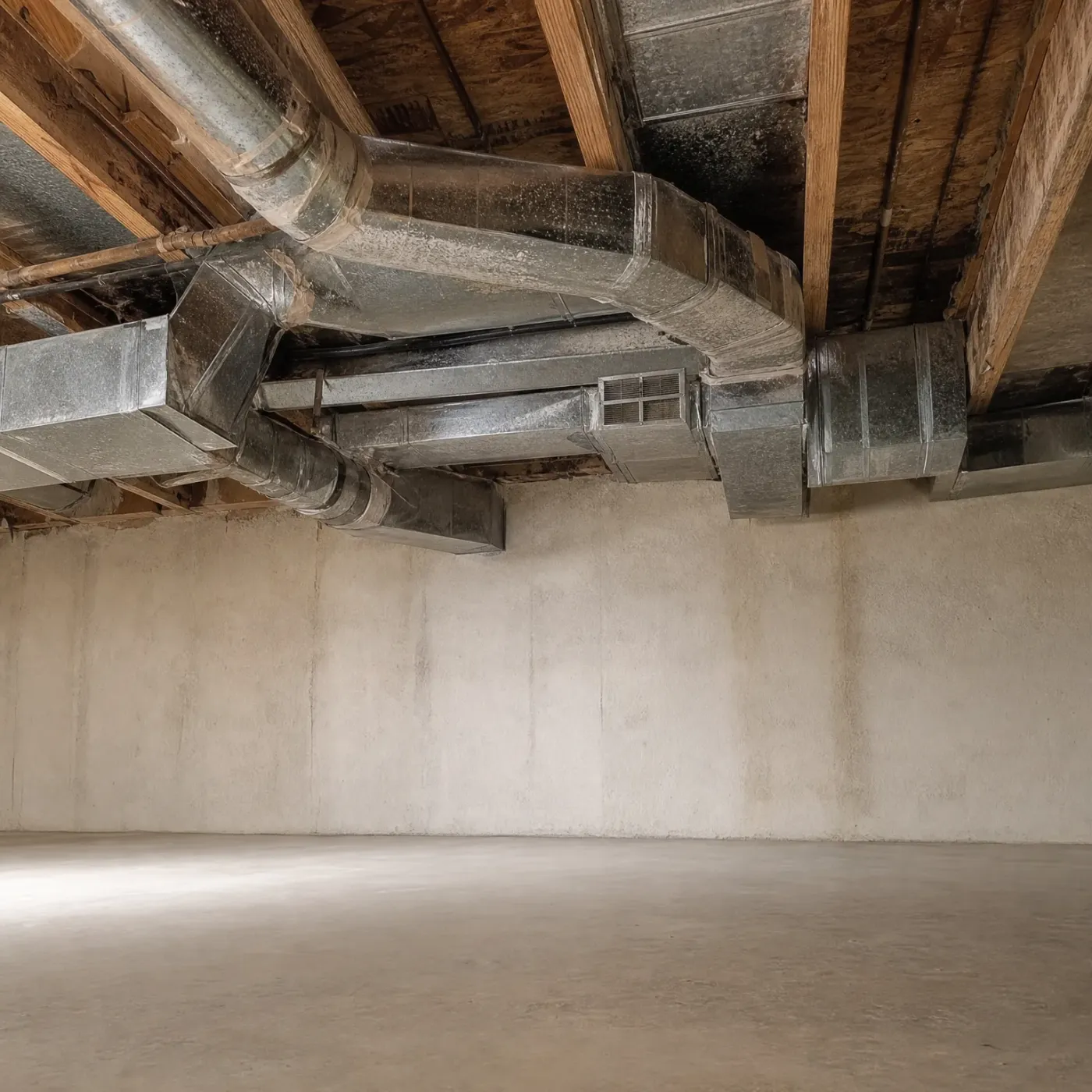
An empty basement room with bare concrete walls and floor, with galvanized sheet-metal HVAC ductwork and a vent grille running along the wooden joist ceiling.

Ductwork leaking air

Dust collects along the seams where conditioned air escapes and unconditioned air gets pulled in. That dark buildup on the metal marks a joint that has been losing air for a while. The rooms farthest from the furnace feel it first.

Why does duct age matter so much in Brookings County

  • Half the homes here were built by 1983

    Half the homes here date to 1983 or earlier. Ductwork that old has had decades of seams and joints to work loose.

  • Heat runs September through May

    Heat runs September through May here. A leak stays under load nine months of the year, which is most of the year.

  • Cooling runs June through August

    Cooling only runs June through August, but a leak that formed over nine months of heating won't wait for summer to show up.

ACS 2020-2024 · NOAA nClimDiv 1991-2020

What a leak does to the air itself

Ducts move air. They don't clean it. When a return duct runs through a crack in the slab or an unconditioned space and has a gap in it, it doesn't just lose air, it pulls in whatever is around it: dust, insulation fibers, attic or crawlspace air. That air goes straight through the furnace and out into your rooms. You'll notice it faster as dust on furniture and windowsills that builds up again days after you clean it, or a musty smell when the furnace kicks on. The filter catches some of this, but a return leak feeds it more than a filter sized for normal airflow is meant to handle.

Where to feel for it yourself

Walk the basement or crawlspace with your hand near the duct joints and seams while the furnace is running. A leak feels like a thin stream of air moving across your skin, sometimes warm in winter, sometimes cool if the duct is near an outside wall. Look at the metal tape or mastic on older joints. If it's cracked or peeling away from the duct, air is getting out there even if you can't feel it from a few inches back. Rooms farthest from the furnace are worth checking first, since a leak closer to the unit affects everything downstream of it.

A woman in a cream cowl-neck sweater stands in a lamp-lit room looking out a window at a snow-covered yard with shrubs and bare trees at dusk.
A woman in a gray turtleneck sweater stands near a large window in a lamp-lit living room, looking out at falling snow and snow-covered conifers.
A woman in a chunky knit sweater stands by a large window looking out at snow-covered ground, with a dimly lit living room containing a gray sofa, framed artwork, shelves and table lamps behind her.
A woman in a gray turtleneck sweater stands in a dimly lit living room with a lamp and bookshelves, looking out a multi-pane window at falling snow.
Unfinished basement with concrete floor and walls, exposed wood joists, galvanized sheet-metal ductwork, a furnace unit, a steel support column, and a small window.

Sealed and supported

This duct run sits tight against the joists, metal and flex both, with the furnace venting straight out through the foundation wall. Air leaves the unit and stays inside the metal the whole way to the register. Nothing escapes into the basement along the way.

Empty unfinished basement with bare concrete walls and floor, showing exposed wooden joists, galvanized sheet-metal ductwork, pipes, and a white vent grille overhead.

Exposed and straining

That single vent at the wall is doing the work for a run of duct with small pipes and flex crowded in beside it. Bare concrete holds cold in winter, and any gap along this run loses air straight into that space before it ever reaches a room.

Two Ways a Duct Leak Shows Itself

Leak you can hear or feel

  • A hiss or whistle near a joint in the basement or crawlspace means air is escaping before it reaches the register.
  • Hold your hand near a duct seam and feel moving air against your skin, and you've found a gap that needs sealing.
  • Dust streaks along a duct seam show where air has been pushing out through a crack for a while, not just today.
  • A register that barely moves air compared to others on the same run points to a loss somewhere between it and the furnace.
  • Flex duct that's sagged or pulled loose at a connection often separates enough to leak even if nothing looks broken.

Leak you only see in the house

  • One room runs cold in January while the rest of the house holds the temperature you set on the thermostat.
  • Your furnace cycles longer than it used to without any change in how you've set it, because less of its air is making it to the rooms.
  • A gas bill that climbs over last winter's, with the same thermostat setting and the same weather, often traces back to ducts losing conditioned air.
  • Dust builds up faster on furniture or shows up heavier in the return filter than it used to.
  • A musty smell from vents in a room over a crawlspace can mean a return duct is pulling in air from underneath the house.
  1. Air leaves the furnace through the main supply trunk.

  2. It branches off into smaller ducts feeding each room.

  3. A gap in a joint lets heated air escape unseen.

  4. The register delivers less air than the furnace made.

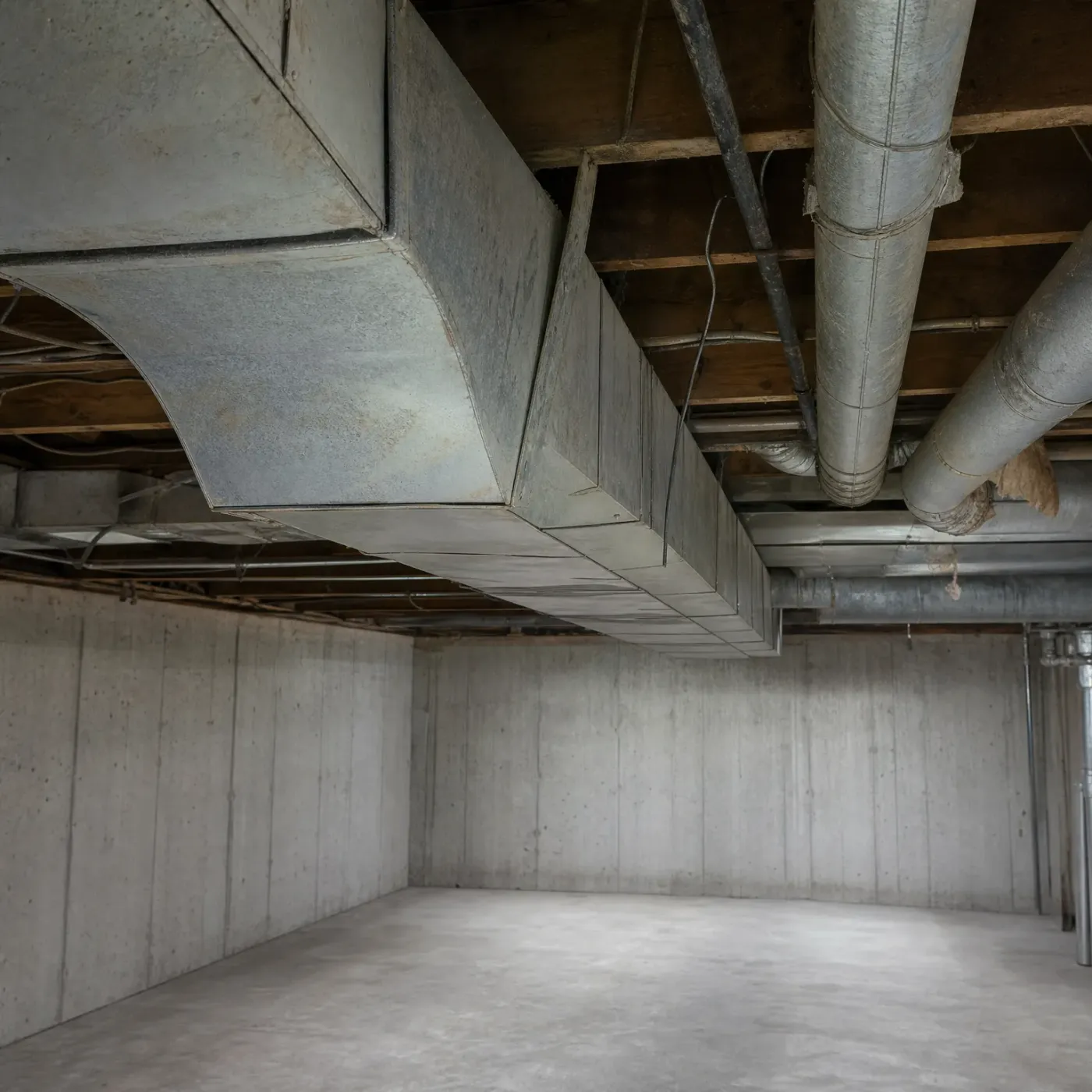
Empty concrete-walled basement with bare floor, showing large galvanized sheet-metal HVAC ducts, insulated pipes, wiring and wooden floor joists overhead.
Before you get your ductwork cleaning
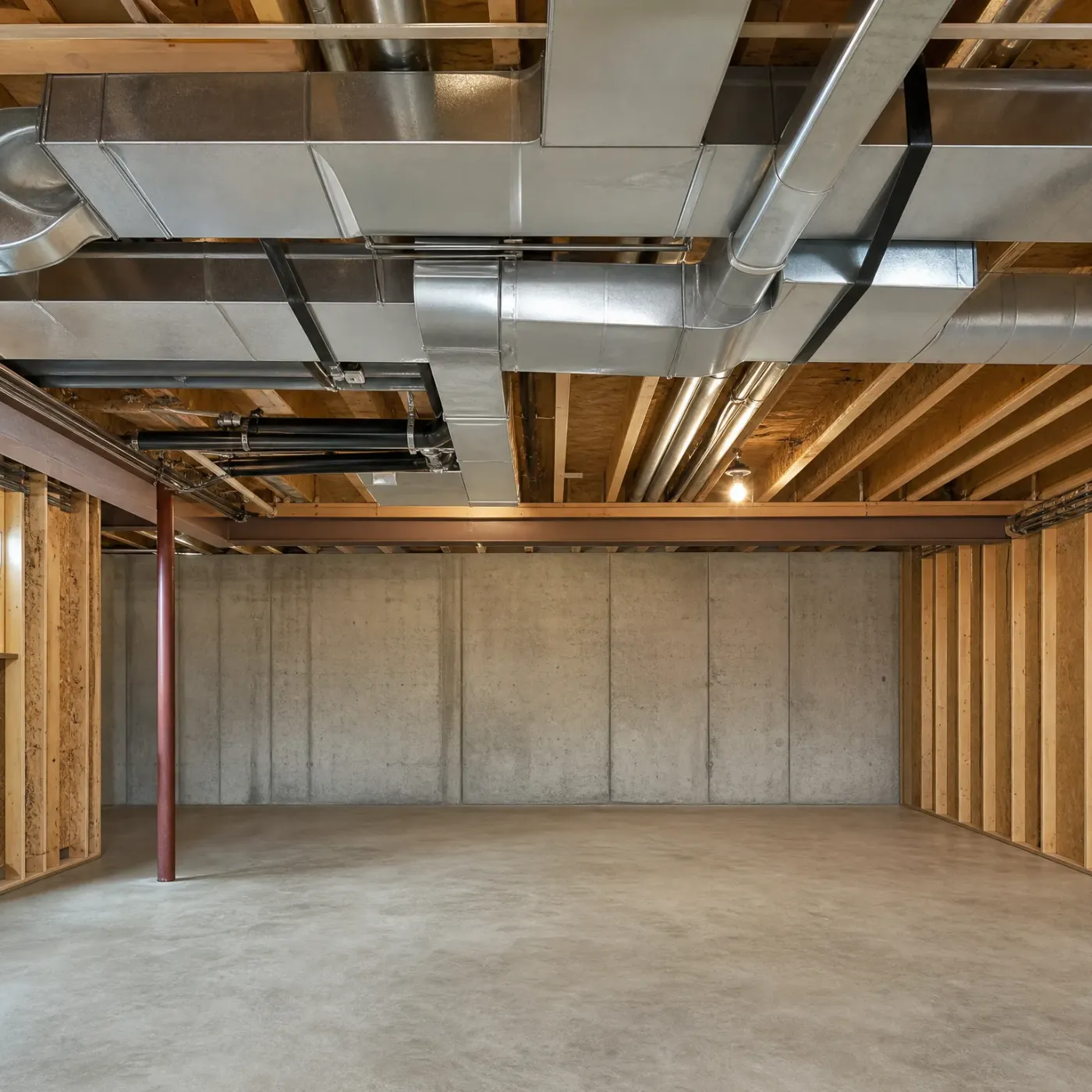
Empty unfinished basement with bare concrete floor and wall, wood-framed stud walls, exposed joists, galvanized HVAC ducts and pipes overhead, a steel beam and red support column, and a single bare bulb light.
After you get your ductwork cleaning

Get matched with a duct system pro in Brookings County

The pro who gets in touch is licensed in South Dakota and works in Brookings County.

You're not committing to anything by asking.

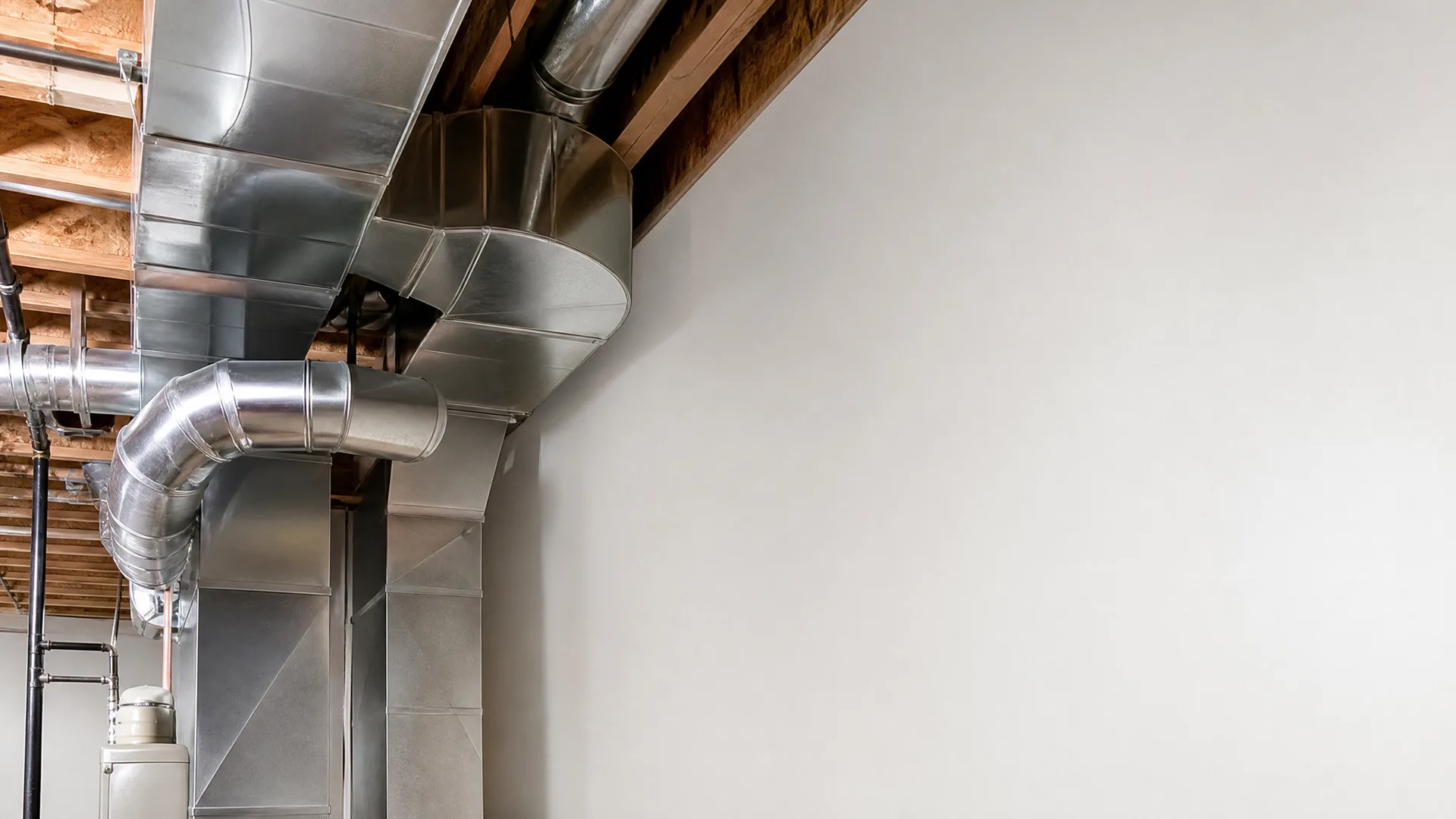
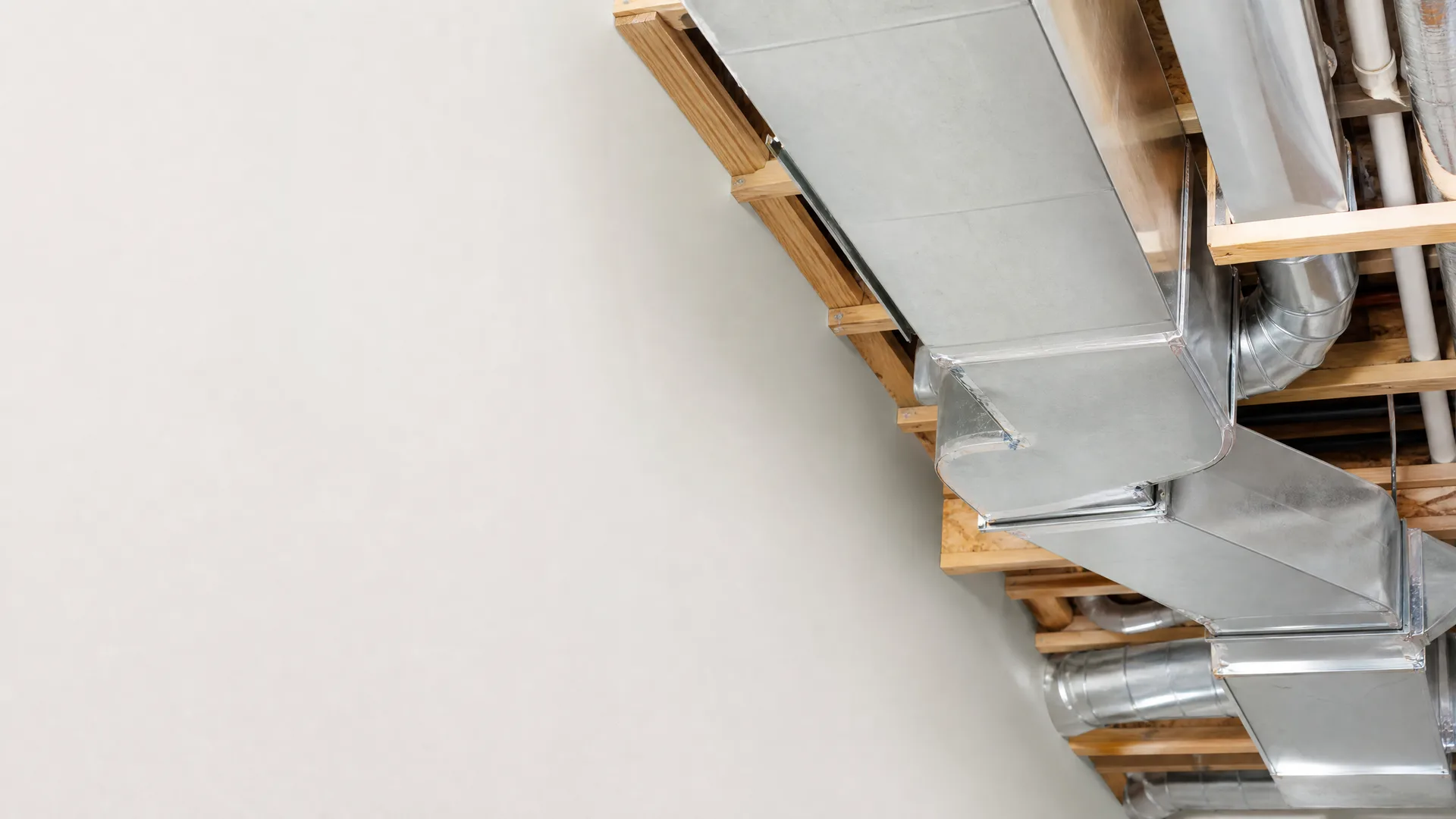
Galvanized sheet metal HVAC ductwork and round pipes running along an exposed wood-joist basement ceiling beside a plain white wall.

What this does to your furnace

Your furnace is sized for the ducts it was installed with, not for ducts that are leaking air into the crawlspace. When a leak opens up, the furnace has to run longer to push enough heated air past the gap and out the register. That extra runtime shows up on your gas bill, and it also means more hours of wear on the blower motor and the igniter each winter, parts that were only built to run as long as a sealed system asks of them.

Galvanized sheet metal HVAC ducts and round pipes installed among wooden joists on a ceiling, beside a large blank white wall.

What it puts at risk over time

A duct leak in an unconditioned crawlspace or attic doesn't stay the same size. Metal joints that have worked loose keep working loose under the same pressure cycles, winter after winter. A small gap that costs you a few degrees in one room this year can widen into something that costs the whole system its balance, with some rooms barely getting air at all while the furnace strains to heat the ones that still do.

A man in a dark jacket and khaki pants walks through an open gate in a stone wall toward a woman standing in the open front doorway of a single-story white house with a dark shingled roof and river-rock accents.

What a leaky duct costs you by February

By midwinter the pattern is easy to spot. The furnace cycles on more than it used to, and it runs longer each time, because some of the air it heats never makes it to a register. You pay for that air twice, once to heat it and again when the furnace has to make more to replace what leaked out. Power here is cheap, but a furnace that runs nine months a year on a leak adds up on the gas side of the bill, not the electric side.

There's a safety piece too, if your ducts run through the crawlspace or the garage. A return leak there can pull in exhaust fumes or garage air and carry them back through the house. You don't need to diagnose that yourself. A contractor who works on duct systems in Brookings County through a winter like this one knows where leaks tend to open up first in a house like yours, and a local match means one contractor looking at your ducts, not a handful of strangers calling about the same job.

A mug and a small round vase sit on a wooden windowsill beside sheer and heavier curtains, with blurred autumn trees seen through the rain-speckled window and a sofa with cushions and a throw in the foreground.
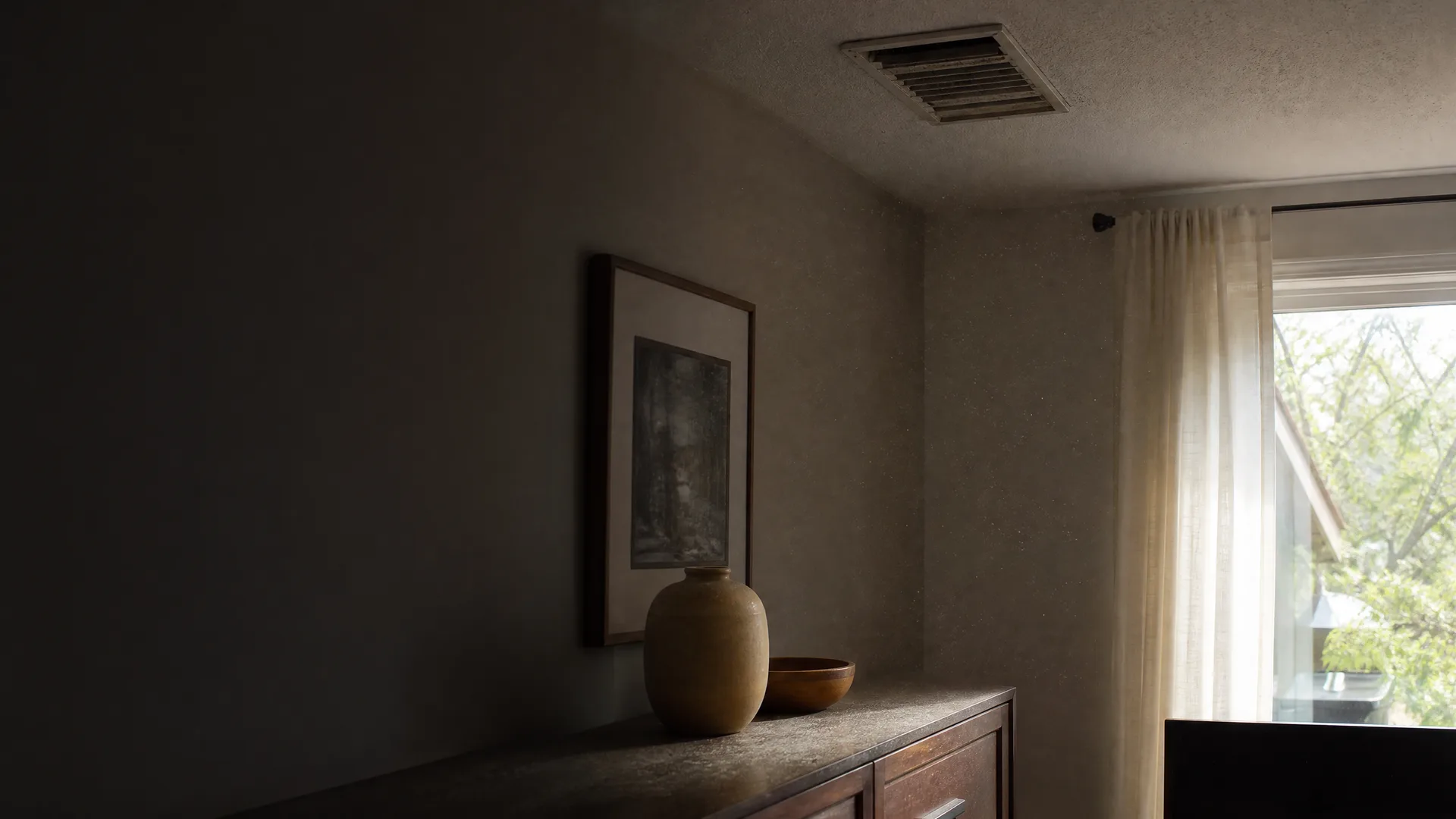
Dim room corner with a framed picture on a textured wall above a counter holding a tall ceramic vase and a shallow wooden bowl, with a sheer curtain beside a window and a ceiling air vent overhead.

Mid-morning in April, sun coming in low across the living room carpet. You're on the couch with coffee, and the light catches the ceiling vent grille above the bookshelf. There's a gray ring of dust around the slats, thicker than you remember it being last fall, and a fine layer of it has settled on the bookshelf top and the lamp shade below. You run a finger along the grille and it comes back dark. The furnace hasn't run in days, it's warm enough outside now, but the dust is still there, like it's been building all winter while you weren't looking up.
Power here costs 11.36 cents per kilowatt-hour

At 11.36 cents per kilowatt-hour, power here is cheap, so a leaky duct hits you hardest through the furnace's gas use, not the blower. Every cubic foot of heated air lost to a gap is gas burned for nothing, and that's the bill a sealed duct system brings back down.

EIA-861 2025

What a leaky duct tells you

  • A cold bedroom, a furnace that runs long, and a dusty register together point to a duct leak, not a thermostat problem.
  • Sealing those gaps stops the furnace from heating air that never reaches a room.
  • A local contractor who works on Brookings County duct systems every winter knows which joints and seams tend to open first.
  • You get matched with one contractor, not several, so you're not sorting through a pile of calls to find the right one.
  • The furnace itself usually isn't the problem; the ducts carrying its air are.
  • Once the leaks are found and sealed, the rooms that ran cold start pulling the same heat as the rest of the house.

A cold bedroom, a furnace that won't stop running, and a dusty register are three signs pointing to the same cause. The ductwork is losing air before it gets where it's supposed to go. That's worth knowing because it means the furnace itself is probably fine. The problem is the path the air takes to reach your rooms, not the unit making the heat.

Once you know that, the fix is straightforward. Someone finds the gaps, seals them, and the air that used to escape into the crawlspace or the space between floors starts reaching the register instead. The room that ran cold all winter starts pulling the same heat as the rest of the house. The furnace stops working overtime to make up for what it was losing.

Finding those gaps matters more than guessing at them. A contractor who handles duct systems around Brookings County through the winter has seen where the joints tend to separate and where flex duct tends to tear, because the same kind of seams fail the same way across the same kind of homes here. That's who gets matched to your request, one contractor, not a handful competing for your callback. You explain the cold room and the dusty vent once, to someone who already has a good idea where to look before they get there.

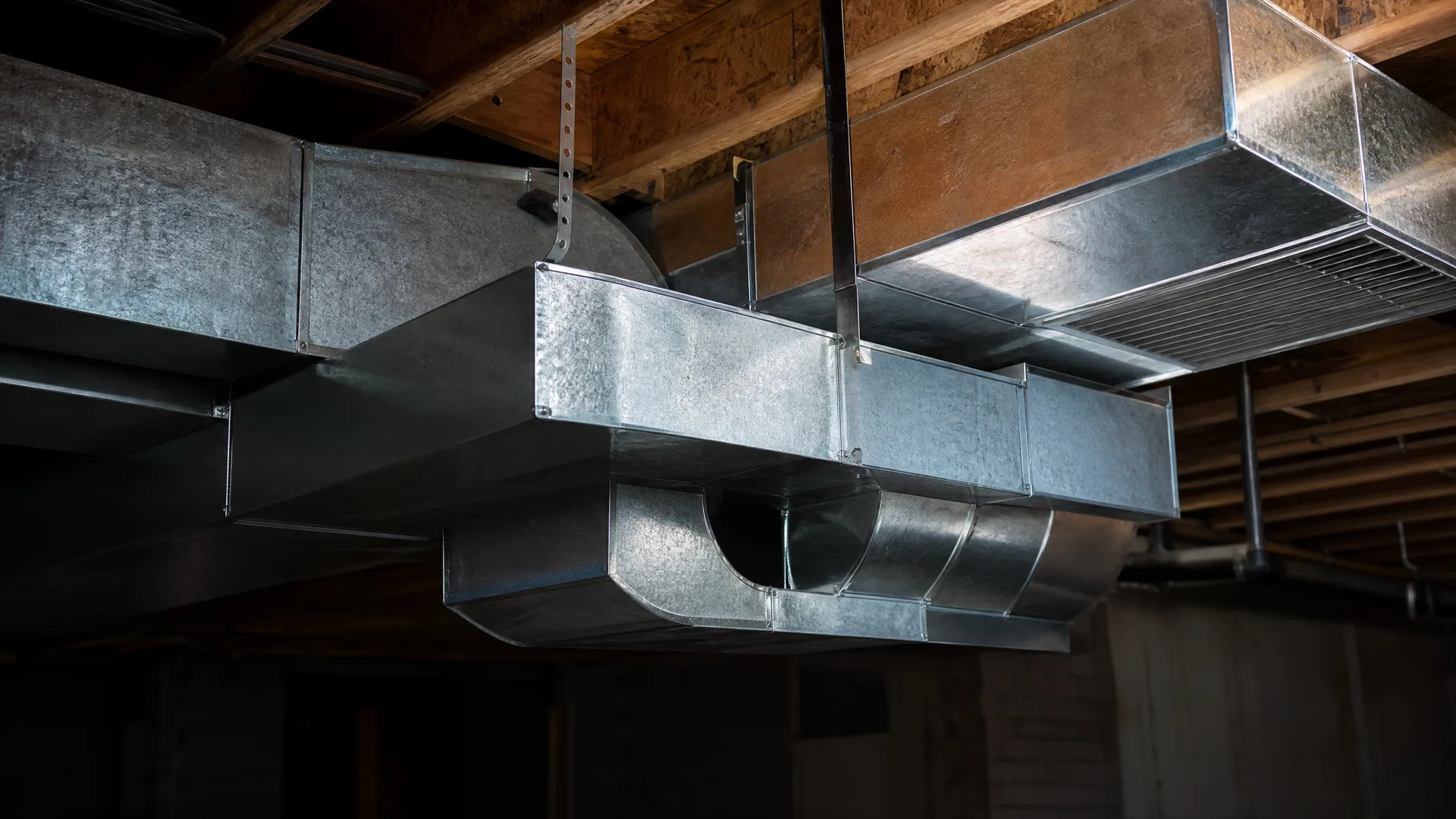
Galvanized sheet metal HVAC ductwork with rectangular trunks and round takeoffs suspended from wooden floor joists in an unfinished basement ceiling.

Find a duct system cleaning pro in Brookings County

Duct and vent cleaningDucts or ventsBrookings County, SD
Step 1 of 2

What ZIP code is the job in?