
Mold in air ducts in Brookings, SD
Get matchedYou noticed something off about the air in your house, maybe a musty smell when the furnace kicks on, maybe dust that keeps coming back no matter how often you clean. Mold in the ducts is not something you can see without opening the system up, and it is not something you want to guess about. Winters in Brookings County mean that furnace runs hard for months, pushing whatever is in those ducts through every room. Finding someone licensed to inspect and clean a duct system means calling around, asking who actually does this work versus who just vacuums a vent, and comparing quotes without knowing what a fair one looks like. That part is what this page takes off your plate. Answer a few questions about your home and your system, and a contractor who handles duct cleaning in this area will reach out to you directly. No lists to build, no voicemails to leave with three different companies.
Can mold actually grow inside air ducts?
Maybe you caught a musty smell when the furnace kicked on, or you've noticed dust settling back fast after you just cleaned. You can't see inside the ductwork, so it's hard to know if that smell is actually mold or just an old filter. It helps to know what conditions let mold take hold inside a duct system in the first place, and whether your house is likely to have them.
Yes, if there's moisture inside the ducts
Mold needs moisture to grow, and ducts stay dry most of the time, so they aren't an easy place for it to start. It happens when water gets in some other way: a leak in the ductwork, condensation off an AC coil that drains into the supply side, or a humidifier on the furnace set too high. Once mold has something to feed on in there, dust and the dark inside the duct keep it going. Winters are hard in Brookings County, and a furnace that runs long hours all winter will move whatever is growing in the ducts through every room it heats. That smell when the furnace kicks on is worth taking seriously, not ignoring.

Why ducts hold onto moisture
Mold needs moisture to grow, and ductwork can hold onto it longer than you'd expect. If your supply or return runs through a crawlspace or an unconditioned part of the house, condensation can form on the metal when warm air meets a cold surface. That moisture sits in a dark, enclosed space with dust already collected on the walls of the duct. Dust is an organic material, and it's enough to feed mold once there's water to go with it.
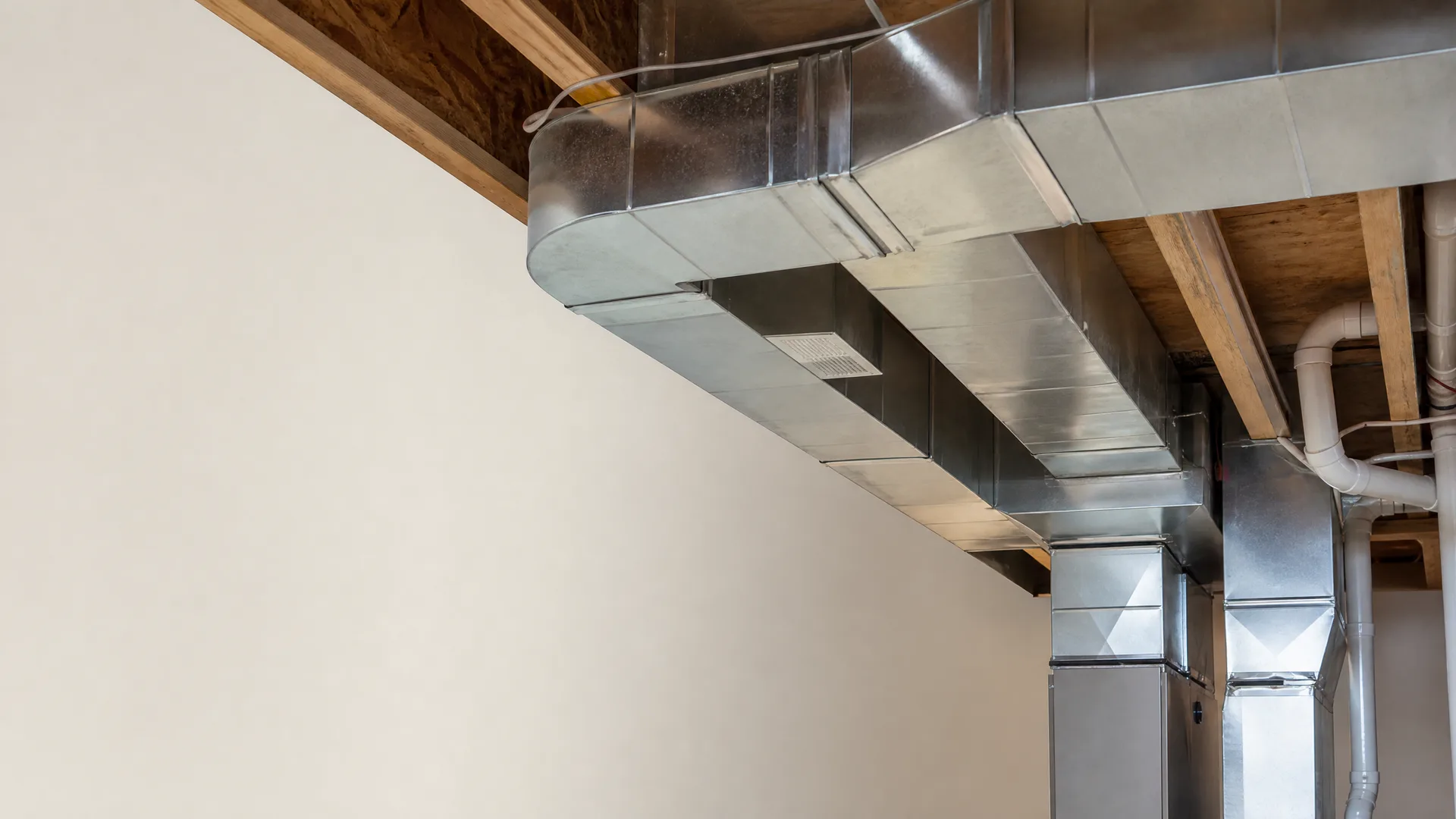
What a cleaning actually removes
A duct cleaning clears out the dust, debris and any mold growth sitting inside the supply and return lines, along with the registers and the furnace's blower compartment where air moves through daily. It does not fix a moisture source on its own. If condensation or a leak is what let mold grow in the first place, that part of the system needs to be addressed too, or the growth is likely to come back even after the ducts are cleaned out.
Why does duct mold matter so much for this house?
Half the homes here were built by 1983
Half the homes in Brookings County were built in 1983 or earlier, according to Census data. Older ductwork is more likely to have seams and joints where moisture gets in.
Heat runs September through May
Furnaces here run September through May, close to nine months a year. Any mold sitting in the ducts gets pushed through the house most of the year.
Cooling runs June through August
Air conditioning only runs three months a year here, June through August. That's a shorter window for the cooling side to add moisture, but the furnace months do most of the work.
ACS 2020-2024 · NOAA nClimDiv 1991-2020
Your furnace runs most days from September through April, and every one of those cycles pushes air straight through the ducts carrying whatever is growing in them into the rooms where you sleep and eat. If mold has taken hold in the supply runs, you are breathing it all winter, not just catching a whiff of it when the system kicks on. Musty air is one thing, but mold in the ducts also means spores settling on surfaces after you've just cleaned, and a smell that comes back no matter what you do about the dust. Humidity goes up in a closed-up house during a South Dakota winter, and condensation inside metal ductwork gives mold exactly what it needs to keep spreading, duct run by duct run, long after the original damp spot is gone. Left alone, it does not stay contained to one register or one room. It moves through the whole system, because that is what the ductwork is built to do, and every vent in your house is connected to the same air.


You keep cleaning the house and the dust and the smell come back within days, because the source isn't on any surface you can reach with a rag or a vacuum.
A contractor who cleans the duct system itself gets at the part of the house you can't get to on your own, which is the only way that cycle stops.
Power here costs 11.36 cents per kilowatt-hour
At 11.36 cents a kilowatt-hour, running a bathroom fan or a dehumidifier to keep moisture down in a crawlspace or basement costs you little. Clearing a duct system of mold once it's grown in is the bigger job, and the one cheap power here won't help with.
EIA-861 2025




The right pro for this job

Explain the job once and skip repeating it on every call.
It costs nothing to send, and you don't have to hire anyone.

A contractor inspects the duct system with a camera to find growth
Supply and return runs are sealed off from the rest of the house
A negative air machine pulls contaminated air out through a HEPA filter
Agitation tools knock mold loose from the metal inside each run

What this looks like in your house
Your bedrooms and your living room likely sit on the same duct run, so mold in one branch doesn't stay put. It rides the air to wherever a vent is open. You might notice it more in the room where you spend the most time in the evening, since that's where you'd catch a smell or see dust settle on a shelf you just wiped down. A finished basement with a return nearby is often where people notice it first.
What it puts at risk is anyone in the house who's in a room a lot, not just whoever does the cleaning. Finding a contractor who cleans ducts rather than just the furnace itself takes some sorting, since not every HVAC company runs that equipment. Getting matched with one who handles this specific job and already knows the house types common around Brookings means you're not the one calling three companies to find out who actually does duct work.


It is April, and the afternoon sun comes low through the window behind the couch. The furnace clicked off a few minutes ago after a short cycle, the kind it still runs on cooler spring mornings before the day warms up. Above the couch, the ceiling vent grille holds a soft gray line of dust along its slats, thicker than it should be for a room you vacuumed Sunday. On the side table underneath, a fine film has settled on the lamp base and the picture frame, the kind you can write your name in. You run a finger along the grille and it comes back dark. The room looks lived in, not dirty, but the dust is back already, and you noticed it the moment the light hit it.
What are you actually noticing in your own house
You might catch the smell most when you first turn the furnace on in the fall, a musty note that fades after a few minutes and makes you wonder if you imagined it. Dust shows up again on the TV stand or the windowsill just days after you wiped it down. Someone in the house might be stuffed up more mornings than not, or the cough that was supposed to be a cold hangs on past the cold. None of this tells you for certain what's in the ducts, but it's the kind of pattern that doesn't come from a dirty rag or a weak air filter. Left alone, it's the air moving through every bedroom and the living room that carries it.




Where this leaves you
- Mold grows inside ducts when moisture sits on metal that never dries, and a camera inspection is the only way to confirm it's there.
- A musty smell at furnace start-up and dust that returns within days are the two signs most homeowners in Brookings notice first.
- Cleaning the duct system removes the growth itself, not just the dust or smell it sends into your rooms.
- Finding a contractor who does this work means fewer calls to make and fewer times explaining the smell and the dust to someone new.
- Once matched, a contractor reaches out to you instead of you sorting through quotes and estimates on your own.
- The furnace will keep pushing air through those ducts every day from September through April, whether or not the problem gets addressed.
You started out wondering if that musty smell at furnace start-up meant something real, or if the dust coming back so fast was just the house. A camera inspection answers that question directly, because mold inside ductwork isn't something you can confirm by looking at a vent or wiping down a surface. If it's there, it sits on metal that stayed damp, often in a crawlspace or unconditioned part of the house where nobody checks. Cleaning doesn't just mask the smell or catch the dust for a week. It takes the growth out of the system that's been feeding both.
Finding someone who does this specific work usually means calling a few duct cleaning outfits, describing the smell and the dust pattern to each one, then sitting with quotes that are hard to compare because you don't know what's actually wrong yet. That part is what goes away here. You get matched with a contractor who handles this, and they contact you, rather than you working down a list and repeating yourself to each one.
None of that changes what the furnace does. It runs September through April in Brookings, and every cycle moves air through those same ducts, carrying whatever's growing in them into the rooms you spend your evenings in. The smell and the dust were never the problem. They were what the problem sent out into the house.

Ductwork Cleaning
Matched to your ductwork job

- Get matched with a Brookings County pro who cleans ducts.
- Describe your ductwork job, and a local pro who handles it gets in touch.

- Send the form and the duct cleaning stops sitting on your list.
- Send the request and finding a pro stops being your problem.

- One form replaces the calls you'd make to find a duct system pro.
- Skip calling around for someone who cleans ducts.

- The pro who reaches out is licensed in South Dakota.
- Only one pro gets your request, so you hear from one company.