

Musty smell from vents in Sioux Falls, SD

One request and the duct cleaning stops waiting on you.

Hand it off

That musty smell is almost always water sitting somewhere it shouldn't. Most often it's the evaporator coil, which stays wet every time the air conditioner runs and grows mold on its surface if it never fully dries. It can also be standing water in the drain pan, a clogged condensate drain line, or moisture trapped in the ductwork itself. The smell gets pulled through the vents because the duct system is what carries air from that wet coil into every room. In Minnehaha County, summers aren't as humid as some places, so the coil gets a break for much of the year, but once mold is established on it or inside the ducts, dry weather alone won't clear it out. The duct system and coil need to be cleaned to get rid of it. Until that happens, every time the system runs, it pushes that smell through the house.

Why does that musty smell keep coming back here?

  • Half the homes here were built by 1987

    Half the homes in Minnehaha County were built in 1987 or earlier, and ductwork that old has had decades to collect the dust that mold needs to take hold on.

  • Heat runs September through May

    Heat runs here from September through May, so your system sits idle and damp for long stretches between cooling runs, giving mold time to set up in the duct.

  • Cooling runs June through August

    Cooling runs June through August, and every one of those months pulls moisture across the coil, which is exactly when that smell shows up at the vents.

ACS 2020-2024 · NOAA nClimDiv 1991-2020

Where the smell actually starts

  • The evaporator coil sits inside the air handler and gets wet every time the AC runs, all summer long.
  • A drain line carries that water outside, and when it clogs the water backs up into the pan instead.
  • A full pan sits under the coil and does not drain itself, so standing water can sit there for days.
  • Mold needs food too, and the dust layered inside your ducts since they were built is exactly that.
  • The blower only moves air through the system, it never dries the coil or the pan on its own.
  • A cleaning reaches the coil, the pan, the drain line and the duct runs, not just the vents you can see.

Warm air moves across the evaporator coil and the coil pulls the moisture out of it. That's how the air gets cool. It also means the coil is wet almost every time the system runs, from April through whenever the heat kicks back in. Water that condenses there has somewhere to go. A drain line runs from the pan underneath the coil to the outside of the house, carrying that water away so it never sits for long. When the line is clear, you'd never know any of this was happening. When it isn't, the water backs up into the pan instead of draining out, and the pan isn't built to hold it for long. It sits there, sometimes for days, with nothing moving it along. The blower fan runs the whole time too, but all it does is push air through the ducts. It doesn't touch the coil or the pan, and it can't dry out standing water. So the moisture stays right where it landed, on a coil and in a pan that are already coated with years of dust from the air passing through. That dust is what mold needs to get started, and once it does, the air moving past carries the smell through every duct run in the house, out through every vent. A cleaning goes after all of it at once, the coil, the pan, the drain line and the ducts themselves, not just the register you can smell it from.

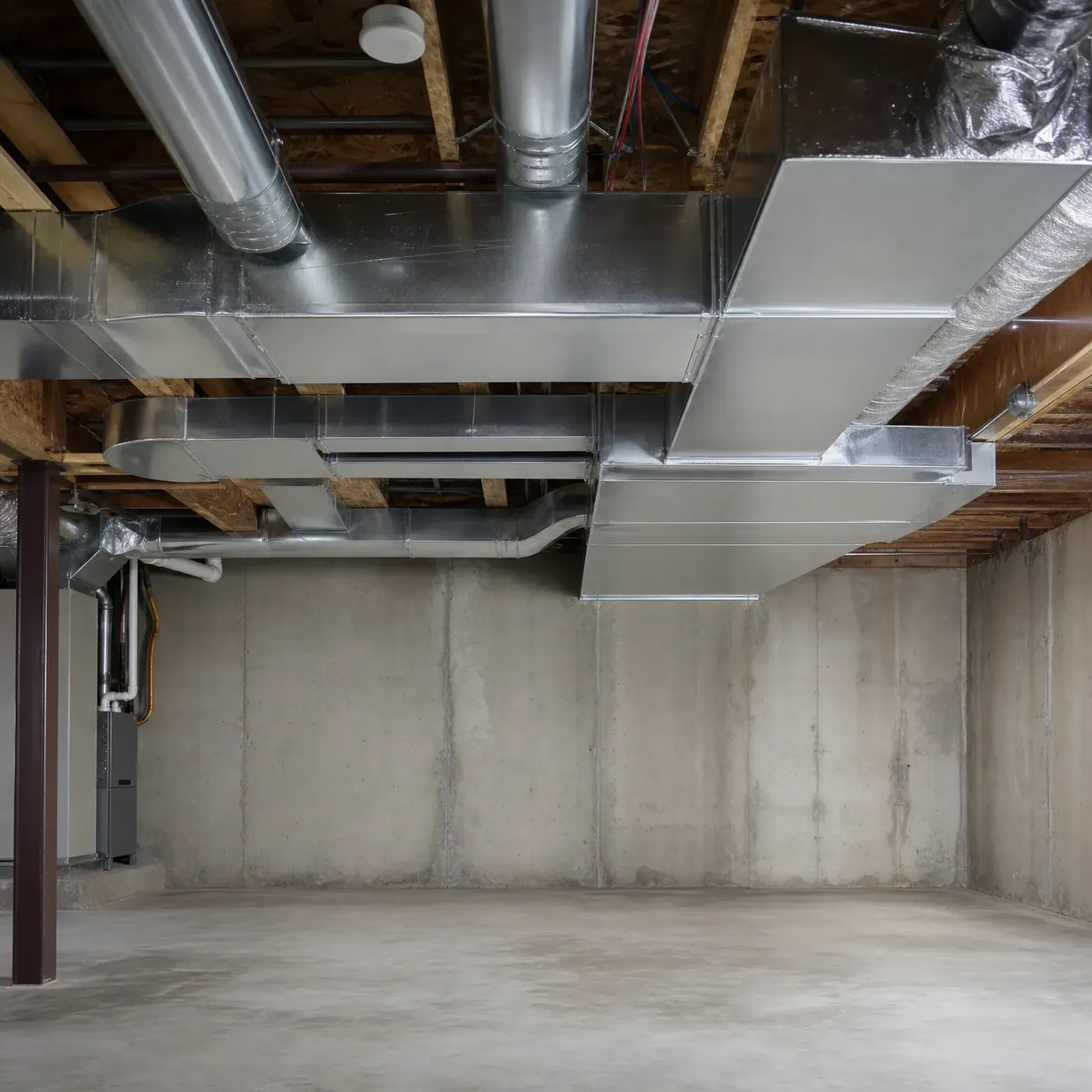
Unfinished basement with bare concrete walls and floor, and galvanized sheet-metal HVAC ducts, pipes and wiring running along the wood-joist ceiling.
Before you get your ductwork cleaning
Unfinished basement with concrete walls and floor, a steel beam on posts, and exposed wooden joists with sheet-metal ductwork and piping overhead.
After you get your ductwork cleaning

What a cleaning actually removes

A duct cleaning clears the dust and debris built up along the sheet metal, the mold feeding on it, and whatever is sitting in the return and supply runs that keeps the smell going. On a system that's never been cleaned, that buildup can line the inside of the ducts for the system's whole life. Clearing it out doesn't fix a clogged drain line or a coil that won't dry, but it takes away the material mold needs to keep growing once those problems are handled. Without it, a fixed drain line or a cleaned coil can still smell musty for a while, because the dust further down the line is still holding spores.


Why the coil and drain come first

If the coil is still wet or the drain line is still clogged, cleaning the ducts buys you a little time, not a fix. Water sitting in the pan or growing mold on the coil will keep feeding spores into the air stream, and those spores settle right back into clean ductwork within a few weeks of running the system. A contractor who checks the coil and drain line before cleaning the ducts is working the problem from the source outward, not just clearing what's visible. That order matters more than which gets done first on paper.

A smiling man in a dark green sweater sits at a wooden table with a light gray mug in a kitchen with white tile backsplash, pendant lights, and an adjoining living room visible.
A smiling man in a dark gray sweater stands indoors looking to the side, with a kitchen counter holding a ceramic mug and open wooden shelves behind him and a living area in the background.
A smiling man in a dark blue button-up shirt stands at a white kitchen island, with open shelving, a gas range, a potted plant and a window in the background.
A smiling man with dark wavy hair and a beard, wearing a dark green knit sweater, sits in an open-plan living room and kitchen with a brown sofa, large windows, and a counter holding a mug and a wooden bowl.

One request and it's handed off

You already know the smell comes back every time the furnace or the AC kicks on, and you've probably tried the easy fixes first. New filter. Vinegar in the drain line. Maybe a can of duct deodorizer from the hardware store on Minnesota Ave. None of it holds, because none of it touches what's actually growing on the coil or sitting in the duct runs. What's left is the part nobody wants to do: finding a contractor who does this kind of cleaning, checking they're licensed to work on a system like yours, calling two or three for quotes, and explaining the same smell to each one. Send the request instead and that work is off your plate. You're not chasing anyone down or sitting on hold between loads of laundry and whatever else is on the list this week. The smell is still there until the coil and the ducts get cleaned, but finding who does that job stops being something you have to manage.

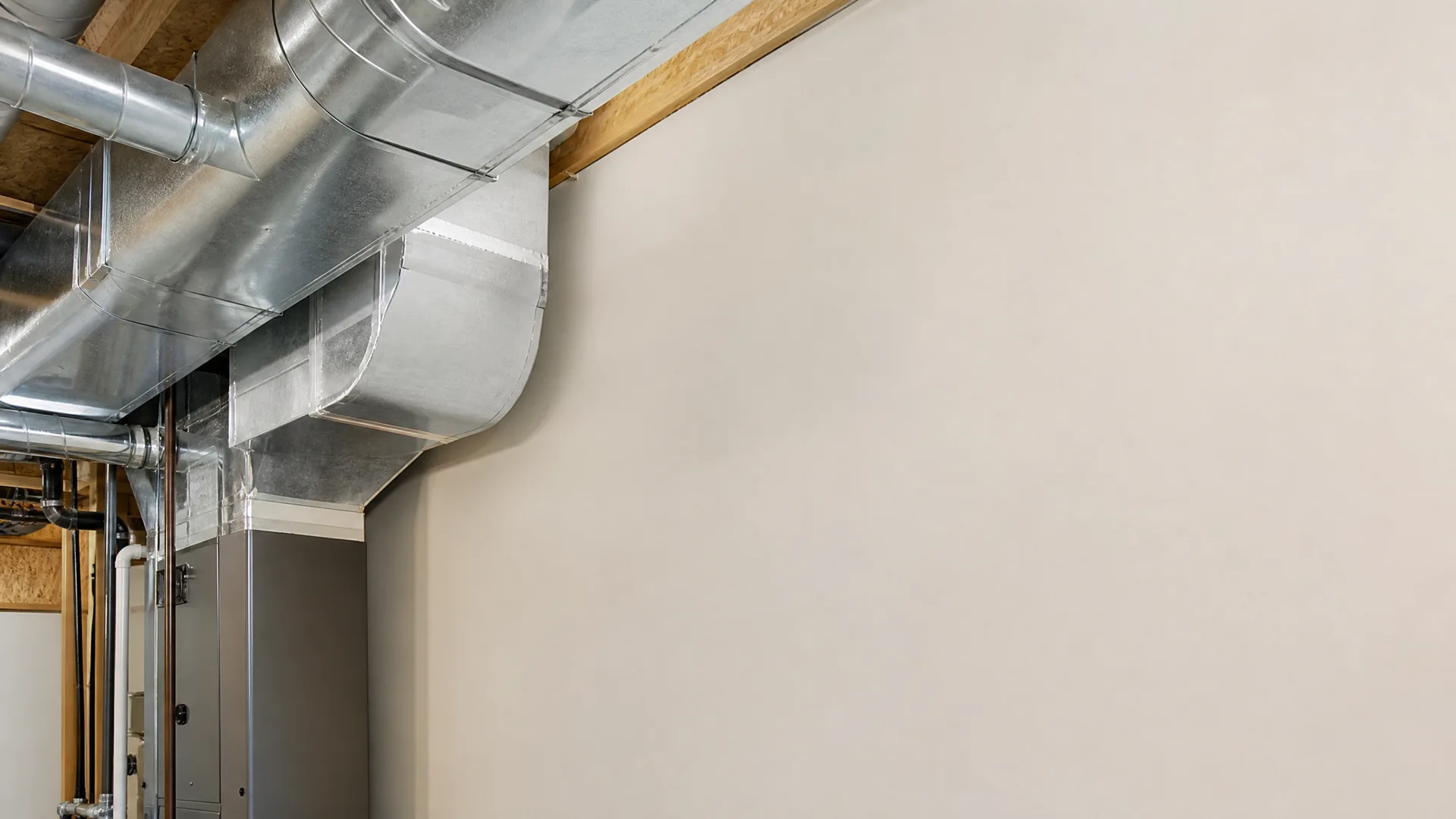
Galvanized sheet-metal ductwork and pipes running along an unfinished basement ceiling beside a plain beige wall, with a gray equipment cabinet below.

What it means for your house

The smell isn't staying in one room. Your return pulls air from wherever it sits in the house and pushes it through the same ductwork to every vent, so a coil or drain pan growing mold in the basement ends up in the bedrooms too. Shut doors don't stop it. Anyone with allergies or asthma in the house notices first, usually as more coughing or a stuffy nose that doesn't track with a cold. The smell is just the part you can detect. What's actually growing in there doesn't go away on its own.

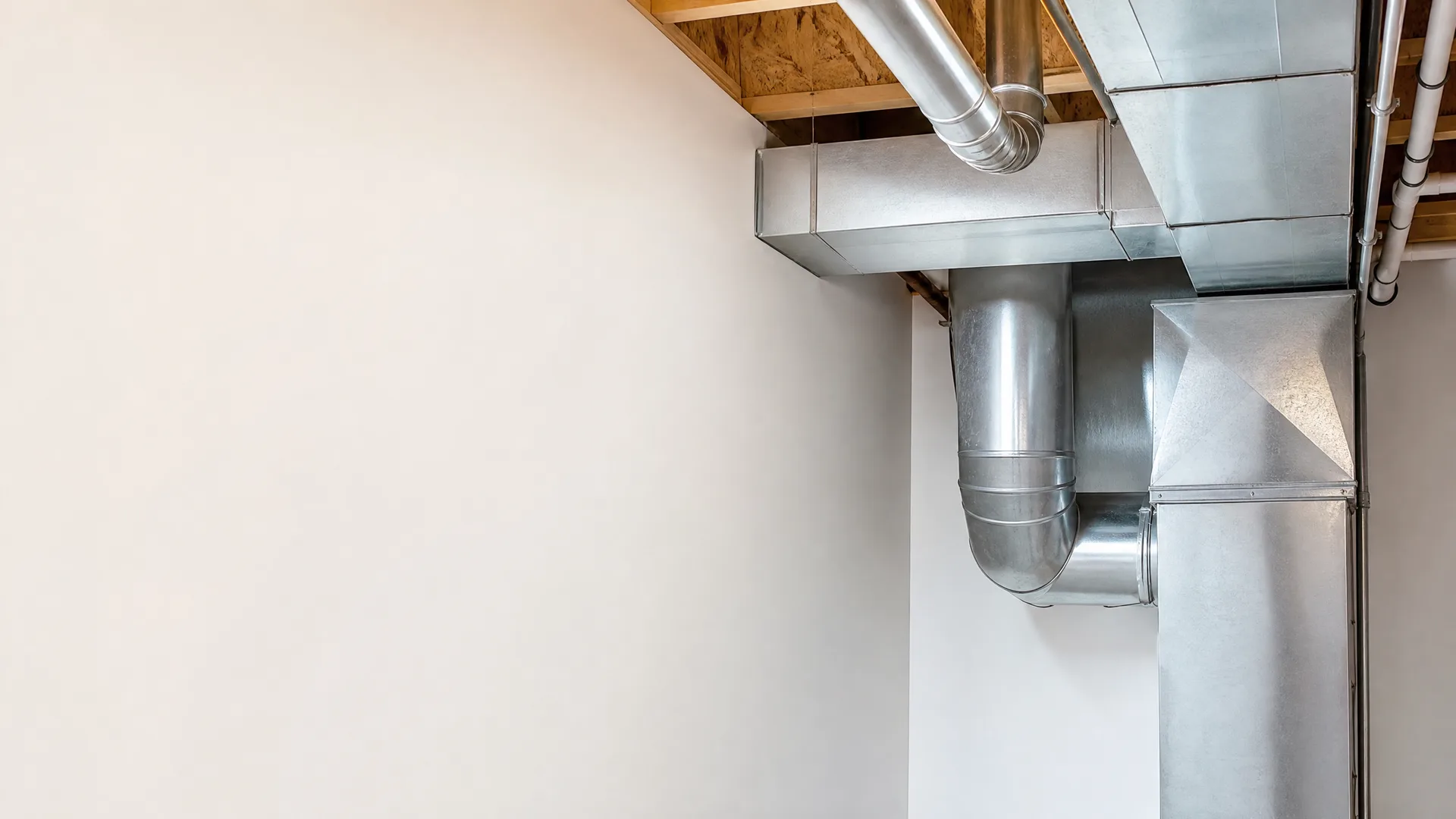
Galvanized sheet metal rectangular and round HVAC ducts running along a ceiling and down a white interior wall, with exposed wood joists and subfloor above.

What waiting costs you

Mold on the coil or sitting in the pan doesn't stay put. It spreads along the duct runs a little more each time the furnace or the AC cycles on, which in Sioux Falls is most of the year between the two. A clogged drain line that keeps backing up can overflow the pan entirely, and that water doesn't always stay inside the system. It can reach the floor underneath or the ceiling below it, depending on where your air handler sits.

Does the smell mean there's mold growing in my ducts?

Does the smell mean there's mold growing in my ducts?

Usually not in the ducts themselves, but mold is growing somewhere in the system

Sheet metal duct runs usually stay too dry for mold to take hold on the metal itself. What's growing is on the evaporator coil, in the drain pan, or on dust packed into the return and supply runs near the air handler. Once mold is established there, the air moving past it picks up the smell and carries it through every duct in the house. That's why the smell seems to come from the vents in every room instead of one spot. A cleaning reaches the coil, the pan, and the runs close to the air handler, which is where the growth actually lives.

A dim living room corner with a ceiling air vent, a curtained window showing blossoming trees, a table lamp and dark ceramic vessels on a wooden dresser, a potted plant, and a sofa in the foreground.

You're dusting the shelf under the ceiling vent in the living room, one of those mild spring afternoons before the AC has had to run much yet. The cloth comes away gray, more than you expected for how recently you wiped it down. You look up at the grille and there's a ring of dust caked around the slats, the kind that doesn't blow off on its own. It's the same vent that's been putting off that musty smell every time the furnace kicked on this past winter. You set the cloth down and just stand there a second, looking at the grille, doing the math on how long that's been building up in there.

Is that musty smell something to worry about?

You notice it most when the air first kicks on, a damp basement kind of smell that fades after a few minutes and comes back the next time the system cycles. Check the vent covers and you might see a thin gray film on the slats. Some rooms carry the smell stronger than others, usually whichever room sits closest to the return or furthest down the duct run. If anyone in the house has allergies or asthma, you've probably noticed more sneezing or a stuffier nose when the furnace or AC has been running a while. Left alone, the mold feeding that smell keeps growing, and the air moving through your ducts keeps carrying it to every room the system reaches.

  1. Technician inspects the coil, drain pan and duct runs with a camera

  2. Supply and return vents get sealed off from the rest of the house

  3. A vacuum collector attaches to the ductwork to pull air negative

  4. Compressed air agitates dust loose from the sheet metal walls

Power here costs 13.16 cents per kilowatt-hour

At 13.16 cents per kilowatt-hour, running a blower fan longer than it needs to, pushing air through ducts coated in dust and mold, doesn't cost much here. That's not a reason to leave the smell alone. It just means the fix is about the air you breathe, not the power bill.

EIA-861 2025

Unfinished basement with bare concrete walls and floor, exposed wood joists, and large sheet-metal HVAC ducts and pipes running along the ceiling.

Clean ductwork, working the way it should

This is a system that moves air without feeding a smell. The sheet metal stays dry, the joists overhead stay clear of dust, and air coming off that furnace picks up nothing on its way to your bedrooms and living room.

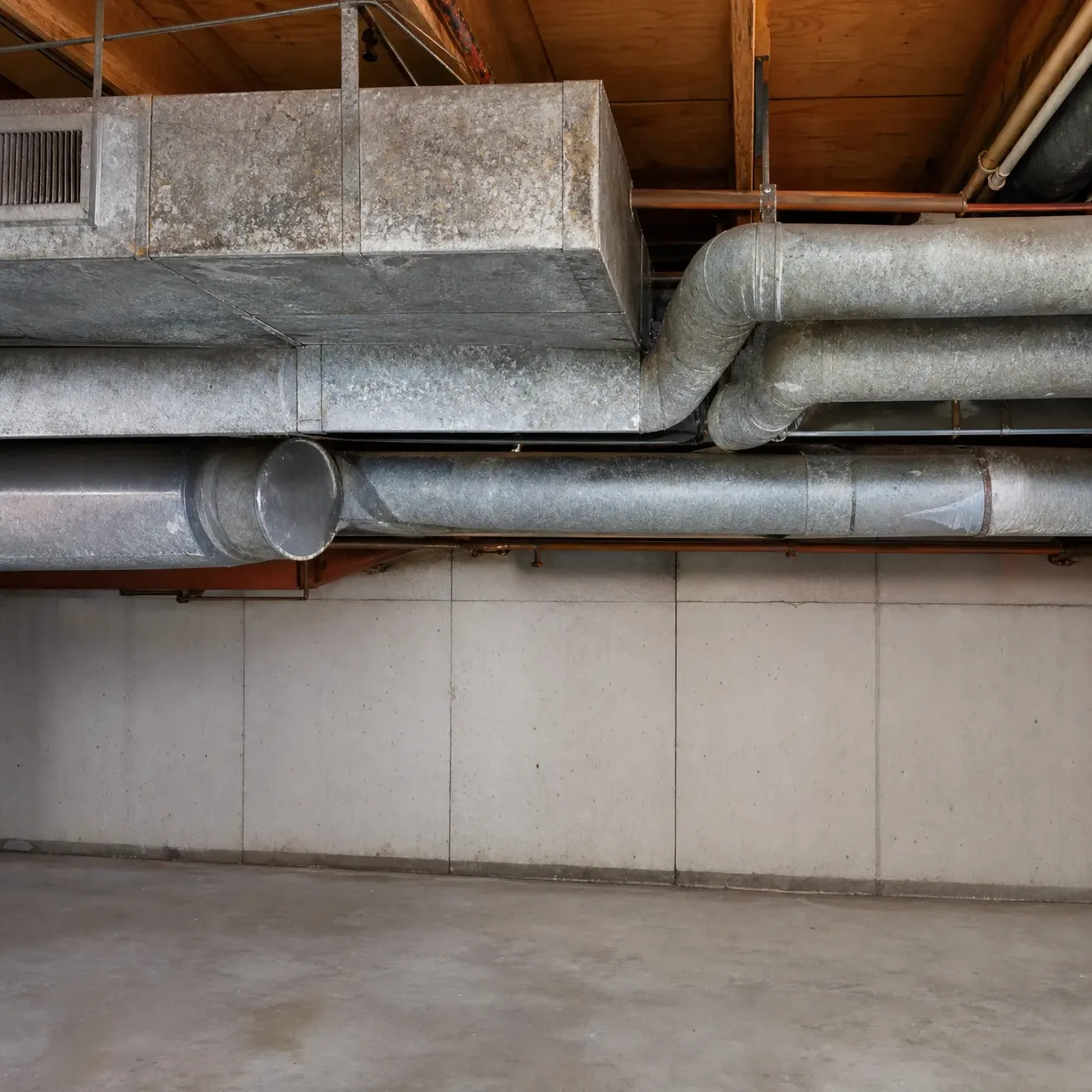
Basement interior with galvanized rectangular and round sheet-metal ductwork and copper piping running below a wood-joist ceiling, above a concrete wall and bare concrete floor.

Ductwork that's been holding onto something

Here the runs look sound, rectangular and round, bolted up tight under the joists. What's built up inside them isn't visible from the floor of the basement. That's the gray film you find on a shelf under a vent, traced back to its source.

A closed silver laptop and a white cup of coffee on a saucer sit on a wooden table in front of a wooden chair, a plain beige wall, a potted leafy plant and a window with greenery outside.

Where that leaves your ductwork

The smell is water sitting where it shouldn't, somewhere in that system, feeding mold that the moving air carries to every room on the same loop. A cleaning takes the coil, the drain pan and the duct runs back to bare metal, and the smell goes with it. That's the whole answer.

What's left is finding someone to do it. Instead of searching for duct cleaners around Sioux Falls, calling a few, explaining the smell and when it shows up to each one, then sitting with quotes trying to tell which contractor actually knows what they're looking at, you send this once. From there, finding someone to look at your coil and your ducts is off your plate.

A light-colored ceramic vase holding green leafy branches sits on a round wooden table, with a wooden-framed armchair draped in a cream throw, a tripod floor lamp, and sheer curtains blurred in the background.
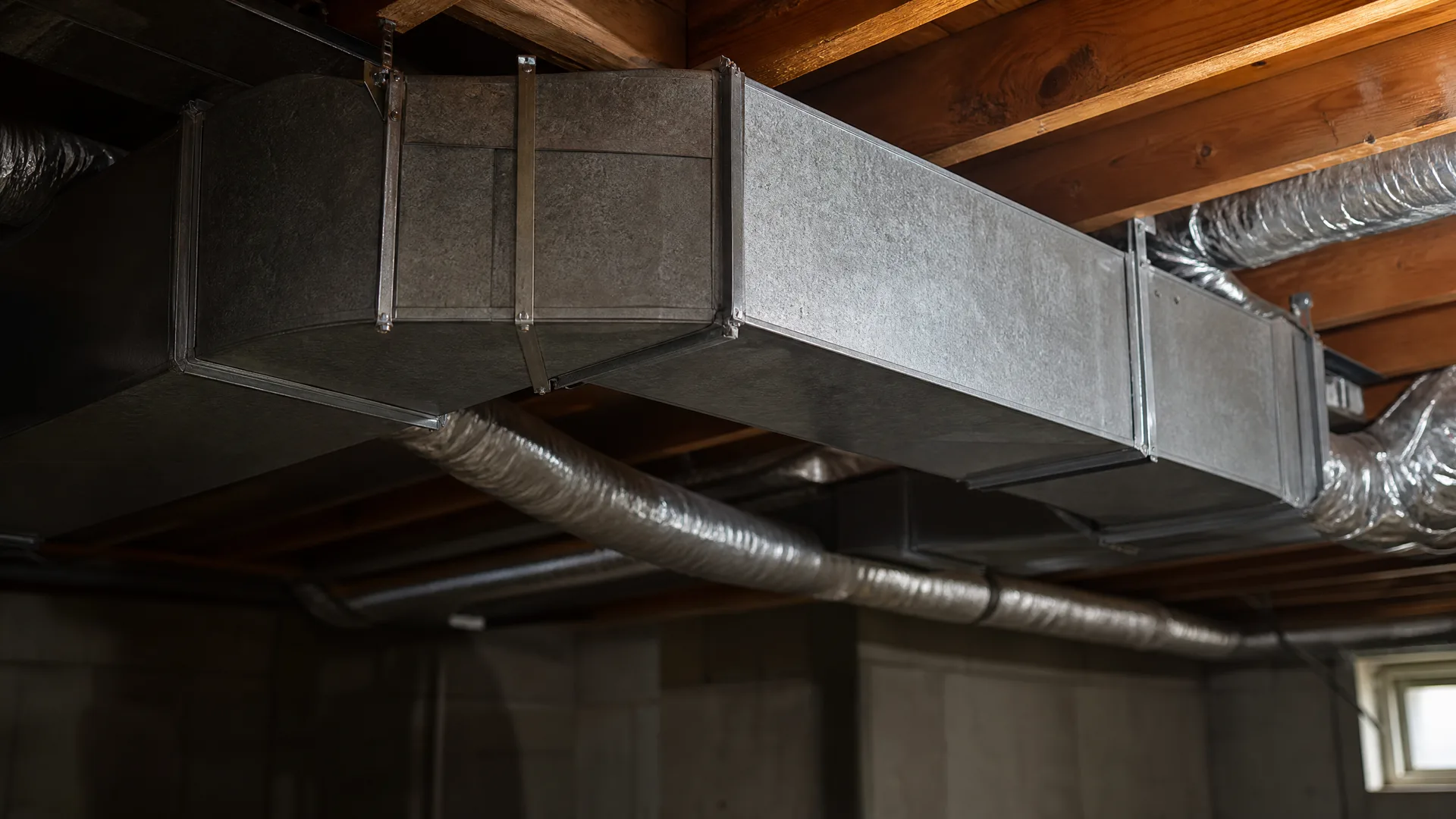
Rectangular sheet-metal HVAC trunk ducting and insulated flexible ducts running along wooden floor joists in an unfinished basement ceiling above concrete block walls.

Done looking for a duct system pro

Duct and vent cleaningDucts or ventsMinnehaha County, SD
Step 1 of 2

What ZIP code is the job in?