2,900 home dryer fires a year
That is the national yearly count tied to failure to clean the vent. Lint buildup is named the leading cause, ahead of any mechanical part failing.
 Hand off the search
One request and the dryer vent cleaning stops waiting on you.
Yes. Lint is the fuel, and a clogged vent is what lets it build up where the heat is. A dryer pushes hot, damp air out through that vent every time it runs, and if the lint is packed in there instead of blowing outside, it sits right next to the heating element. That's a fire risk, not a maintenance inconvenience.
Cold winters here mean the dryer runs more, and the vent run often has to cover more distance or more turns to reach outside through a wall built for South Dakota weather. Every extra foot and every bend is a place lint can catch instead of clearing out. A vent that was fine when the house was new can be mostly blocked years later without ever showing a sign you'd notice from inside the laundry room.
You don't have to figure out how bad it is yourself. A local contractor who clears vents in Brookings County homes all year knows what a vent looks like after a hard winter of heavy use, and what tools actually pull years of packed lint out of a run with a few bends in it. Send the request once and it goes to one contractor, not a handful of companies competing for the job. No waiting on hold, no explaining the problem five times to five different people.
Once you send the form, the work of finding someone who can look at your vent is off your plate. You're not left checking a list of names or guessing who's reliable. It goes to someone who already knows this kind of job in this kind of house, in this kind of winter, and that's the last thing you have to arrange yourself.
A dryer that takes two cycles to dry a load, a vent hood outside that barely flutters when the dryer runs, or a laundry room that gets warmer than it should while it's running are all worth paying attention to. None of them mean you have to solve it alone.
Yes, a clogged dryer vent is a real fire risk, and it works the same way in Brookings as anywhere else. Lint is what catches. A dryer pushes hot, damp air through that vent duct every single load, and if lint has built up along the way, the airflow slows down and heat has nowhere to go. That trapped heat sits next to the lint instead of venting outside with the air. Winters here push dryers harder for months at a time, drying heavier loads more often, which means more lint moving through that duct and more chances for it to catch somewhere along the run. A vent that empties slowly, a dryer that runs hot to the touch, or clothes that take two cycles to dry are all signs lint has built up enough to matter. It is not a rare failure. It is a buildup problem that gets worse the longer it goes unchecked.


That is the national yearly count tied to failure to clean the vent. Lint buildup is named the leading cause, ahead of any mechanical part failing.
A clogged vent makes the dryer run hotter and longer to finish a load, which is often the first sign in a house before anything else looks wrong.
You know lint builds up and airflow slows, but that doesn't explain how a pile of lint turns into an actual flame. You want the mechanical chain of events, the part that fails first and what it touches next, not just the warning that it's dangerous.
A dryer's heating element is built to have air moving past it constantly, carrying the heat down the duct and out. When lint packs the vent, that air slows or stops, so the heat has nowhere to go and builds up right at the element instead. Lint is dry fiber, and it sits close enough to catch once the temperature climbs past what it can take. Some dryers shut off when the internal thermostat senses the heat, but if that safety fails or the buildup is heavy enough, the lint ignites right there inside the duct. From there it can travel back toward the drum or spread along the vent run, especially if the ductwork passes through a wall or attic space on its way outside.





A load that used to take forty minutes now runs an hour or more, and you run it twice to get clothes dry. The top of the dryer feels hot to the touch partway through a cycle. The laundry room itself warms up and smells faintly like something scorched, not like fresh laundry. You open the lint trap after every load already, but the screen still looks coated even right after you clean it. Outside, the vent cap barely moves when the dryer is running, or you don't feel much air coming out at all. Any one of these by itself might not mean much. Together, they mean lint has built up somewhere between the drum and the outside wall, sitting next to a heating element that runs every time you do a load, and that is the setup a dryer fire starts from.
A dryer vent doesn't clear itself, and every load you run through a slow-draining one packs the lint in tighter. That's the risk sitting in your laundry room right now, not somewhere down the road. Clearing it isn't a job most people want to take on themselves either, since it means getting into the duct run behind the machine and often out to the wall cap, and getting it wrong leaves lint behind where it still matters. Send the request and it goes to one contractor local to Brookings County, someone who clears these vents in homes like yours all winter and knows what a packed duct looks like before it gets worse. You're not left fielding calls from five companies trying to win the job. One load that runs too hot, one lint trap that fills faster than it used to, that's reason enough to stop guessing and hand it to someone who does this for a living.

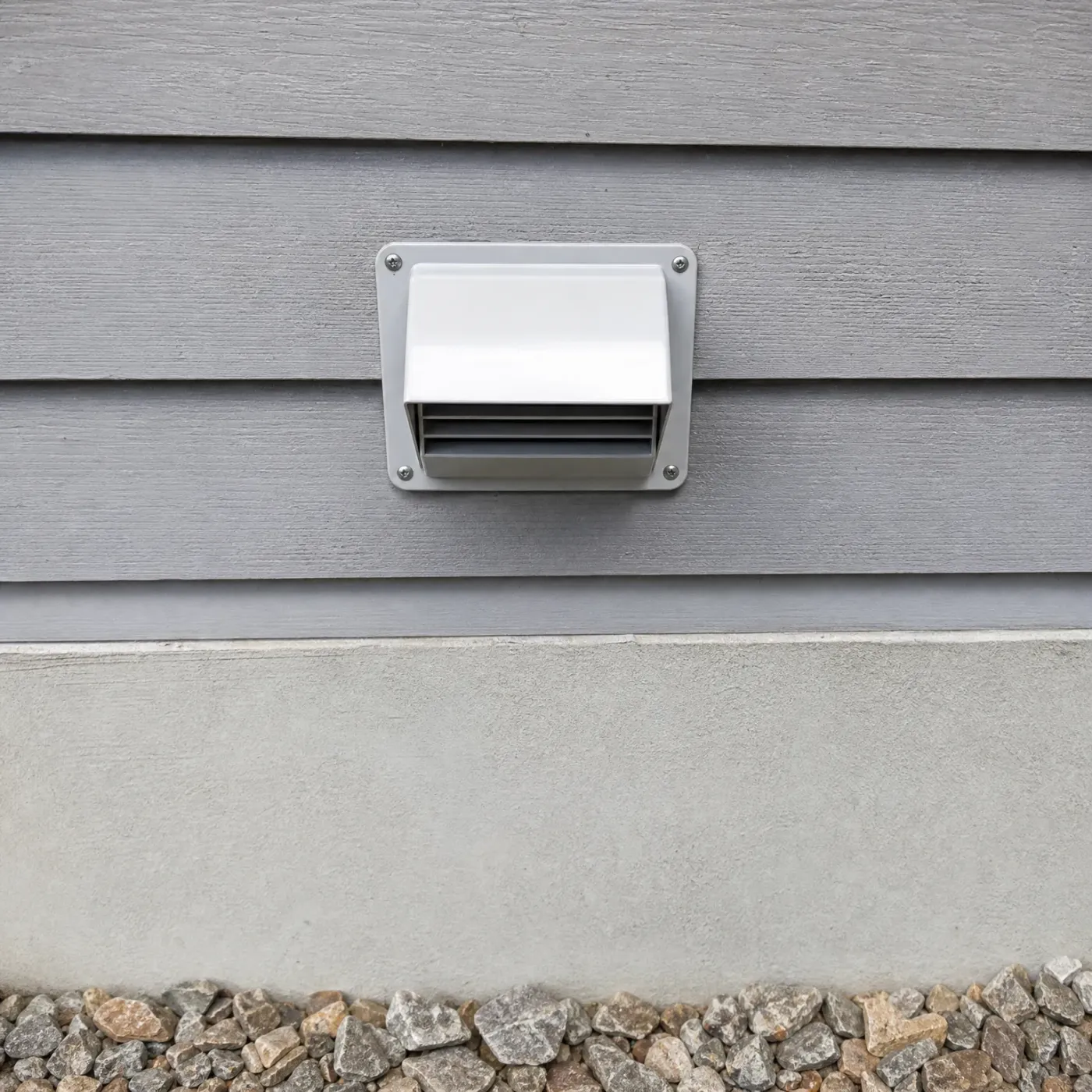
This is what a clear vent looks like from outside. The louvers swing open all the way when the dryer runs and close again when it stops. Air moves freely from the drum straight outside, carrying the heat and moisture with it, so nothing lingers near a heating element.

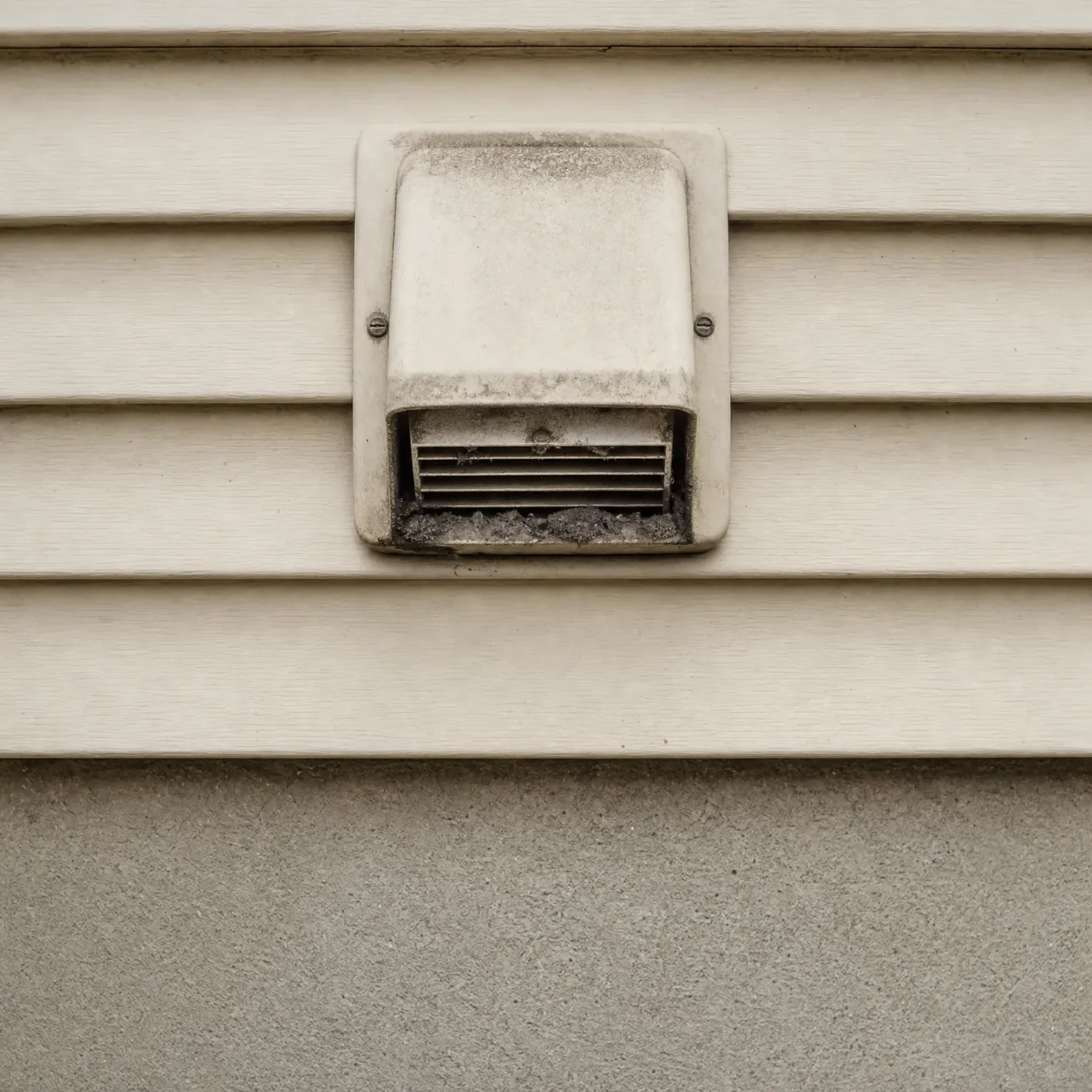
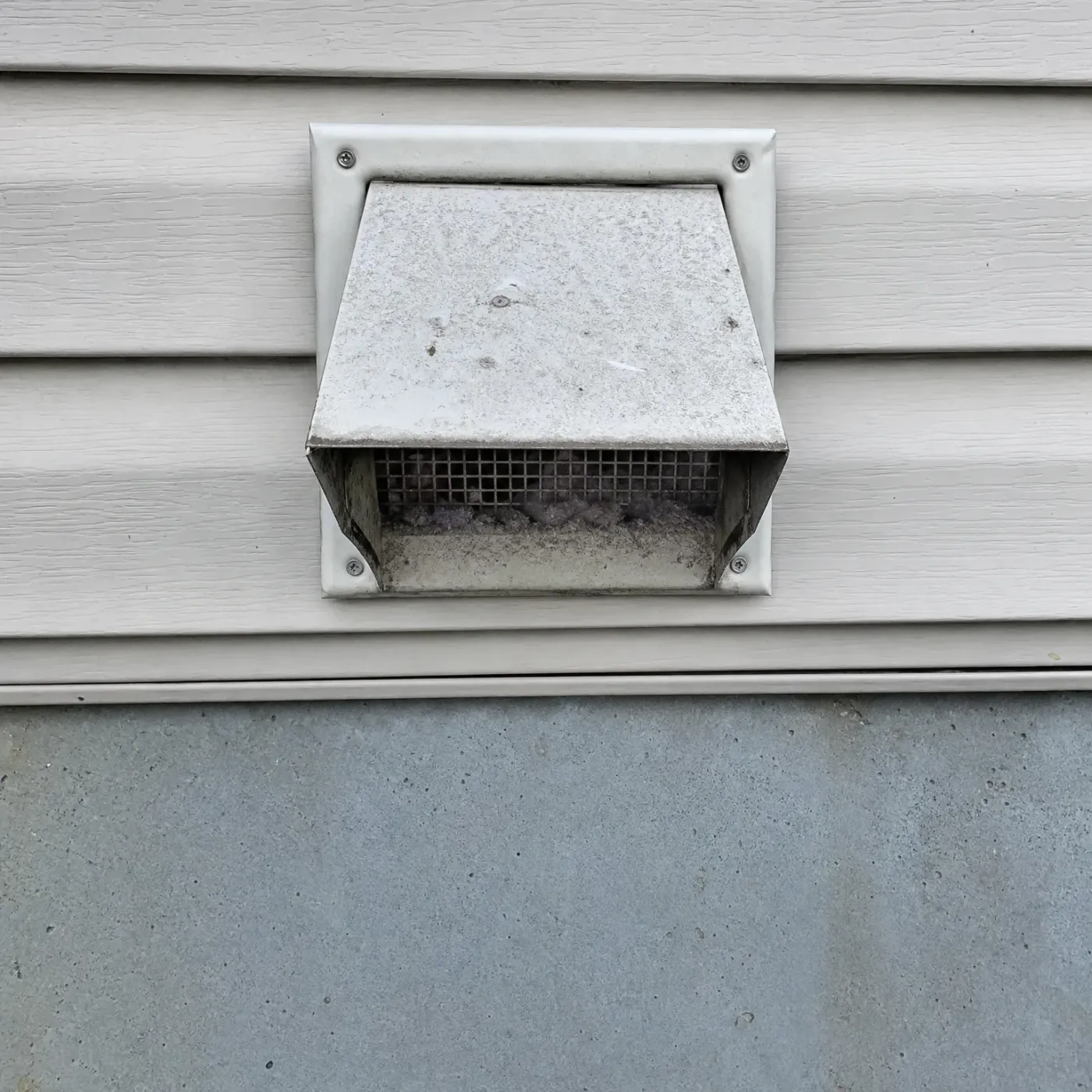
This cap is caked in lint and grime, and the buildup is holding the flap from closing right. That same buildup is sitting further back in the duct too, slowing the air enough that heat has somewhere to collect instead of venting out. From the yard, this is the sign something is wrong inside.
Most households in Brookings County run close to 2.33 people, which usually means a load of towels or sheets a couple times a week on top of everyday laundry. Every one of those loads pushes more lint toward that vent. A smaller household doesn't run the dryer less than you'd think, and the vent doesn't care how many people live there, only how many loads pass through it.
ACS 2020-2024
A dryer vent that's never been cleaned still works fine the first few years, so there's nothing to notice and nothing that tells you to act.
By the time the dryer runs hot or a load takes twice as long, lint has already packed in deep enough to slow the air and trap the heat.
2.33 people per household on average
Half the houses in Brookings County were built by 1983, and older vent runs are more likely to use metal duct joined in sections, with more seams where lint can catch and build.
Half the homes here were built by 1983
At 2.33 people per household, most homes here are doing laundry several times a week, and each load adds another pass of lint moving through the same vent.
Power here costs 11.36 cents per kilowatt-hour
Power here runs 11.36 cents a kilowatt-hour, cheap enough that a dryer working harder through a clogged vent doesn't show up fast on the bill, so the fire risk can sit there unnoticed.
ACS 2020-2024 · EIA-861 2025
A clogged dryer vent is a fire risk because lint is fuel and a packed vent puts it right where the heat is. That's true in Brookings County the same way it's true anywhere a dryer runs. You don't need to guess whether it applies to your house. Longer dry times, a dryer top that's hot to the touch, a laundry room that's warmer than it should be, any of those tells you the lint has already built up enough to slow the air down. That's the moment to deal with it, not after another season of loads pushing more lint into the same blocked run.
Clearing it out isn't something to hand to just anyone. It takes someone who works on duct runs and vent caps like yours on a regular basis, who knows which joints tend to pack first and what a slow vent looks like from the outside before you even open the cap. That's the kind of work a contractor who services dryer vents across this county does every week, not once a year.
When you put in a request here, it goes to one licensed local contractor, not a handful of companies bidding for the job. You get someone who knows this equipment and this area, and you're not stuck sorting through competing calls to figure out who to trust. Once the vent's been cleared, you'll know it. Dry times drop back down, the dryer stops running hot, and the risk that was sitting in that duct is gone.

Your request stays with one local pro.