









Profile view of a bearded man wearing a black baseball cap and a dark gray T-shirt against a plain light background.

Does closing vents save heat in a South Dakota home

Tune-up, service, or cleaningFurnace or heatingSouth Dakota
Step 1 of 2

What ZIP code is the job in?

Closing vents in unused rooms does not save heat, and it can work against you. Your furnace moves a set amount of air no matter how many vents are open. Shut several and that air has fewer places to go, so pressure builds in the ducts. The blower has to push harder, which uses more energy, not less, and the extra pressure can force warm air out through duct seams before it ever reaches a room. Some furnaces respond by running longer to satisfy the thermostat, which raises your gas use instead of lowering it. On top of that, the higher duct pressure can crack seals over time or strain the blower motor. If a room runs cold, the better fix is finding out why. Duct leaks, a blocked vent, or a return that's too small for that room all do more than closing a register, and they're worth having a furnace tech look at.

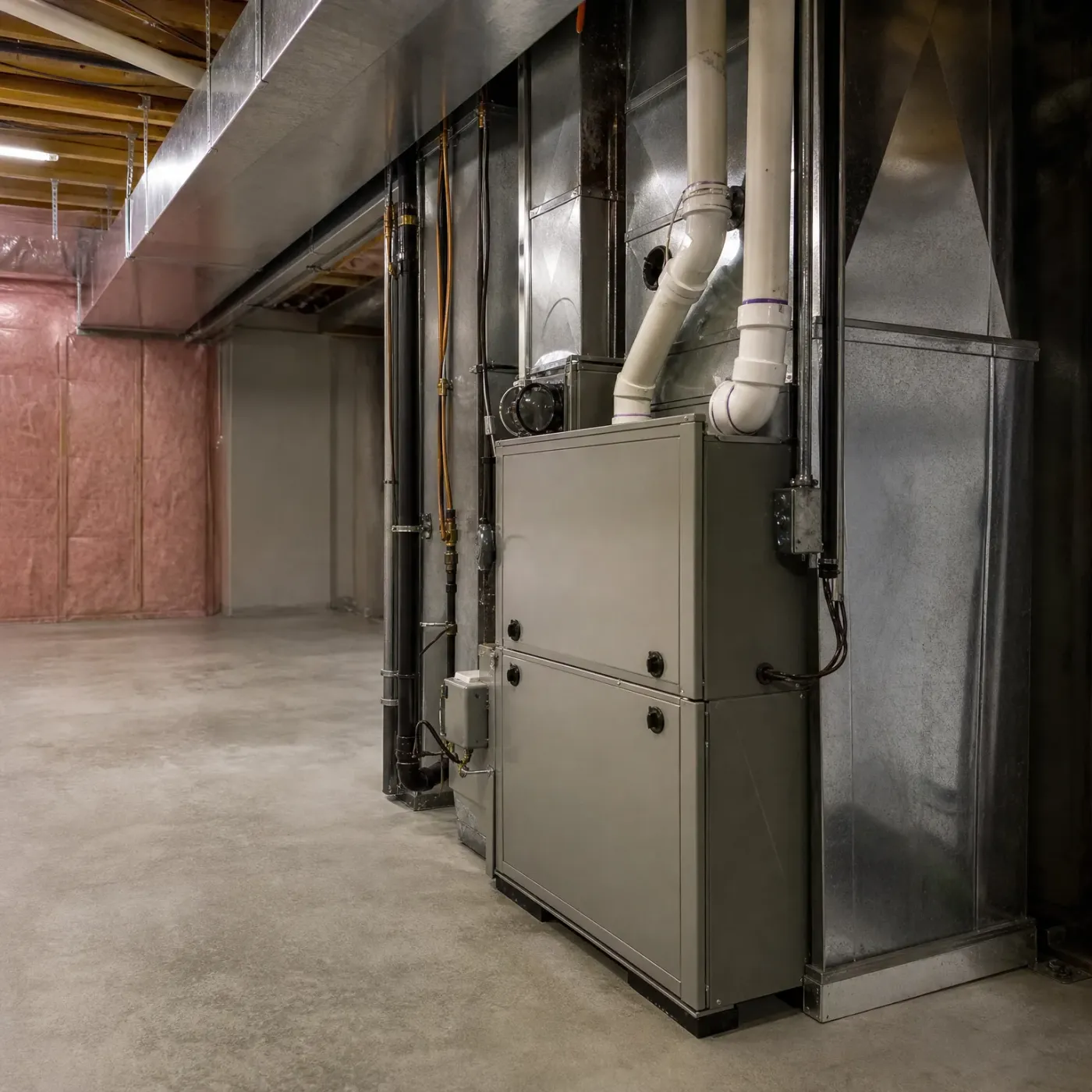
A gray high-efficiency furnace stands on a concrete basement floor beside galvanized sheet-metal ductwork, white PVC vent pipes, copper and black piping, and unfinished wood stud framing.
Leave the vents open and the system runs the way it was designed, air moving freely from the furnace through every duct and out each register.
A gray furnace with two access panels stands on a concrete basement floor beside sheet-metal ductwork, with pipes, flexible conduit and an electrical box on the concrete wall to the left.
Close too many vents and the blower fights the pressure, pushing harder against closed ducts while the panels and fasteners seal in that strain.

Your blower is built to move a set volume of air every time it runs, no matter how many registers are open. Close enough of them and that air still has to go somewhere. Pressure builds in the trunk line, and it looks for the easiest way out, usually a duct seam or a panel joint rather than the register you shut. Air that escapes there ends up in the attic or the crawlspace, heating neither that room nor the one you closed off. Meanwhile the blower motor is working harder against all that resistance, drawing more current and running hotter than it was built to. That extra heat can trip the limit switch on a blocked trunk, and the furnace shuts down mid-cycle until it cools enough to restart. None of this shows up as savings on a gas bill. It shows up as a furnace working harder to do less, and a system that a technician can usually spot with a static pressure reading during a regular check.

Where the air actually goes

  • Your furnace has a blower rated to move a set volume of air, and closing vents does not lower that amount, it only blocks where the air can go.
  • Static pressure builds in the ductwork once enough vents are shut, and duct seams and panel joints are the weak points where that pressure finds a way out.
  • Air forced past a duct seam goes into the attic or crawlspace instead of the room it was meant to heat, so the furnace runs without heating anything.
  • A blower working against closed vents draws more current and runs hotter, which wears the motor bearings faster than a system left open.
  • The limit switch can trip if heat builds up in a blocked supply trunk, shutting the furnace off mid-cycle until it cools back down.
  • A technician checking airflow during a maintenance visit can tell from static pressure readings whether vents have been closed enough to stress the system.
A man in a blue sweatshirt reclines with closed eyes in a brown leather armchair in a living room with a bookshelf, houseplant, sofa, window, and a side table holding newspapers and a dark mug.
A bearded man in a gray pullover reclines with closed eyes on a brown leather sofa in a sunlit room with a window, framed picture, potted plant, and a wooden cabinet holding papers and a dark mug.
A man in a gray sweater leans back with closed eyes in a brown leather armchair beside a wooden side table holding a dark mug and a folded newspaper, with bookshelves and a window seat behind him.
A man in a green sweater reclines in an armchair with his eyes closed and a slight smile, beside a window with plants, a small table holding a mug and folded newspaper, and bookshelves behind him.

Where that trapped air leaks out

Sheet metal ducts have seams, and furnace cabinets have access panels held on by clips or screws. Neither is built to hold pressure. Once a few vents are closed and the air has nowhere to go, it finds those seams and panel gaps instead of the register in the room you wanted heated. That is conditioned air leaking into a basement or an attic space instead of reaching the living room or bedroom it was meant for. Your furnace still burns the same amount of gas to make that heat. It just does not land where you need it, and the room with the closed vent was never actually saving you anything to begin with.

Why the furnace runs longer, not less

A thermostat only reads the temperature where it sits, usually a hallway or a main living area. When heat escapes through duct leaks instead of reaching every room evenly, that main area takes longer to reach the set temperature because the system is working against itself. The furnace answers by running longer to satisfy the thermostat. So the gas meter keeps turning, the blower logs more hours than it should, and the rooms you tried to shut off still pull warmth through walls and doorways from the ones you heated. Closing vents does not reduce the work. It just moves where that work goes.

A beige gas furnace with a metal flue pipe stands in a basement against concrete block walls, beside sheet-metal ductwork, copper and white plastic pipes, and a water heater at right.
Before you get your furnace maintenance
A gray high-efficiency furnace with white PVC vent pipes stands beside sheet-metal ductwork and a water heater in an unfinished basement with concrete walls and wood framing.
After you get your furnace maintenance
An unfinished basement with a concrete floor, pink insulation on one wall, exposed joists, galvanized sheet-metal ductwork, PVC vent pipes, and a tall gray furnace with attached gas and electrical lines.

One request and it's handed off

The pro who reaches out is licensed in South Dakota.

One request and finding someone for the tune-up is handled.

Find a licensed pro

There's no charge for the request.

Why does one room never warm up right

You've probably closed the vent in a spare room or the basement to push more heat toward the rooms you use. Feel around the register now and you may notice warm air leaking around the edges where it shouldn't, or hear a faint hiss near the furnace cabinet itself. That's the air finding another way out. Meanwhile the room with the vent closed stays cold anyway, and a room you didn't touch runs weaker than it used to. Your gas furnace is working the same as always, but more of what it makes is leaking into the basement or the duct chase instead of reaching your living room. Over a winter that adds up on the gas bill, and it puts more hours on a blower that's already straining against pressure it wasn't built to handle.

A beige high-efficiency furnace in an unfinished basement, with white PVC vent pipes, a yellow gas line, metal ductwork, and exposed wood framing on a concrete floor.

Vents open, system doing what it was built to do

Air moves from the furnace through the ducts and out every register without a fight. The blower sees the load it expects, the cabinet panels sit flush, and the gas line and flue run the way they were set up to run.


An older beige furnace with two louvered vent panels stands on a concrete basement floor, connected to galvanized ductwork and a metal flue pipe, with gas piping and flexible conduit on the wall behind.

Vents closed, the furnace pushing against itself

This older furnace already works through iron gas pipe and a flue that has to draw right. Close enough vents downstream and the panels on a cabinet like this one are the first place pressure finds a way out.

Why does closing vents put stress on my furnace?

You've probably heard that closing vents makes a furnace work harder, but it's not obvious why shutting a metal flap in the floor would strain a machine sitting in your basement or closet. The connection is in the ductwork between the two, and once you see how the blower and the ducts relate, the stress makes sense.

The blower pushes against the closed ducts instead of through them

Your furnace's blower is built to move air against a certain amount of resistance, the normal friction of air traveling through ducts and out registers. Close vents and that resistance goes up, because the same volume of air is being forced through fewer open paths. The blower motor works harder to push that air, drawing more current and running hotter than it was designed to. Over time that extra load wears on the motor and its bearings. It also raises pressure in the supply plenum right above the furnace, the one place in the system built to standard pressure, not the higher pressure closed vents create. Furnace maintenance is when a contractor checks static pressure and catches this kind of strain before it shortens the blower's life.

A two-story light-colored house with a gabled roof stands alone in a flat snow-covered field under a pale overcast sky, with a wooden post-and-rail fence and drifted snow in the foreground.

Winter nights here average 11°F across South Dakota, according to NOAA climate data. That's the kind of cold where your furnace is running long stretches, not just short bursts, to keep the house at temperature. A system working that hard depends on air moving the way it was built to move. Close off vents to save on a room you don't use, and you're adding resistance right when the blower is already under the heaviest load of the year. The strain lands on the same furnace that has to get you through months like this one, night after night at 11 degrees and colder.

NOAA nClimDiv 1991-2020 county normals weighted by homes

An older man with gray hair and a beard leans back on a beige sofa with his eyes closed, in a sunlit room with potted plants, a wicker chair and large windows behind him.
A woman in a cream knit sweater sits in an armchair with her eyes closed and a slight smile, beside an open window showing orange autumn foliage, with a mug, books and a lit candle on a small side table.

Open the vents and let a technician find out why that one room runs cold, whether it's a duct run that was never sized right or a register pushed shut years ago and forgotten.

A furnace tune-up checks static pressure and looks at the ductwork itself, so the cold room gets fixed at the cause instead of staying closed off all winter.

Winter nights average 11°F statewide

At 11 below zero most winter nights, your furnace is in long, steady run cycles to hold the house at temperature, not short bursts. Closing vents to try to help it through those stretches does the opposite. It needs that air moving freely all night.

NOAA nClimDiv 1991-2020 county normals weighted by homes

Open the vents, call someone local

  • Leave your vents open all winter and let the furnace move air the way it was built to.
  • A furnace tune-up checks static pressure and finds the real reason a room runs cold, whether it's a duct run or a register someone shut years ago.
  • A licensed local contractor who services furnaces through South Dakota winters every year knows what tends to fail first in a system run this hard.
  • Your request goes to one contractor, not a handful, so you deal with a single call instead of sorting through competing bids.
  • The fix for a cold room is finding the duct problem, not closing vents and pushing air where the ducts and cabinet were never built to hold it.

The answer doesn't change with the thermostat setting or the month. Closing vents doesn't save heat in a South Dakota winter, and on the nights it drops to 11 below, it works against the furnace instead of for it. The air your blower moves has to go somewhere. Give it every register and it runs the way it was built to. Shut several and it finds the ducts seams and the cabinet panels instead, and that's air you paid to heat leaking into a basement or an attic instead of a room.

If one room never gets warm, that's a real problem, but closing its vent doesn't fix it. It just hides it while putting the furnace under pressure it wasn't designed to handle, all winter, every winter. A tune-up finds the actual cause, a duct run that was sized wrong or a register someone shut years ago and never opened back up. That takes someone who knows what a furnace running long cycles at South Dakota temperatures tends to wear out first, because the contractor your request goes to works on this equipment through winters like this one every year. It's one contractor, not several, so there's no pile of competing bids to sort through, just a straightforward look at your ductwork and your furnace from someone local who's seen this exact problem before.

A curving paver walkway runs alongside a house with beige lap siding and a white-trimmed window, bordered by low shrubs, grassy plants, and trees in sunlight.
A dark-framed casement window with divided upper panes set in a stucco wall beside a stone-clad section, with hydrangeas, hostas and trimmed shrubs in a mulched bed above a lawn.
White horizontal lap siding wall with a single six-pane double-hung window, above a mulched bed of hydrangea shrubs with browning blooms, bordered by mown grass in low sunlight.
Interior corner with tan plaster walls, a potted olive tree in a large terracotta urn beside a floor-to-ceiling window, and a wooden bench with a beige cushion on a herringbone brick floor partly covered by a woven jute rug.
A wooden bench beneath a window holds a green linen cushion and a fringed cream throw, with a woven basket stored underneath on a wood plank floor.

Done looking for a furnace pro

Only one pro gets your request, so you hear from one company.

Find a local pro

You only hire the pro if you want to.






