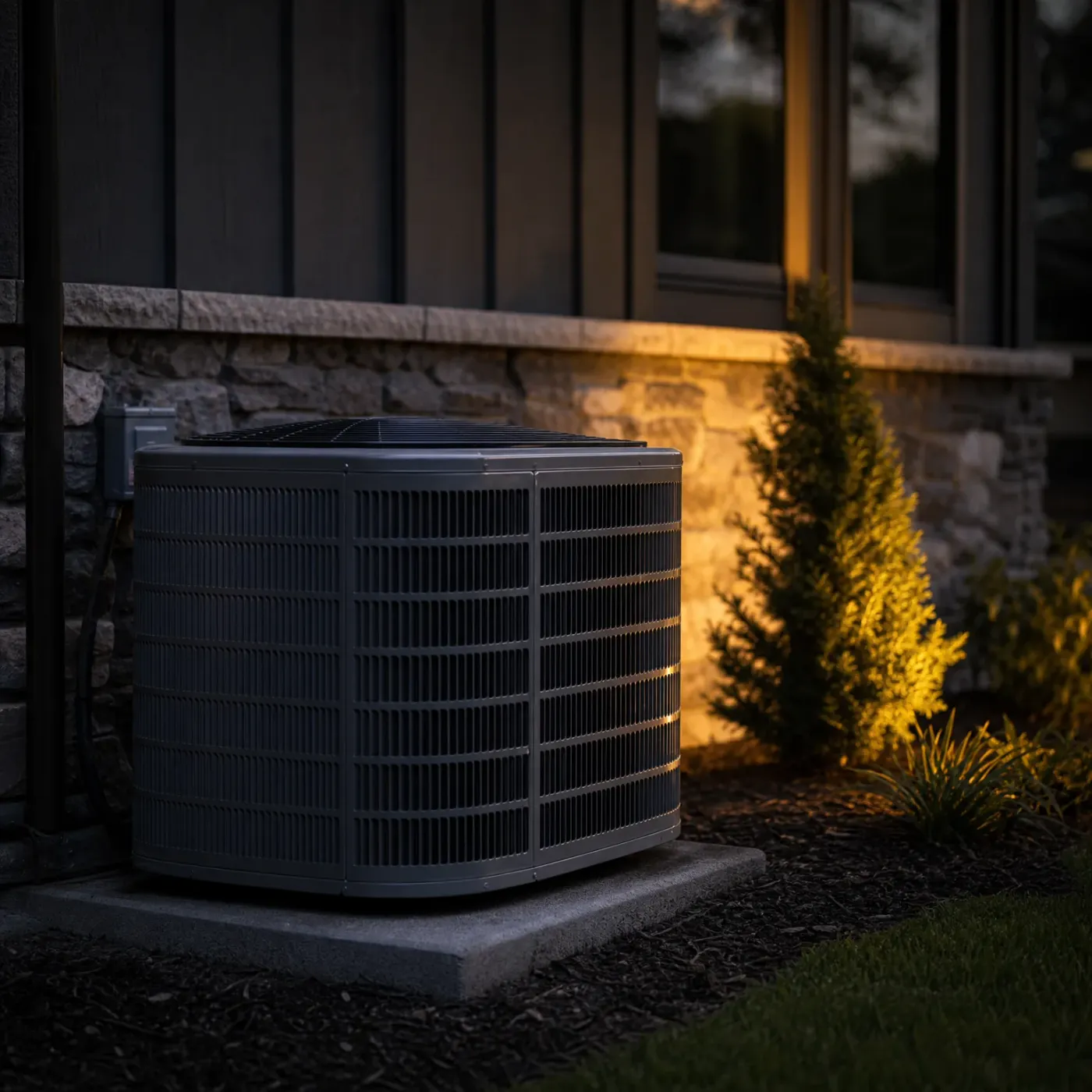





An outdoor air conditioning condenser unit on a concrete pad beside a house with stone veneer and vertical board siding, with a small shrub and mulch bed lit by a ground light at dusk.

One form, no calling around

Does closing vents help your AC in South Dakota

Closing vents in unused rooms seems like it would push more cold air where you want it, but with most systems it just throws off the balance your AC was set up to hold. This page gets into what closing vents actually does to your system and when shutting one off is fine. If you want someone to look at your setup and tell you what's worth doing, that beats tracking down a contractor yourself and repeating your situation on call after call.

Skip calling around

No, closing vents does not help your AC, and in most homes it works against you. Your air conditioner's blower is set to push a certain amount of air through the whole duct system. Close off a few vents and that air has nowhere to go. Pressure builds in the ducts, and the system has to push against it. That can mean air leaking out through duct seams before it ever reaches a room, or the coil icing up because not enough air is moving across it. South Dakota summers run warm but the air is not heavy, so your AC is not fighting humidity the way systems do elsewhere. Its job is simpler, which means it is tuned closer to a fixed airflow rate. Shutting vents to save a little on a cheap kilowatt hour costs you more in strain on the blower and the coil than it saves.

A woman in a cream sweater with her hair in a bun laughs while seated at a stone counter holding a glass of red wine, in a dimly lit interior with a sofa, houseplants and a large window at night.
A woman with long dark hair in a cream knit sweater laughs while looking off to the side, seated in front of a dimly lit kitchen with an island, stools, open shelving and a potted plant, with a glass of red wine in the foreground.
A smiling woman with long dark wavy hair in a light knit sweater sits at a marble counter with a glass of red wine, with a dimly lit living room and kitchen in the background.
A smiling woman with long wavy brown hair in a beige sweater sits at a white marble counter with a glass of red wine, with a living room, dining table and kitchen cabinets behind her.

Closed Vents vs. Open Vents

Vents closed

  • Pressure builds in the branch lines that feed the closed rooms, and that pressure pushes back toward the blower.
  • The static pressure rise can force air out through duct seams and joints before it ever reaches a register.
  • Coils run colder than they should when airflow drops, and a coil that gets too cold can ice over.
  • Rooms near the closed vents often end up warmer than before, not cooler, since the air has to go somewhere else first.
  • The blower motor works harder against the added resistance, which shows up as higher power draw over a South Dakota summer.
  • A system that cycles against this kind of resistance wears its parts faster than one running the airflow it was set up for.

Vents open

  • Air moves through the duct system the way it was balanced to when the contractor set it up.
  • Static pressure stays in the range the blower and coil were designed to handle.
  • Every room gets the share of airflow the ductwork was sized to deliver to it.
  • The coil holds the temperature it's meant to, so there's less risk of it icing over on a hot day.
  • The blower runs at the load it expects, without the extra strain of pushing air past blocked registers.
  • A contractor who services your system can check the duct balance directly rather than you guessing room by room.
A gray outdoor air conditioner condenser unit on a concrete pad beside a house with horizontal lap siding, with a wall-mounted disconnect box and conduit at left and a green shrub and mulch bed at right.

Vents left open

Your AC runs the way it was set up to run. Air moves through every branch line at the pressure the blower was built for. The coil stays at a normal temperature, so it pulls moisture out of the air instead of icing over. Nothing in the attic or the closet is working harder than it has to.


An outdoor air conditioner condenser unit on a concrete pad beside a house with horizontal lap siding, with a conduit running to a gray electrical disconnect box on the wall.

Vents closed off

Closed registers trap air in those branch lines, and the pressure backs up toward the blower. The coil can run colder than it should, which leads to ice instead of cooling. Forced air can also find its way out through a duct seam before it ever reaches a room that needs it.

Why does closing a vent actually make my AC work harder?

It seems backward that shutting a vent could cause more strain instead of less. The logic feels sound: less space for air to go, more of it pushed where you want it. But the blower doesn't know you closed anything. It's still trying to move the same volume of air it was set up to move, and that air has to go somewhere.

The blower pushes a fixed amount of air no matter how many vents are open

Your AC's blower is sized to move a set amount of air through the duct system, based on how many vents and how much duct are on the other end. Close a few vents and the blower still spins at the same speed, trying to push the same volume into a smaller opening. That's what drives static pressure up. The motor pulls more current to keep moving air against that resistance, and it runs longer to satisfy the thermostat because less air is actually making it into the house to cool the rooms you're using. None of that shows up as more cold air where you want it. It shows up as a harder-working blower and a system that wasn't built to run that way.

An outdoor air conditioning condenser unit on a concrete pad beside a house with horizontal siding and a concrete foundation, with dry brown leaves on the ground to either side.
Before you get your air conditioner maintenance
A gray outdoor air conditioning condenser unit on a concrete pad beside a house with horizontal lap siding, with a wall-mounted disconnect box and conduit, and shrubs to the left.
After you get your air conditioner maintenance

Skip the search

A system running with pressure it wasn't built to handle doesn't fix itself. Once a coil starts icing over or air is leaking out through duct seams, it keeps doing that every time the AC cycles on, all summer. Finding out why your house runs warm in one room and cold in another, or why the coil freezes up, takes someone who can look at your actual duct runs and your actual blower, not a general rule about vents. That usually means tracking down a contractor, explaining the symptoms, waiting on a callback, then doing it again with a second company to see if the price or the answer changes. Here it's simpler. A request through this page goes to one licensed contractor working in South Dakota, someone who deals with this kind of airflow problem on these kinds of systems all season and already knows what to check first. You explain it once, to the person who's actually going to look at it.

What static pressure does to a system

Every air conditioner is rated for a range of static pressure, the resistance the blower pushes against to move air through the ducts. That rating assumes all the vents are open. Close several and the resistance climbs past what the blower was built for. Some systems respond by moving less air overall, which means less cooling at every register, not just the ones you closed. Others keep pushing the same volume at a higher pressure, which is what drives air out through duct seams instead of the rooms you wanted cooled. Either way, the system is working outside the range it was designed for, and that shows up as rooms that don't cool evenly no matter how many vents you adjust.

What a dry South Dakota summer hides

A coil that's running too cold from reduced airflow still pulls moisture out of the air, and with the lower humidity here, you won't feel that the way someone in a muggier state would. That makes it easier to miss the early signs of ice building up on the coil, because the air coming out still feels dry and cool even as the system struggles behind the wall. By the time a vent is blowing warm air or not blowing at all, the coil has likely been icing over for a while. A maintenance visit catches that kind of airflow problem on the coil itself, before it turns into a repair.

Power costs 13.32 cents per kilowatt-hour statewide

At 13.32 cents per kilowatt-hour, running your AC longer than it needs to costs you directly. Closed vents don't lower that rate, they just make the system work harder to move the same air, so you pay more for the same cooling instead of less.

EIA-861 2025 statewide residential average

An outdoor air conditioner condenser unit on a concrete pad beside a house with beige horizontal siding and a stone-veneer base, with refrigerant lines running to a gray wall-mounted electrical box, surrounded by dark mulch, a flowering shrub and an evergreen on the left.

Unit running the way it was set up to run

Every vent in the house stays open and the blower moves air at the pressure it was built for. The coil stays cold enough to pull moisture out of the air without icing over, and the condenser outside cycles off on schedule instead of running long.

An outdoor air conditioning condenser unit on a concrete pad beside a house with light vinyl siding, an electrical disconnect box and conduit on the wall, bare shrubs and mulch to the right, and a concrete walkway in the foreground.

Unit working against pressure it wasn't built for

Vents get closed down the hall and the blower keeps pushing the same volume of air into a smaller space. The condenser outside runs longer to move it, and a coil icing over inside can show up here as weak airflow at the unit itself.

A closed dark laptop and a ceramic mug of coffee on a wooden dining table, with wooden chairs, a dark kitchen cabinet with cutting boards and a potted plant, and a leafy plant by a window in the background.

Leave the vents open and let the system do its job

Closing vents doesn't help your AC. Leaving every vent open lets the blower move air at the pressure it was built for, keeps the coil cold enough to pull moisture out of the air, and keeps the whole system running the way it was designed to run. That's the answer, and it holds true whether one room runs warm or the whole house does.

If a room still runs warm with the vents open, that's worth a look from someone who works on these systems locally, instead of you guessing room by room all summer. Finding that person usually means searching around, calling a few companies, and explaining the same problem more than once before you get a straight answer. Skip that part, and you're left with one licensed local contractor who already knows what tends to go wrong in a South Dakota summer, and what to check first.

Interior corner with a beige sofa holding a dark green and a light cushion and a textured throw, a potted small-leaved tree beside a white-framed window, and a dark shallow bowl on a wooden coffee table in the foreground.
A smiling bearded man in a navy crewneck sweater sits at a dinner table with a glass of red wine, plates and glasses in the foreground, in a dimly lit room with a lamp and framed picture behind him.
A woman in a dark gray sweater reclines on a light sofa with eyes closed and a slight smile, under a textured gray blanket with an open book resting on her lap, with a lit table lamp and plant in the background.

Air Conditioner Maintenance

Explain it one time

A licensed local pro takes the request for your air conditioner tune-up.

A black-framed smartphone standing upright against a plain white background, its screen filled with solid green.
Tune-up, service, or cleaningCentral ACSouth Dakota
Step 1 of 2

What ZIP code is the job in?







