Mini Split Installation in Yankton, SD
A new system here will heat from October through May and cool from June through August every year. Tell us about the house, and a licensed contractor who covers Yankton County will get in touch.
Tell us about the job
It takes about a minute.
What Yankton winters and summers ask of a mini-split
Winter nights here average 13°F from December through February. A mini-split heat pump has to keep pulling heat out of air that cold, and it runs on most days from October through May, eight months of the year. Summer adds three more months of work, with afternoons averaging 83°F. Between the two seasons, this system is heating or cooling a Yankton home 11 months of the year.
A mini-split installed new has to be built for that kind of year. Any unit manufactured from 2023 on must meet 14.3 SEER2 for cooling and 7.5 HSPF2 for heating, the federal minimum for split-system heat pumps. Yankton County has also seen 35 winter storms and 62 damaging wind events over the past ten years, so the outdoor unit and its mounting need to hold up through weather like that, not just mild days.
- 8 months
- October through May, your system heats
- 3 months
- June through August, it cools
- 13°F
- the average winter night it heats against
- 83°F
- the average summer afternoon it cools against
NOAA nClimDiv, 1991–2020 normals
In South Dakota, HVAC licensing for homes is left to the cities and towns.
In Yankton County, whether a contractor needs a local license depends on the city or town, since South Dakota leaves that decision to them rather than setting one rule for the state. There is no state record of who is licensed to install a mini-split here, so any protection comes from what the city requires, and that can differ from one town to the next.
In most cities and counties, installing a mini-split needs a permit from the local building office, with an inspection once the work is done, so someone with no stake in the job checks it. Where South Dakota has no license to point to, that permit and inspection are what stand in for one.
Source: South Dakota Legislature
- Is a mini split worth it?
- For the right house, yes. A mini split heats and cools without ductwork, so it works well in additions, garages, or homes that never had a duct system to begin with. It also handles both jobs, heating and cooling, with one system instead of two. Whether it makes sense for your house depends on what you already have for heat and how many rooms need to be covered, and a contractor can walk through that with you.
- How many rooms can a mini split cover?
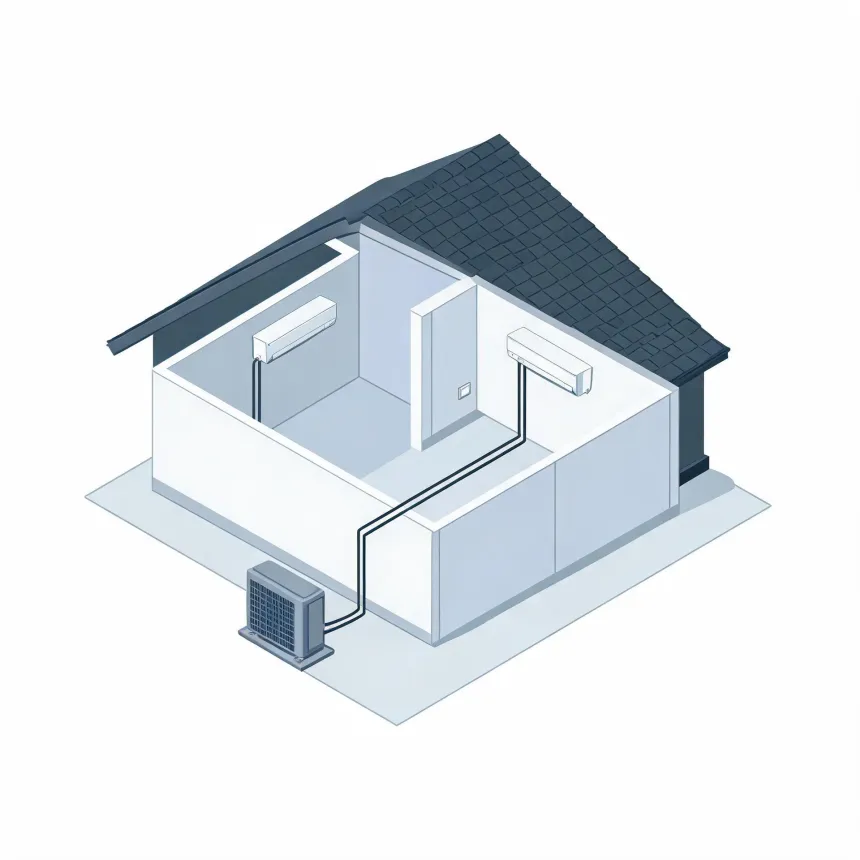
- A single outdoor unit can run one indoor head or several. Each indoor head handles one room or one open area, so the number of heads depends on how many rooms need their own heating and cooling. The outdoor unit has to be sized for the total load of every head running at once, which a contractor works out room by room rather than guessing at.
- Can a mini split heat a whole house?
- It can, if there's an indoor head in every room or open area that needs heat. The catch here is winter. Nights average 13 degrees from December through February, and a mini split has to be sized for that kind of cold, not just for a mild fall day. A contractor needs to check the system's rated output at low temperatures before counting on it as the only heat source for the house.