Mini Split Installation in Hot Springs, SD
A new system here will heat from September through May and cool from June through August every year. Tell us about the house, and a licensed contractor who covers Fall River County will get in touch.
Tell us about the job
It takes about a minute.
Nine months of heating and 14 below zero nights
Winter nights here average 14°F from December through February, and homes need heat from September through May. That is nine months of the year a mini-split has to hold a house warm against real cold, not just take the edge off. Summer only asks three months of it, with afternoons averaging 85°F, so the heating side of the system does most of the work over a year.
A mini-split installed here has to be sized for that cold, not just the mild stretch on either side of it. If it's manufactured from 2023 on, the unit has to meet 14.3 SEER2 for cooling and 7.5 HSPF2 for heating, the federal minimum for this kind of system. Fall River County has also seen 59 winter storms and 154 damaging wind events over the past ten years, so the outdoor unit and its mounting need to hold up to wind and ice, not just cold air.
- 9 months
- September through May, your system heats
- 3 months
- June through August, it cools
- 14°F
- the average winter night it heats against
- 85°F
- the average summer afternoon it cools against
NOAA nClimDiv, 1991–2020 normals
In South Dakota, HVAC licensing for homes is left to the cities and towns.
South Dakota has no state license for HVAC contractors. Whether one is required at all is up to the city or town, so there is no statewide record to point to either way.
For this mini-split installation, the protection that applies everywhere is the permit process. Most building offices require a permit before the work starts and an inspection once it is finished, which puts someone other than the installer in front of the completed job. That inspection is what stands behind the work here, not a license.
Source: South Dakota Legislature
- Is a mini split worth it?
- For a lot of homes here, yes. A mini split gives you both heat and cooling from one system, and homes here need one or the other all twelve months of the year. They work well for additions, garages, or rooms that never got ductwork, and for houses where running new ducts isn't practical. A contractor can look at your house and tell you whether it makes more sense than what you have now.
- How many rooms can a mini split cover?
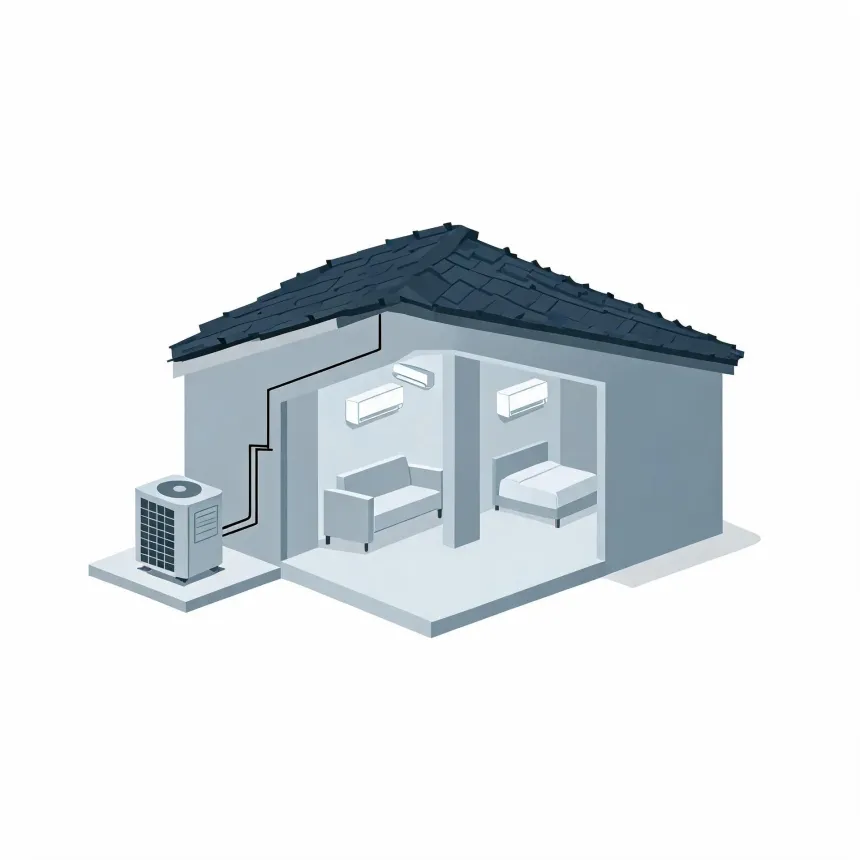
- A single indoor unit is built for one room or one open space. If you need to cover more rooms, a multi-zone system lets one outdoor unit run several indoor heads, each with its own thermostat, so a bedroom, a living room, and a den can each get their own settings. How many zones you can add depends on the outdoor unit and the layout of the house, so a contractor will need to look at your place to say what fits.
- Can a mini split heat a whole house?
- It can, if it's sized and placed for that. A multi-zone system with enough indoor units can cover every room, and mini splits are heat pumps, so they're built to heat as well as cool. Winters here average 14°F, and homes need heat from September through May, so the system has to be sized for those cold nights, not just for a mild day. A contractor can work out what your house needs room by room.