Mini Split Installation in Watertown, SD
A new system here will heat from September through May and cool from June through August every year. Tell us about the house, and a licensed contractor who covers Codington County will get in touch.
Tell us about the job
It takes about a minute.
What a mini-split in Watertown has to handle
Winter nights here average 6°F from December through February. That is real cold for a heat pump to pull warmth out of, and it is doing that work most of the year, since homes in Codington County need heat from September through May, nine months out of twelve. Summer only asks for three months of cooling, June through August, with afternoons averaging 79°F.
A new mini-split still has to meet the federal minimum for a split-system heat pump, 14.3 SEER2 for cooling and 7.5 HSPF2 for heating. With heating being the main job here, the HSPF2 number is the one that matters most for how it performs on those 6°F nights.
- 9 months
- September through May, your system heats
- 3 months
- June through August, it cools
- 6°F
- the average winter night it heats against
- 79°F
- the average summer afternoon it cools against
NOAA nClimDiv, 1991–2020 normals
In South Dakota, HVAC licensing for homes is left to the cities and towns.
Whether this mini-split installer needs a local license depends on the town, since South Dakota leaves that decision to each city and county rather than setting one rule statewide. There is no state license behind the work here, so nothing was tested or recorded at that level.
What covers this job instead is the permit process most local building offices use for this kind of work. In most cities and counties, installing a mini-split needs a permit from the local building office and an inspection once the installation is done. That inspection is what checks the work, not a license number.
Source: South Dakota Legislature
- Is a mini split worth it?
- For most homes, yes, especially if you're heating a room that never had ductwork or trying to cool one that always runs hot. A mini split gives you both heating and cooling from one system, and it doesn't lose energy through ducts because there aren't any. Winters here run cold, down to 6°F on average overnight in the coldest months, so the outdoor unit and the sizing matter more than they would somewhere milder. A contractor can tell you whether a mini split alone will carry your house through that or whether it makes more sense paired with your existing furnace.
- How many rooms can a mini split cover?
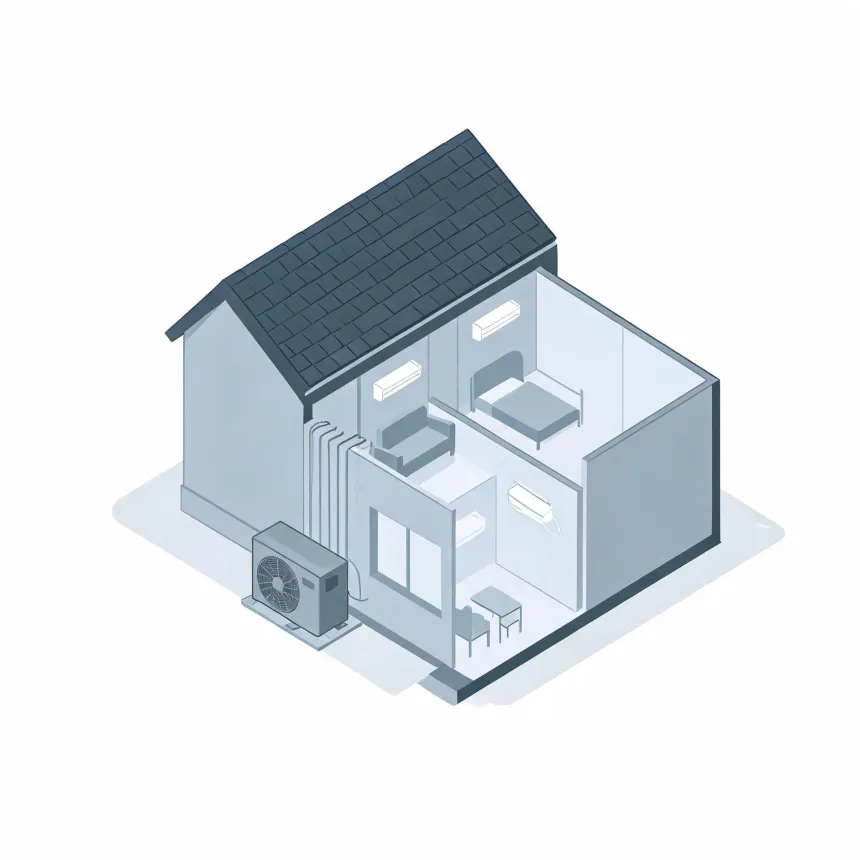
- A single outdoor unit can run more than one indoor head, so it can cover more than one room at once. Each indoor head handles its own room or open area, so a one-to-one setup covers a single room and a multi-zone setup covers several. The right number comes down to the size and layout of the space, not a fixed rule, so a contractor sizing the job will look at your actual rooms before recommending how many heads you need.
- Can a mini split heat a whole house?
- It can, if enough indoor heads are placed to cover every room and the system is sized for the coldest nights you get. Homes here need heat from September through May, nine months out of the year, with winter lows averaging 6°F, so the heat pump has to be rated to keep working at those temperatures without falling back on backup heat. Some houses do this with mini splits alone, others keep the furnace for the coldest stretches and let the mini split carry the rest of the year. Which setup fits your house depends on layout and insulation, so that's a call for the contractor doing the install.