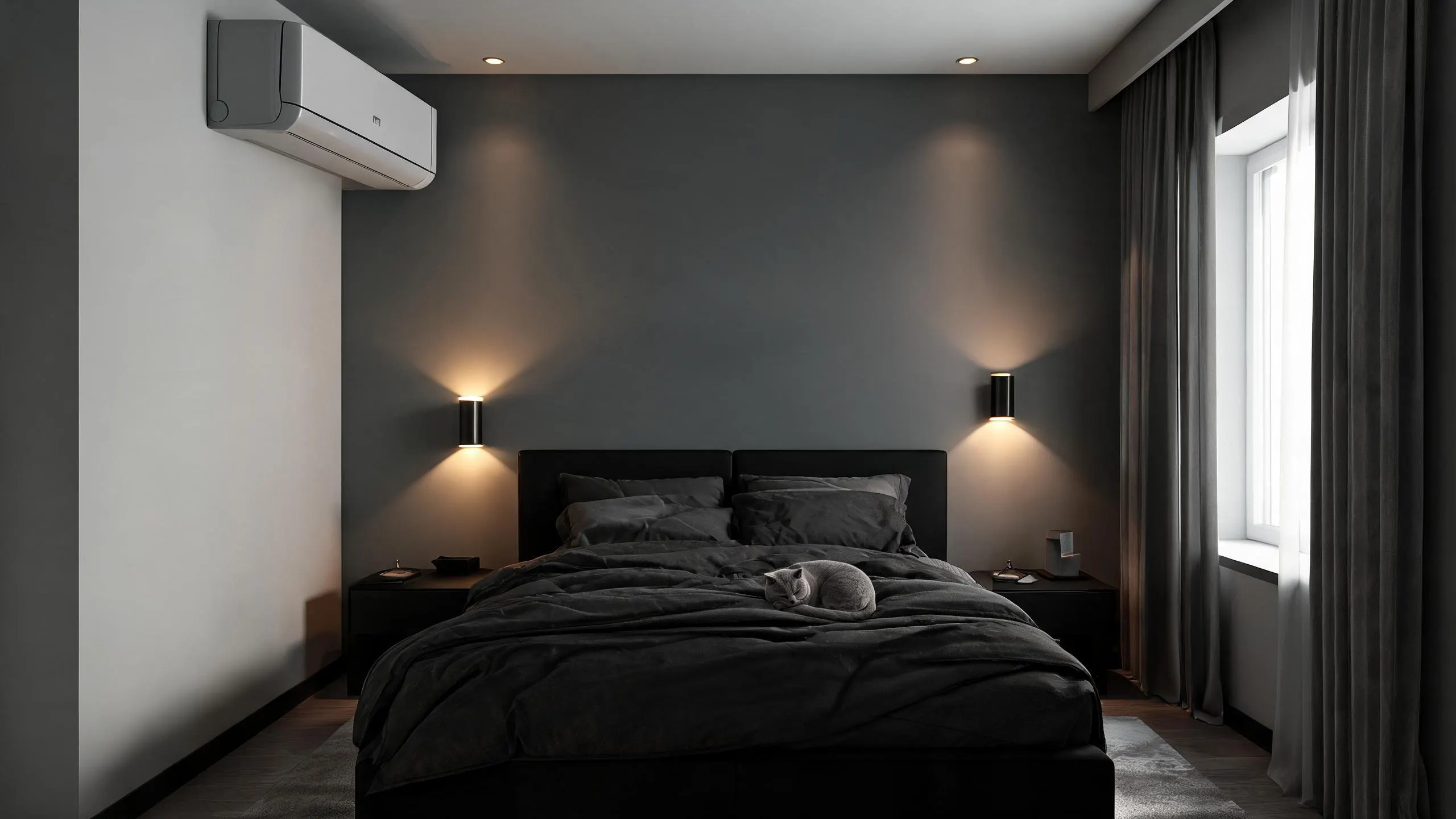
Mini Split Installation in Mitchell, SD
A new system here will heat from October through May and cool from June through August every year. Tell us about the house, and a licensed contractor who covers Davison County will get in touch.
Tell us about the job
It takes about a minute.

What a mini-split in Mitchell has to handle
Winter nights here average 11°F from December through February, and a mini-split installed in Mitchell needs to hold heat on those nights, not just in a mild snap. Homes here need heat or cooling 11 months out of the year, from October through May on the heat side and June through August on the cooling side. That is most of the year asking something of the system, with only a short stretch of easy weather in between.
Any mini-split installed new has to meet the federal minimum for a split-system heat pump, 14.3 SEER2 for cooling and 7.5 HSPF2 for heating. In a place where summer afternoons reach 84°F and winter lows sit near 11°F, that heating side of the rating matters as much as the cooling side, since the unit will lean on its heat pump for eight months against real cold.
- 8 months
- October through May, your system heats
- 3 months
- June through August, it cools
- 11°F
- the average winter night it heats against
- 84°F
- the average summer afternoon it cools against
NOAA nClimDiv, 1991–2020 normals
In South Dakota, HVAC licensing for homes is left to the cities and towns.
Davison County does not run its own HVAC license either, so whatever rule applies comes from whichever city or town the house sits in. There is no statewide test or record to check here, only whatever a local office keeps on file, and that office is not the same in every town.
For a mini-split, in most cities and counties the work needs a permit from the local building office and an inspection once it is done. That inspection is what checks the work, not a license, since South Dakota does not issue one. The building office looks at how the unit is installed and wired after the fact, and in a place with no state license, that inspection is the record that the job was done and checked.
Source: South Dakota Legislature
- Is a mini split worth it?
- For most homes, yes, especially if a room runs hot or cold and the ductwork can't fix it. A mini split heats and cools without ducts, so it works well for additions, converted garages, or a room a furnace and central air never handled right. Mitchell winters push down to 11°F on average and summers reach 84°F, and a mini split rated for cold climates can cover both. The bigger question is whether it fits your house better than extending ductwork or adding a zone, and that depends on the layout, which a contractor should walk through with you.
- How many rooms can a mini split cover?
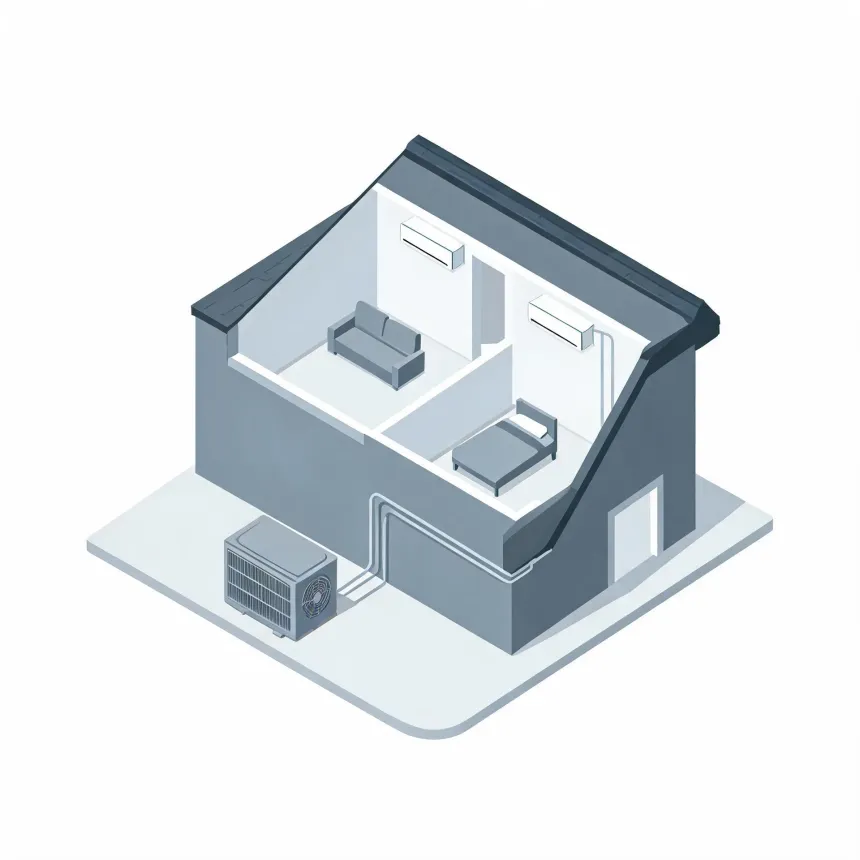
- A single outdoor unit can run one indoor head or several, up to eight on some multi-zone systems. Each indoor head handles one room or open area, so the count depends on how many separate spaces need their own temperature control. A single-zone system covers one room well. A multi-zone system splits capacity across several rooms, so a contractor sizes each head to the room it's in, not just the total square footage.
- Can a mini split heat a whole house?
- It can, but it depends on the house. A multi-zone mini split with enough indoor heads, sized room by room, can heat an entire home the way a furnace does. What matters is whether every room gets its own head or is open enough to share one, and whether the system is rated to keep up when it's 11°F outside, which is a normal winter night here. A contractor can look at the floor plan and tell you if whole-house coverage makes sense or if some rooms are better served by keeping the existing heat source.