Mini Split Installation in Belle Fourche, SD
A new system here will heat from September through May and cool from June through August every year. Tell us about the house, and a licensed contractor who covers Butte County will get in touch.
Tell us about the job
It takes about a minute.
Nine months of heat, three of cooling
Belle Fourche asks a mini-split to work most of the year. Winter nights average 12°F from December through February, and that is when a heat pump has to work hardest to pull warmth out of cold air. Summer afternoons average 84°F, milder work by comparison, but the unit still has to be sized and installed right to keep up both directions.
A new mini-split here needs to be rated for both jobs, not just one. If it was manufactured in 2023 or later, federal law sets the floor. It has to hit at least 14.3 SEER2 for cooling and 7.5 HSPF2 for heating. With nine months of heating and three of cooling every year, the heating rating matters here as much as the cooling one, maybe more.
- 9 months
- September through May, your system heats
- 3 months
- June through August, it cools
- 12°F
- the average winter night it heats against
- 84°F
- the average summer afternoon it cools against
NOAA nClimDiv, 1991–2020 normals
In South Dakota, HVAC licensing for homes is left to the cities and towns.
South Dakota has no state license for HVAC contractors. Whether one is required for this job depends on the city or county where the house sits, since some places license contractors on their own and some do not. There is no state test behind any of it and no state record to check either way.
For a mini-split installation, most cities and counties require a permit from the local building office, with an inspection once the work is done. That inspection is what checks the wiring and refrigerant lines were done right, since a bad connection is the part of this job that can cause harm.
Source: South Dakota Legislature
- Is a mini split worth it?
- For most homes here, yes, especially in a room that needs its own heating and cooling. Belle Fourche sees winter lows around 12°F and summer afternoons near 84°F, and a mini split rated for cold climates can handle both without ductwork. It works well for an addition, a garage conversion, or a house that relies on a system struggling to keep one room comfortable. A contractor can look at the space and tell you whether one unit covers it or you need more.
- How many rooms can a mini split cover?
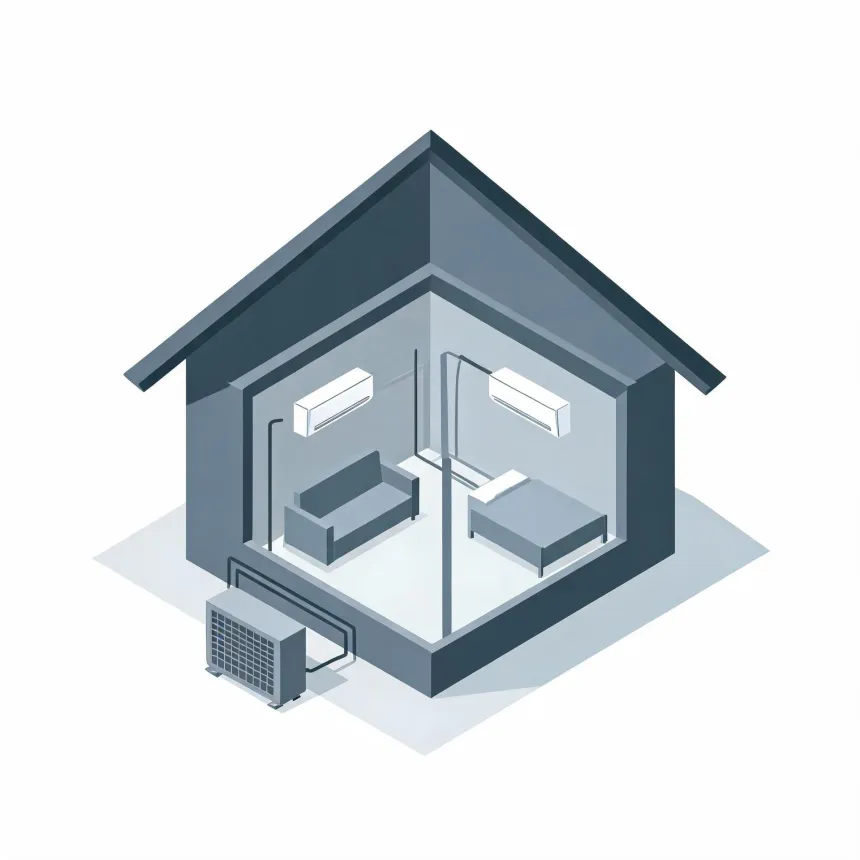
- A single-zone system heats and cools one room or open area well. If you need several rooms covered, a multi-zone system connects one outdoor unit to two, three, or more indoor units, each with its own thermostat. The number of zones an outdoor unit can run depends on the unit's capacity and the size of each room. A contractor sizes this to the house rather than guessing at a number that works everywhere.
- Can a mini split heat a whole house?
- It can, if enough zones are installed to reach every room and the system is sized for the coldest nights. With winter lows averaging 12°F here, the unit has to be a cold-climate model rated to keep producing heat at those temperatures, not just a standard heat pump. Homes here need heat from September through May, so this isn't a system that runs a few weeks a year and sits idle. A contractor can work out how many indoor units a whole-house setup needs and whether the layout of the house makes that practical.